
Laura Bornfreund
Senior Fellow, Early & Elementary Education
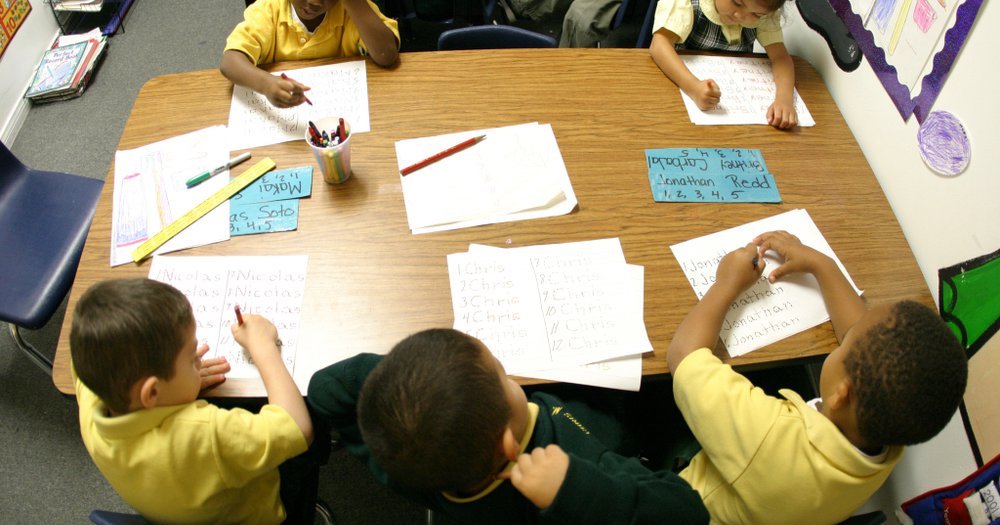
In a public school classroom in Denver, Colorado, kindergarteners have been reading the Magic Treehouse book Night of the Ninjas鈥攁nd they鈥檙e ready to take the story a step further.
鈥淲hat kind of tools did ninjas engineer to sneak through water?鈥� their teacher asks.
鈥淪norkel,鈥� answers one child.
鈥淣ow, imagine you鈥檙e a ninja鈥攚hat would you need to pack?鈥� The class mulls over this and other day-to-day ninja practicalities, after which it commences with the next part of the day: Bringing the discussion to life. Together, the kindergarteners work in teams to plan, design, create, and ultimately dramatize all the ninja equipment they just talked about, marrying a simple reading activity with intentional play and make-believe.
Children in nearly every state showed 鈥攁nd the students struggling most are actually faltering. These findings from the most recent should serve as a wake-up call for policymakers and educators鈥攁nd signal a need for a new approach in how we teach reading.
The kindergarten classroom above offers intriguing hints into what could be the missing piece of the puzzle. It鈥檚 employing something called (Tools), which is designed to build children鈥檚 academic learning by fostering executive function鈥攊.e., managing behavior and emotions, holding an idea in the mind and quickly recalling it, and making connections between multiple concepts at once. Developed in 1993 by Dr. Elena Bodrova and Dr. Deborah Leong, Tools can be found in pre-K and kindergarten classrooms in 23 states; altogether, it鈥檚 being used by approximately 300,000 children (many of whom are living in underserved communities) across the country. Tools is marked by an emphasis on make-believe and dramatic play: Pre-kindergarteners, for instance, draw pictures and indicate with early writing the role they will play, what they will do, and who they will play with鈥攑lans that help develop early literacy skills. And while make-believe is an important part of Tools, teachers also engage children in math, science, and literacy activities, as well as in opportunities to build executive function skills. Kindergarteners develop learning goals that guide what they will accomplish each day, and work with study buddies who help support those endeavors. And, yes, kindergarteners play! The children act out stories they鈥檝e read and connect the learning to science, culture, and history via themes in those books.
In short, Tools takes a more well-rounded approach to learning, combining structured reading instruction with opportunities for children to develop executive function skills. It allows teachers to tailor learning to meet children鈥檚 individual needs鈥攁nd could be key to really improving children鈥檚 reading outcomes.
Over the years, studies on Tools have shown academic gains for children engaged in the curriculum. According to a , by the end of the school year, three times as many kindergarteners participating in Tools classrooms were reading at a 1st grade level or higher, compared to children in non-Tools classrooms. The study also found stronger writing skills in Tools children, and more Tools teachers reported that their students were ready to learn after breaks. The study also found positive benefits for teachers: Nearly 80 percent of Tools teachers reported feeling excited about teaching and energized for the next year. None of the non-Tools teachers selected that response on the survey.
But of course, absorbing a new teaching paradigm is easier said than done. According to an on Tools, emphasizing executive function requires a big shift for teachers, especially when it comes to behavior management. For example, in addition to teaching content, teachers also have to help children learn how to learn, providing more immediate feedback throughout the process. They also need to view children鈥檚 challenging behaviors as learning and growth opportunities. This means, for example, that rather than simply doling out consequences, a teacher might ask a child why they aren鈥檛 listening or moving to the next activity, and then work with that student to come up with solutions. Teachers play a critical role in whether Tools works for children, so investing in teacher training and classroom materials is a must.
If states and schools want different reading outcomes, they鈥檙e going to have to do something different. A good first step might be taking a closer look at the kind of reading instruction and exploring a shift to a different approach: one that makes early reading the active, joyful experience it was always meant to be.
Senior Fellow, Early & Elementary Education


