
Math Apps, Preschoolers and Framing New Research Questions

For the past two years, I鈥檝e been following the creation and development of , a research and development project funded by the National Science Foundation. The project is designed to shed light on how — and if — 4-year-olds can learn early math skills from apps designed to be used in classroom settings with teacher input and guidance.聽
聽The results of the study won鈥檛 be available for another year or more, but I explored the work involved in developing apps and setting up such a study in a The New York Times piece yesterday, .鈥� This is challenging research work, involving vast literature reviews on different stages of children鈥檚 cognitive development to the rounds of testing required to ensure the games work as expected.
I talked to various people about the aims of the project. I came away from each conversation with a richer understanding of how certain aspects of new technologies could cause educators to think more deeply about what (and how!) children are learning. But one interview keeps replaying in my mind 鈥� my interview with Colleen Cordes, editor of , a report released last year by the Alliance for Childhood, the Campaign for Commercial-Free Childhood and Teachers Resisting Unhealthy Children鈥檚 Entertainment.聽
Cordes questioned why the NextGen Math project was set up the way it was. A major aim of the project is to determine how teachers could implement math lessons using apps, including whether the apps might elicit more 鈥渕ath talk鈥� in the classroom and enable teachers to see where children were having trouble with new concepts.聽 But Cordes asked: Why wasn鈥檛 the study designed to ask whether the apps were necessary in the first place? She wanted to step back to a more primary question: Could more 鈥渕ath talk鈥� be promoted by offering teacher training that didn鈥檛 feature apps and iPads?聽 With projects like NextGen, there is too much of an emphasis on 鈥渘ovelty,鈥� Cordes said, adding, 鈥淭hat鈥檚 been a real sinkhole for education for decades.鈥�
My conversation with Cordes reminded me of the significance of the questions we ask, not just the answers we seek.聽 As academic institutions and federal agencies embark on more research around technologies for young children, we need to think about which variables we鈥檙e 鈥渃ontrolling,鈥� which new variables we鈥檙e introducing, and exactly which questions we aim to answer. If we want to find out what is truly contributing to children鈥檚 learning, these kinds of decisions really matter.
Should every research study about the impact of apps have a 鈥渘o app鈥� condition? If so, what would that look like? Are iPads to be seen as 鈥渟creens鈥� alone or are they, for example, containers for portable board games or vehicles for personalized teacher training? Should 鈥渘o app鈥� conditions mean 鈥渘o apps鈥� for kids but 鈥測es apps鈥� for teachers? 聽(I should add that early childhood advocates often want to know about 鈥渘o app鈥� conditions because they are painfully aware of tight budgets and 聽are rightly cognizant of the cost and upkeep of iPads. That makes we wonder if one of the larger questions is how to spend money wisely in a preschool classroom, and if so, how we design studies to help answer that question.)
Ideally, future research would answer all of these questions and spark new ones. To find out whether new technologies are helping to catalyze interactions that lead to lasting learning, we need to study what works under all sorts of different conditions. 聽
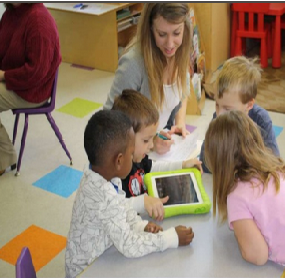
Image captured from video by Next Generation Preschool Math.
Issues
Programs/Projects/Initiatives
Related

Federal Early Education Update: March 2026

A Bureaucratic Shakeup Threatens Future Child Care Research
