Jasmine Heyward
Entertainment Initiative Senior Associate, Better Life Lab
It鈥檚 Sexual Assault Awareness Month, as by the White House last week. In the proclamation, President Biden highlighted essential programs for preventing sexual violence and offering support services to survivors, all authorized through the Violence Against Women Act. These include culturally-specific support resources for LGBTQI+ survivors, people living in rural areas, and other underserved communities and funding for government and nonprofit-designed sexual violence prevention programs.
It鈥檚 refreshing to have a president who has been engaged with this work for decades and was a lead architect of the Act, which remains an important cornerstone of federal policy and programs. However, throughout the proclamation鈥攁nd many other resources from policymakers and some advocacy groups鈥攖he terms 鈥渟exual violence鈥� and 鈥済ender-based violence鈥� are conflated. Additionally, when both these things are addressed primarily through policies focused on women, it can further an old and incorrect idea that these issues only impact (usually cisgender) women.
It鈥檚 worth noting that on the first day of his presidency, President Biden passed an embracing the broader definition of discrimination 鈥渙n the basis of sex鈥� defined by the U.S. Supreme Court in the decision in June 2020. Federal officials are generally in agreement that sexual orientation and gender identity are included in the definition of gender-based violence, discrimination, or harassment. Even with that broader definition, not all sexual violence is gender-based, and it鈥檚 a semantics issue that comes with a human cost.
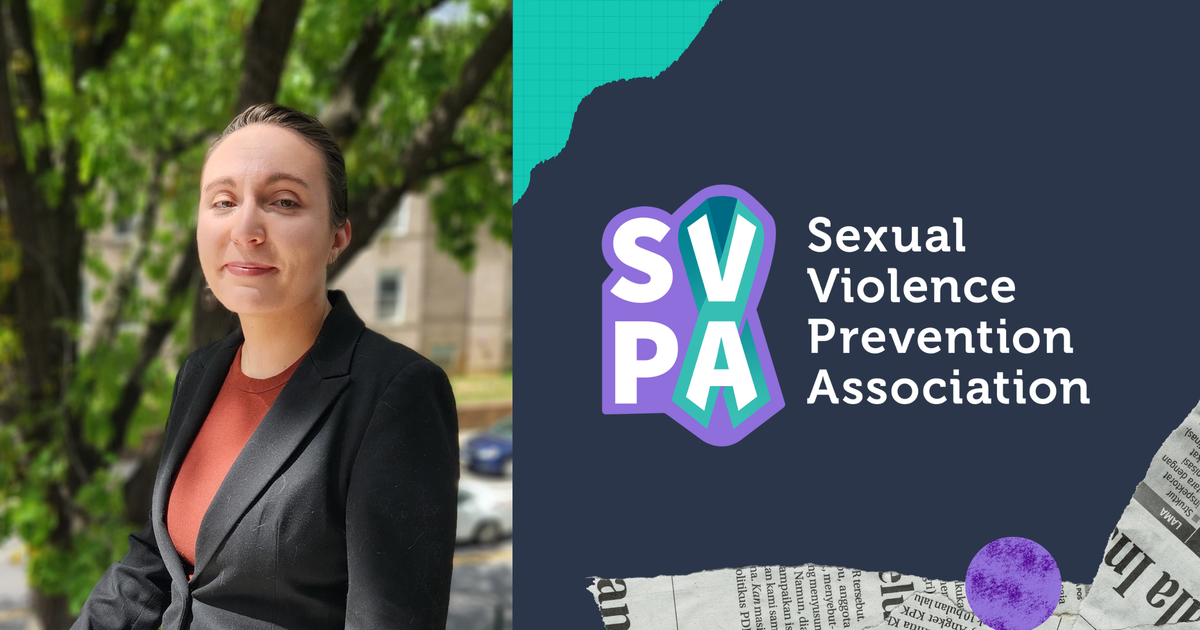
As explained to me by Omny Miranda Martone, founder and CEO of the (and a friend, full disclosure), of federal legislation focused on preventing and addressing sexual violence lives within the Violence Against Women Act. follows this mindset, seeking programs focused on supporting women. And when resources are designed only for women, survivors of other genders end up with little formal support.
I sat down with Martone to discuss the consequences of conflating gender and sex in this context and the consequences for both programs, educational resources, and policy efforts to prevent sexual violence and access to supportive resources for survivors of sexual violence. Below is their primer, in their own words, lightly edited for clarity:
On the framing of sexual violence as 鈥渧iolence against women鈥� or 鈥済ender-based violence鈥�
We view there to be three distinctly different things here. There's gender-based violence, violence against women, and sexual violence.
Gender-based violence can include sexual violence, domestic violence, and other forms of abuse and harm. Violence against women is one type of gender-based violence; there are other types of gender-based violence, like violence against intersex people, trans people, etc. So, all gender-based violence is not violence against women. And then outside of that is sexual violence.
We view sexual violence not as just a gender-based issue鈥攚e are really, really adamant that this is not just an issue of violence against women, nor is it just an issue of gender-based violence. Sexual violence includes all forms of rape, sexual assault, sexual harassment, child [sexual] abuse, things like that. It is both the result of existing power imbalances as well as a tool used to gain and maintain power, control, and oppression. And that is our definition of sexual violence as an organization.
So what that really means is existing power imbalances can be at that individual, institutional, or systemic level. At the individual level, that might be a perpetrator who is physically stronger than their victim. It might be a perpetrator who's sober, and their victim is inebriated. That's an individual level of power. At the institutional level, that level of power might be a supervisor or boss controlling their employee's income and their career, or a teacher or professor controlling a student's grades or their future career as well.
Then there鈥檚 the systemic level of power. That can be gender, or it could be transphobia, homophobia, racism, etc. And so that is another level of power where you see increased levels of sexual violence against Black trans women, for example, because perpetrators think, 鈥淲ell, nobody's probably gonna believe this person or care,鈥� or 鈥淚 can just get away with it.鈥� Or, in some cases, it鈥檚 legal [due to gaps in existing legislation]. So, that systemic form of power can be gender-based violence; the axis of oppression can be sexism, but it isn't always sexism. If it is sexism, then yes, it's violence against women, typically, but sometimes it's not sexism. Sometimes, as I said, it's transphobia, homophobia, intersex-phobia鈥攊f that's a thing. That's still gender-based violence, then, or sometimes a part of that is racism or something else. Most cases don't fit neatly into one of those things鈥攖hey are usually combinations.
The issue with sexual violence being portrayed and, honestly, siloed as a gender-only issue is that we're ignoring the intersections. We're ignoring some specific survivors themselves, whose cases are not going to fall into a gender-based issue, [perhaps because the perpetrator and survivor are the same gender].
We really want to make sure that people understand, yes, there is overlap. If we're going to address sexual violence and fully prevent it systemically, we need to start with a general understanding of those axes of power control and oppression.聽
On gendered prevention and support resources
I think that there is a difference between funding and other resources [dedicated to gendered] services versus the gendering of prevention. I feel prevention needs to acknowledge and always include all forms of oppression, not just sexism. Because if you only include sexism, you are overlooking misogynoir and other intersections, not to mention you鈥檙e overlooking racism, which has long been a driver [of sexual violence] in and of itself. And, of course, LGBTQ+ oppression and disability and all other forms of oppression.聽
When it comes to services being gendered, I definitely used to think that they shouldn't be. As somebody who is intersex and non-binary, I felt like there were no services that I could go to, and that was a problem. I've come to kind of realize, first of all, that was years ago, and now that things are a little bit different. I do feel like there can be some value to programs being specific鈥攍ike programs for male survivors. We have heard from male survivors, and we've heard from trans and gender non-conforming people that having services specifically for them can be helpful.聽
Right now, the default is, 鈥淟et's just make every single service specifically for women.鈥� And oftentimes, it's cis women, which is a problem 鈥� but I used to say that we should be genderless鈥攁ll services should be for everybody. Now I鈥檝e come to realize that that's maybe not helpful. We should not be gender鈥擨 don't want to say 鈥済ender blind鈥� because that's an ableist term. But [it鈥檚] basically the equivalent of when people say being 鈥渃olorblind鈥� is not the solution to racism. I realized I was doing that, and that's actually not helpful! We do need to have [gendered services]鈥攖hat's super important when it comes to support. But as I was saying, when it comes to prevention [programs and educational resources], we should recognize all systems of oppression 鈥β� and the intersections that arrive.
Entertainment Initiative Senior Associate, Better Life Lab