Making. It鈥檚 an activity; it鈥檚 a movement; it鈥檚 a mindset. And most of all, right now, its future is uncertain. For the past four years, the Maker movement, an initiative to promote innovation and entrepreneurship through playing and learning, has had a place on the federal stage and garnered national attention. The White House first hosted its own Maker Faire in 2014, followed by a National Week of Makers in 2016. 听Today, the Trump Administration has provided no signals of any desire to continue these efforts. 听
The next step for Makers may be to go local. In fact, cities across the country have been stepping up in the Maker movement. As described in the recent book, 鈥�,鈥� published by Peter Hirshberg, Dale Dougherty, and Marcia Kadanoff of ., cities can be open ecosystems for learning, integrating education, play, workforce development, and industry. 听While the new federal role has yet to be defined in the Maker movement, cities cannot wait to find out what it is. The book argues that local governments, nonprofits, and businesses need to join forces to help the Maker movement in their cities grow into thriving ecosystems.
As the book鈥檚 authors describe how to transform cities, it becomes clear that the Maker movement cannot be defined by a single activity, location, or group. Makerspaces are for learning and working; schools, libraries, museums, and community; and children and adults alike. Catering to a variety of audiences and environments can make it difficult to nail down what a makerspace is, and for those charged with managing makerspaces, what they should be. According to , 鈥� is a physical location where people gather to share resources and knowledge, work on projects, network, and build.鈥� For some, it is a refurbished city building filled with state of the art 3D printers and scanners. For others, a makerspace might include recycled materials in a classroom. Limiting the idea of a Makerspace to technology-centric spaces excludes many makers from the conversation. Maker City shows that the Maker ecosystem includes activists, faith-based communities, and artists as well. Extending the umbrella of the Maker movement beyond , , and ensures that learners of all ages and abilities can reap the benefits of Making.
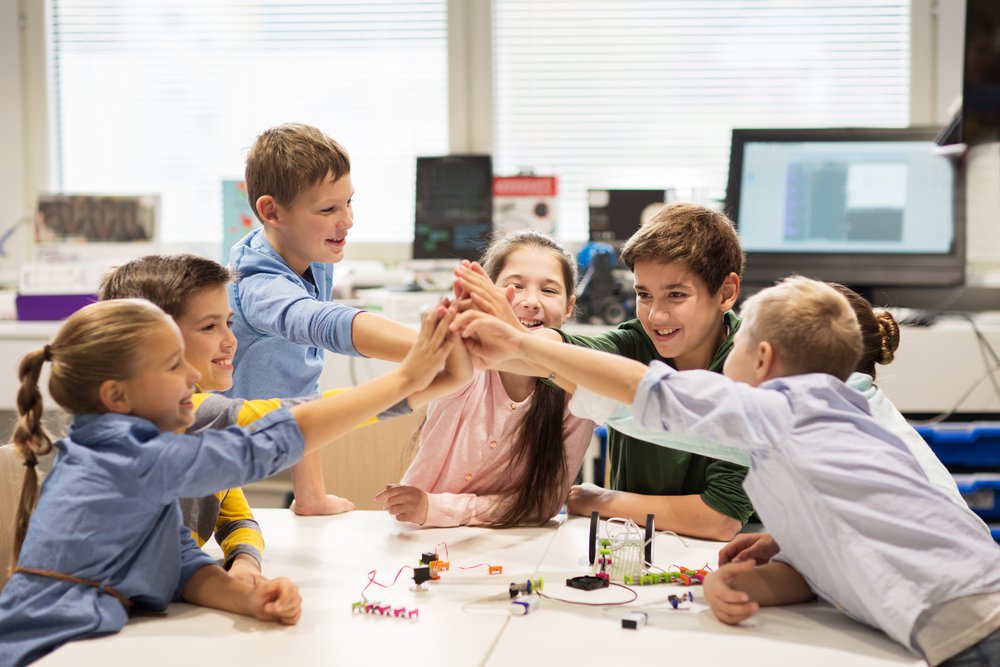
At their best, Makerspaces can blur the lines between hackerspace, FabLab, TechShop, community center, and learning space. In March 2016 I visited the in Baltimore, Maryland for a discussion on the . Digital Harbor Foundation is a non-profit organization that took over an abandoned community center in the Federal Hill Neighborhood of Baltimore in 2013 and turned it into a thriving Makerspace. Since its inception, the organization has provided learning opportunities for children and adults, hosting afterschool and summer programs for students and providing Maker training for educators. While 听I was there we heard from students about their vision for the future of their education and to see how the Makerspace helped them develop new interests and skills. One project designed by a student played Spotify through a piano; another designed their own computer game using code.
Baltimore鈥檚 commitment to making doesn鈥檛 end at the doors of the Digital Harbor Foundation. Like many cities, technology and innovation are becoming apart of the daily lexicon of residents. A simple Google search of 鈥渕akerspace鈥� and 鈥淏altimore鈥� yields pages of results pointing to spaces around the city providing residents with learning outlets.
But what about smaller municipalities with fewer resources? Makerspaces don鈥檛 have to be exclusive to metropolitan areas. Maker City highlights the work of , population 3,000. The small town located in the Sierra Mountains region is utilizing its strengths, agriculture and its rural location, to rebuild the downtown area to make it more conducive to business and tourism. The town worked with design firm to develop a distillery, creamery, and visitor center to attract tourism and economic activity. Minden shows that Making can take many forms, but innovation and bringing people together is at the heart of the movement.
It is clear that Making can cross geographic, age, and skills boundaries. How can we make sure Makerspaces remain an important part of informal learning in a time of uncertain educational priorities? Maker City highlights several key strategies that are echoed in Action Agenda for City and Community Leaders,听a brief published by 国产视频 and the Joan Ganz Cooney Center at Sesame Workshop last week.
For example, the report starts by pushing city leaders to assess existing resources with an eye toward equity. 听There are many ways to do this. Maker City suggests multi-sector collaboration while the new report from 国产视频 and the Cooney Center proposes professional development programs with an emphasis on digital media literacy. 听As in the case of Minden, Nevada, improving infrastructure to support expanded innovation is another key element of improving Making.
Finally, never settling can promote a Maker mindset in communities. The 国产视频 and Cooney Center report asks all city leaders to develop a 鈥渃ycle of continuous improvement鈥� through evaluation and feedback loops. This monitoring and assessment can help Maker cities evaluate their successes and failures to create a city that works best for its residents. 听As the new book and the new report show, Making is built on innovation, and innovation stems from learning and changing, something that municipalities should remember when developing their own Makerspaces, 听Maker communities, and Maker cities.
More 国产视频 the Authors
Issues
Programs/Projects/Initiatives
Topics
Related

Prioritizing Students with Disabilities in AI Policy
Meeting the Moment: Why Digital Skills Matter During a Crisis
AI and The Ownership of Teacher Work