Neoliberalism: The Ideology Blocking Our Collective Economic Power

Most are familiar with the hallmarks of the midterms season鈥攁nd now that the 2022 elections are close at hand, we鈥檝e all settled into the familiar barrage of text messages from strangers. Whether you鈥檙e getting a series of texts from a celebrity like Martin Sheen or a random one-off from a woman named Jesse, these notes share strong opinions on which issues are most important, what鈥檚 at stake this year, and how we should vote. However, most people already hold firmly rooted beliefs on at least the first two: their #1 issue and what鈥檚 really at risk for them and their families.
shows that, akin to a popularized early 鈥�90s political phrase, 鈥�.鈥� Economic issues are not only perennial, but will be central to this year鈥檚 elections. People are thinking a lot about having enough鈥攂e it to cover the stubbornly high gas prices or ever-expensive produce at the grocery store. And if people are going to vote based on the economy, they should understand what that vote stands for鈥攁nd who it could stand against.
There’s an important undercurrent of our economic pains that candidates on both sides of the ballot will avoid bringing up. On the left, most will shy away from connecting the hot-button and fallen-out-of-favor issue of structural racism with economic hardship. On the right, many will argue that a focus on racial equity issues is a distraction from economic ones. Yet we might make different choices as consumers and voters if we鈥檙e willing to make the connection between our own household-level economic woes and American capitalism鈥檚 slavery-inspired .
American capitalism has been around for ages, while , a free and unadulterated market鈥檚 champion, came in vogue after WWII following backlash against socialism. The guiding idea was that only free markets could allocate resources fairly and reward individuals. By the 1980s, the ideology had leapt from universities into politics, and spread widely. Privatization of almost everything followed the logic that corporations could do most things better than the government. A growing cultural acceptance followed鈥攁 鈥溾�� embrace of profit-driven corporate interests and wealth-driven individual interests. And that wonky term became and remains an, on the scale of opportunity for elites.
Reactions to recent debates鈥攍ike the outcry over who did and didn鈥檛 receive stimulus checks during COVID shutdowns, , and certain incentives for first-time home-buyers, among others鈥攄emonstrate how this widespread, internalized ideology drives much of the failure to address what makes it hard for many in the United States to thrive economically. The associated public rhetoric betrays the prevalence of a 鈥渨hy them?鈥� mentality in these economic debates. And race is baked into this rhetoric. Arguments that suggest or that something not properly will be disastrous? Those have racial undertones, too. Those who make these pronouncements often avoid the specter of racism even when their ideas are not so far removed from more explicitly racist takes.
The structure of the American economy highly values individualism: that is, if you fail to succeed, it鈥檚 your fault. Because individualism and individual responsibility are prized, failure to succeed is considered an individual act. In actuality, it . Or rather, a system that is working as intended to keep certain people in power while pinning fault to individuals, and masquerading the whole process as neutrality. It鈥檚 a narrative ready-made for the 鈥渉aves.鈥� And the onus on the individual鈥攖o either succeed or fail solely by their own doing鈥攊s a deception with far-reaching uptake.
This thinking helps t that they acquired their wealth through merit, ignoring advantages like privilege, inheritance (social capital and actual capital), favorable tax codes, and class. The other side of the coin is that those in poverty may be likely to blame themselves for their 鈥渇ailures.鈥� Perhaps many, if not most, along the spectrum of economic vibrance are aware of the set-up. However, even with that knowledge, aspects of what has been ingrained still pit individual against individual, drawing focus toward scarcity, a sort of musical chairs of secure jobs, resources, and common everyday needs.
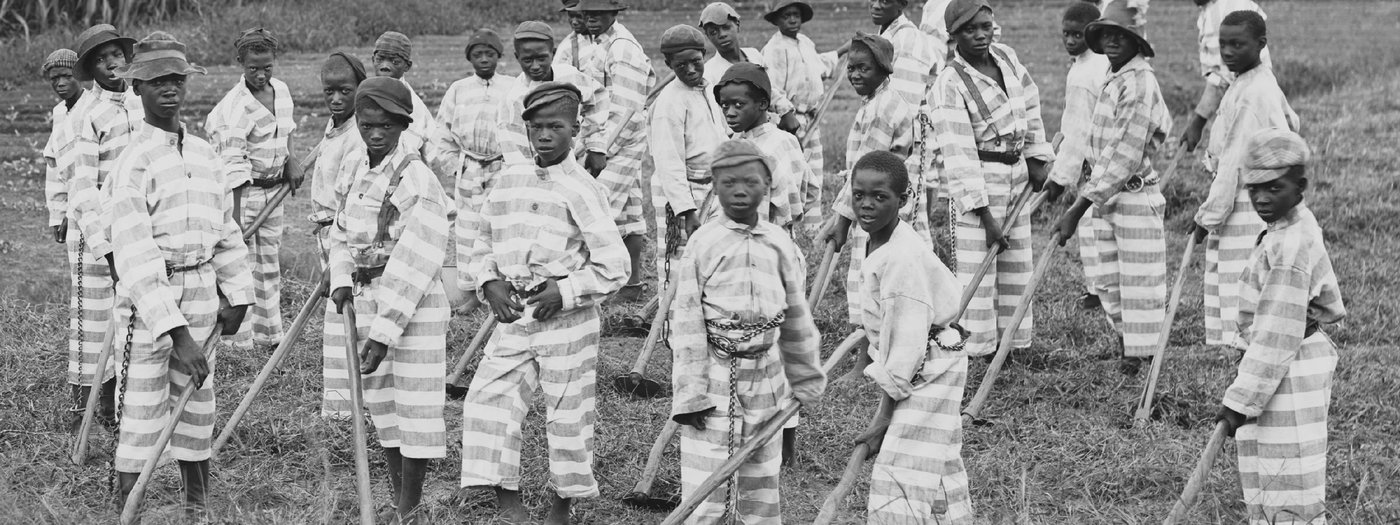
To trace the line back to our capitalist origins, you have to,鈥欌�� as social scientist Matthew Desmond writes, with the economic gifts bestowed on the white ruling class through slavery. By some estimates, slaveholders extracted what would now be worth from their captives. And the gifts kept giving with the post-slavery enactment of 鈥淏lack Codes鈥� and poverty laws that incarcerated violators (for jay-walking, loitering), returning free labor to southern slave owners. .
We might make different choices 鈥� if we鈥檙e willing to make the connection between our own household-level economic woes and American capitalism鈥檚 slavery-inspired low-road approach.
While growth of the middle class was being fueled by the , also known as the GI Bill, Black veterans were largely denied this educational opportunity. 鈥淩edlining,鈥� the process by which Black Americans and other people of color were shut out of home ownership, was yet another way of gatekeeping one of the . While today, Black, Asian, and Hispanic or Latina/o people comprise 36 percent of the U.S. workforce, 58 percent of agricultural workers; 70 percent of maids and house cleaners; and 74 percent of baggage porters, bellhops, and concierges. and the legacy of these institutions continues to inform the American economic system and its outcomes. The impact is intergenerational and makes clear that neither the markets nor the structure of the political economy enable 鈥済etting out what one puts into the economy.鈥� This is a case where neoliberalism鈥檚 answers don鈥檛 answer.
We can鈥檛 separate the economic conversation from the racial equity one. Luckily, some of today鈥檚 brightest thought leaders who consider the economy are hungry to talk about the racism baked into the system. I had the chance to speak with a few before the summer鈥檚 start. At an intimate leadership dinner, , Co-President of Community Change and Co-Chair of the Economic Security Project, explained, 鈥淵ou can鈥檛 talk about the role of government or the role of public goods without talking about racism. It鈥檚 kind of malpractice.鈥� Too often the racial element 鈥渋s relegated to the periphery, when it needs to be more central,鈥� of The New School noted. He added, 鈥淲e are to believe that [this ideology] is cleansing, rewarding good behavior and sanctioning sloth. That it is colorblind, inevitable, natural, and efficient.鈥� But it鈥檚 not. As Hamilton succinctly put: 鈥淲hat it so often is, is un-interrogated.鈥�
And , head of the Groundwork Collaborative, mentioned the importance of exploring the racism woven within policy in order to 鈥済et at the undoing.鈥�
Elections are rife with slights of hand and smoke and mirrors, making it hard for people to see clearly which candidate hopeful is truly aligned to their best interests. If they all suggest that they will advocate on your behalf and safeguard the public good, why is there so much heat and strife over that representation? In relation to the economy, it has a lot to do with 鈥渨ho gets what鈥� and ideas around deservedness. Where some see pragmatism in the current structure of the political economy, there are deep imprints of neoliberalism and its racial rhetoric.
If we鈥檙e willing to make the connection between the racism embedded into the foundation of the economy and our household-level struggles鈥攐ur true voter issues鈥攚e can attempt to make different choices. Yet those choices require clarity and understanding: The lack of which explains the stunning and depressing statistics from scholars Cheryl Boudreau, Christopher S. Elmendorf, and Scott A. MacKenzie, who found that with their desired issues areas, while high-information voters did.
We must be thoughtful about the stories we tell ourselves and each other about why the economy does or doesn鈥檛 work for everyone, and those stories can鈥檛 omit race. Our economic interests are interwoven. No matter what your proximity to wealth may be, every one of us can and should recognize that talking about a painful past doesn鈥檛 make one culpable. In calling out systems that set up barriers, we can also 鈥渃all in鈥� those who enjoy impediment-free progress in the economy. And we position them to be modern-day economic allies. This is what keeps This is where the importance lies in exploring what civic muscles can be built as voters and consumers to tackle economic injustice. Noting, not ignoring, is what allows us to claim and to chart a new collective economic course.
More 国产视频 the Authors
Programs/Projects/Initiatives
Topics
Related
A Journey Towards Racial Equity: Advancing the Work at 国产视频

鈥淎 Warm Hug for Black Kids鈥�: Celebrating Self-Love Through Reading
Ending America鈥檚 Exception to Slavery