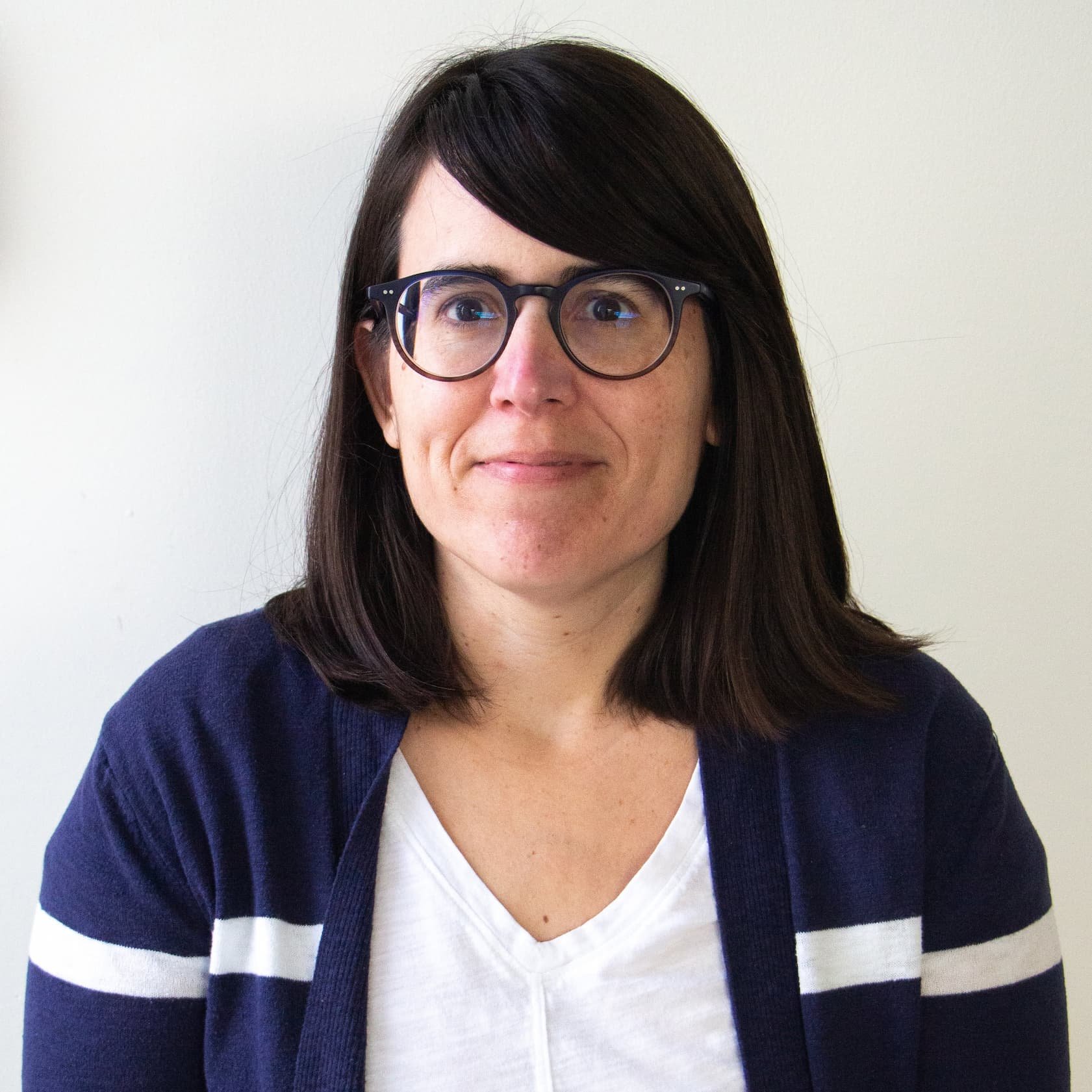
Amaya Garcia
Director, PreK-12 Research and Practice

New Jersey Governor Chris Christie has garnered his fair share of media attention in recent months due to . But in his home state, in recent weeks, the spotlight has been on Christie鈥檚 . Under the state鈥檚 current system, schools are funded under a weighted formula that provides and to the . These types of funding structures are designed to increase equity and ensure that students with more needs receive more resources.聽
But from Christie鈥檚 perspective, pouring additional money into struggling districts has been ineffective and a .聽Currently, more than half of the state鈥檚 annual $9.1 billion in funding for education goes to a small number of districts, 鈥淸A]bout $5.1 billion goes to 31 districts, while the other $4 billion goes to the remaining 546 districts,鈥� . Under his per-pupil funding would be equal across the state with each student receiving $6,599 (special education students would continue to receive additional funding).
To be sure, the plan has been met with swift criticism. Dana Goldstein that the plan would effectively steal from the poor to give to the rich. Other view it as a by-product of Christie鈥檚 affiliation with Trump and adoption of strategies that seek to cast different groups against each other for political gain. And the called the plan 鈥渢oxic鈥� and stated that 鈥渁 flat amount would make it impossible for poor communities to provide a sound education for disadvantaged children who need classrooms with more resources.鈥� Even , like , have expressed concerns. Estimates suggest that the new funding system would cut Newark鈥檚 鈥� where and 鈥� education budget by .
Christie鈥檚 plan does not appear to be focused on students鈥� educational outcomes. Rather, it appears to be simply a tactic to lower property taxes and satisfy New Jersey voters who primarily vote on that issue. The Governor is recasting his state鈥檚 role in school funding, which, as a frames it, is usually 鈥渋ntended to supplement local funding to even out disparities between wealthier and poorer communities.鈥� Indeed, Christie鈥檚 plan ignores the fact that it to educate certain populations of students, including English Learners (ELs).
Julie Sugarman, the MPI report鈥檚 author, examines the myriad factors that influence the cost of educating language learners. First, it can be expensive for districts to hire teachers with the specialized skills necessary to work with ELs. The scarcity of teachers trained to work with ELs can also impact budgets as some states and districts often 鈥減ay a premium to recruit and retain them.鈥� Sugarman cites the example of , where students are required to receive a specified number of minutes of instruction from a teacher certified in English as a Second Language or Bilingual education. Additionally, the state has moved towards a co-teaching model where ELs receive integrated ESL instruction (that integrates content and language instruction) from an ESL/bilingual teacher and a general education teacher. While these policies track research on best practices for ELs, they carry additional costs.
Second, variations in EL instructional program models add variable costs to school districts. Models that require an ESL specialist teacher to 鈥減ush-in鈥� or 鈥減ull-out鈥� to work with ELs can increase the cost of EL instruction 鈥� since they require additional teachers. For example, in the District of Columbia Public Schools (DCPS), ESL teachers are assigned based on the number of EL students in a school and their levels of English language proficiency. The is one ESL teacher per 22 EL students 鈥� in 2015, I visited an elementary school that had 7 ESL teachers due to their high enrollment of language learners! School districts also generally have staff on hand to translate essential materials for families, conduct language assessments, and provide student support in multiple languages.
Finally, local demographics and capacity can play a large role in determining the baseline level of funding a district needs support EL students. Sugarman points out that differences within the EL student population mean that districts must design a range of programs and services. Consider: newcomer students who arrive in U.S. high schools with low levels of English language proficiency can present unique challenges. Some of these students come to school with gaps in their education and require extensive instructional support to get on track to 鈥減erform grade-level work, and meet course requirements for graduation,鈥� writes Sugarman.
can also have an impact on a district鈥檚 bottom line since many schools are funded based on estimates of how many students will be enrolled for a particular school year. That means district administrators and school leaders must often revert to creative solutions to ensure that ELs arriving mid-year still receive necessary instruction and supports. She cites an example of a school district in California that had to open an 鈥渆mergency program鈥� to accommodate the unexpected influx of high school newcomer students.
School districts pay for these additional (and/or unexpected) costs through a mix of federal, state and local funding systems. Federal contributions 鈥� which make up only 11 percent of funding to U.S. schools 鈥� to EL education are made primarily through Title III grants (the FY 2016 Title III budget was to serve 4.9 million ELs). These grants are given to school districts for the purposes of existing services for ELs including instructional staff, materials, professional development and family engagement. But these funds are generally seen as and in some states, amount to . Furthermore, it can be difficult for federal authorities to to actually improve ELs’ opportunities and achievement.
The lion鈥檚 share of EL funding comes from states and local districts. , that provide additional funding on top of the base allocation, are an increasingly popular mechanism for meeting the needs of student subgroups, . Under California鈥檚 (LCFF), 聽the state funds each EL student at 20 percent above the standard per-student funding level. So an EL enrolled in grades K鈥�2 generates the base funding of $6,800 plus an additional 20 percent for his or her district, for a total per-pupil allocation of $8,160. Unfortunately, the LCFF has not yet translated into across the state due to. One reason for the less than stellar results is that even though districts are allocated additional funds for ELs, they are not actually required to spend the money on these students, said Shelly Spiegel-Coleman, Executive Director of in an MPI webinar聽
There is also scant research on how much it costs to adequately educate EL students. Many states have commissioned cost studies to guide the level of funding provided to local districts. seek to uncover how much it costs to provide an education and/or the level of funding necessary to produce certain outcomes. However, very few cost studies have included a . 聽And many jurisdictions that use weighted-funding systems determine weights based on the money available rather than on the actual cost of educational programs and services. The reality, as Sugarman points out, is that 鈥渁dministrators responsible for district and school budgeting are focused on how to use scarce resources and balance the necessary tradeoffs rather than on creating a plan that reflects ideal pedagogical choices and then applying the exact dollar amount to cover it.鈥�
Solutions to these problems are anything but clear-cut. Sugarman suggests that a starting point is to improve research on the costs of EL education and on variables that can impact costs, such as differences in student characteristics. To that end, she also recommends that states develop differentiated funding systems to account for the variability of needs in the EL subgroup 鈥� for example, supplementary funding for students who are recent arrivals and have had limited or interrupted educations.
There’s no shortage of priorities in EL education discourse. From fights over states’ English-only policies to debates over accountability for ELs’ performance, there’s plenty of argument to go around. But none of these ideas can work if they aren’t supported with adequate resources.
鈥�
This post is part of 国产视频鈥檚 Dual Language Learners National Work Group. . To subscribe to the biweekly newsletter, , enter your contact information, and select “DLL National Work Group Newsletter.”
Director, PreK-12 Research and Practice