
Our National Nightmare Will Return Shortly
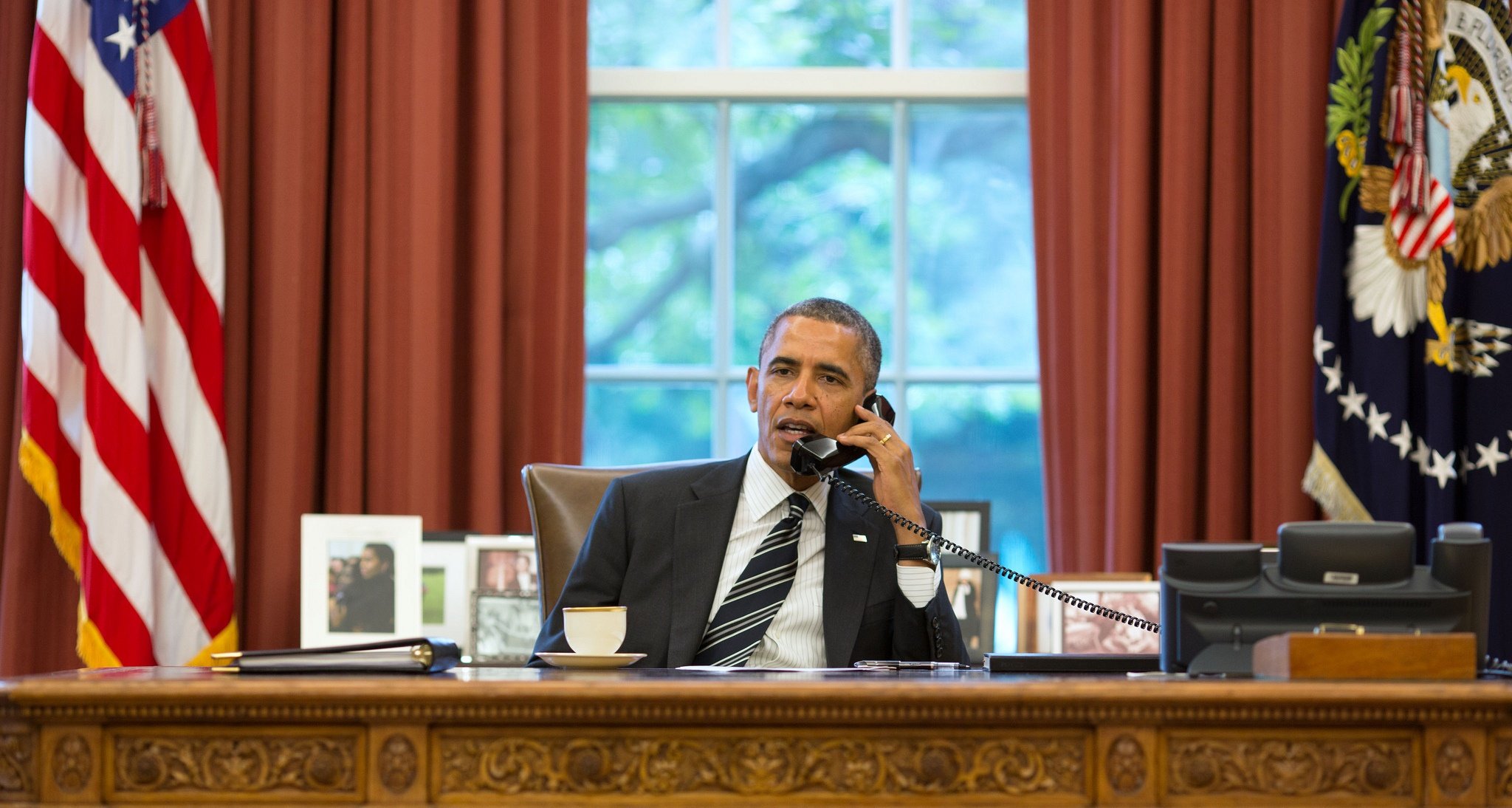
Last night, as the 16th day of the federal government shutdown drew to a close, the House and Senate approved, and President Obama signed into law a that restored funding for federal agencies and brought the nation back from the brink of a debt default. But celebrations will be short-lived. The temporary spending bill will expire again on January 15, and the increased debt ceiling will run out again on February 7 鈥� evidence that the last month of congressional debate had virtually no long-term implications.
The just over two weeks ago, with House Republicans insisting on defunding or at least delaying a portion of the Affordable Care Act, the healthcare law President Obama pushed through Congress in 2010. But Senate leadership and President Obama remained dead-set against the changes. (Only one, relatively minor change to 鈥淥bamacare鈥� was made in this latest deal, requiring the Department of Health and Human Services to verify the incomes of those applying for tax credits or cost reductions under the law.) So instead, the debate morphed into one over a more workable issue: spending levels.
Another sequester will hit federal programs on January 15 鈥� the same date that funding expires under this plan.
Under a law passed by Congress in 2011, known as the Budget Control Act (BCA), lawmakers established a congressional 鈥渟upercommittee鈥� to create a framework for $1.5 trillion in deficit reduction. When they failed to do so, the law reverted to Plan B: spending limits for fiscal years 2012 through 2022. Mid-2013, the White House was required to sequester a portion of that year鈥檚 spending with across-the-board spending cuts, but an eleventh-hour deal in Congress (the American Taxpayer Relief Act) meant that a portion of the cuts were pushed off to fiscal year 2014 instead. This year, then, the spending cap drops by another $18 billion.
That is a key point that has been lost in the debate: The 鈥渟econd sequester鈥� was not part of the original Budget Control Act as passed in 2011. It came later, through the American Taxpayer Relief Act of 2013 (the law that extended most of the Bush-era tax policies), which Congress passed with overwhelming, bipartisan support in January 2013.
The trouble is, the spending bill passed last night, like both the House and Senate proposals that came out ahead of the shutdown, continues funding the government at 2013 (about $985 billion this year, instead of $967 billion as required under the BCA as modified in early 2013). That means another sequester will hit federal programs on January 15 鈥� the same date that funding expires under this plan.
That鈥檚 no accident. Senate Majority Leader Harry Reid (D-NV) wanted to push the deadline for the continuing resolution up against the deadline for sequestration to force the issue further. He hopes to use the next debate over funding the government in just a few short months to press Republicans to provide federal agencies with flexibility to implement the sequester, rather than to apply it evenly to all programs, or even to cancel the sequester entirely. (The proposal to give agencies flexibility was discussed during these budget negotiations, but was ultimately left out of the final bill.)
And when they passed their budget earlier this year, ignoring sequestration and setting spending at $1.058 trillion instead of at the House Republicans鈥� approved (and the Budget Control Act鈥檚 mandated) $967 billion. (President Obama followed suit, with his budget clocking in at $1.057 trillion.)
Republicans, meanwhile, have little incentive to alter sequestration 鈥� and got cold feet when it came time to actually draft an education spending bill that meet the new spending caps. Efforts earlier this year to bolster funding for the Department of Defense by reducing substantial amounts of funding for the Departments of Labor, Health and Human Services, and Education among House Republicans about the size of the reduction. But spending cuts remain a major priority of most GOP lawmakers, and the political will doesn鈥檛 yet exist鈥攁mong Republicans or some Democrats鈥攖o cancel sequestration.
Another provision of last night鈥檚 agreement, though, would attempt to end such 鈥済overning by crisis鈥� in favor of a return to regular order in Congress. A bicameral, bipartisan budget conference committee will begin meeting soon to attempt to reach an agreement on government funding 鈥� undoubtedly, with a focus on altering or eliminating sequestration in favor of more targeted cuts.
Sound familiar? That鈥檚 because the supercommittee whose failure spurred the implementation of sequestration in the first place was tasked with a similar goal of reaching a broad deal on budget policy. Some of the committee鈥檚 appointees 鈥� Rep. Clyburn (D-SC), Rep. Chris Van Hollen (D-MD), Sen. Patty Murray (D-WA), Sen. Rob Portman (R-OH), and Sen. Pat Toomey (R-PA) 鈥� even served as supercommittee members a few years ago.
It seems unlikely that enough has changed politically to spark much agreement. And if that鈥檚 the case, we鈥檒l be right back in the same place, facing a potential government shutdown (and soon after, another possible government default), by mid-January.”
More 国产视频 the Authors
Issues
Programs/Projects/Initiatives
Related

Cosmetology Students Deserve Better Than Debt and Broken Promises

Quality Principles for Workforce Pell Programs

