Andr茅s Martinez
Future Tense Fellow
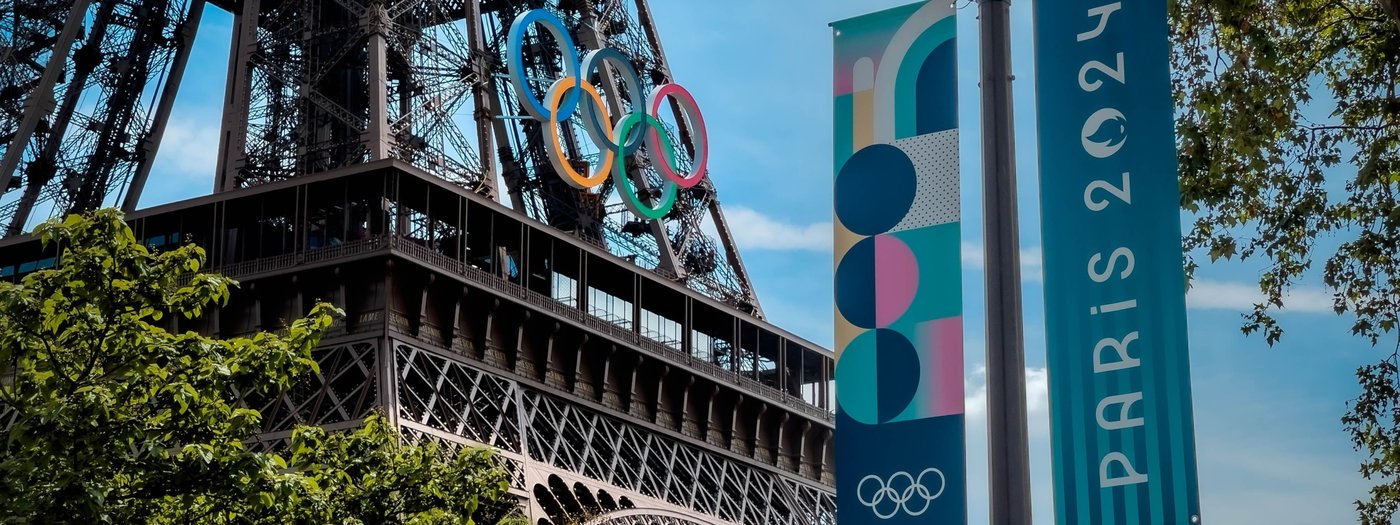
Vladimir Putin’s use of sports as a conduit for global branding was once a hallmark of his regime. From hosting the 2014 Sochi Winter Games and the 2018 FIFA Men鈥檚 World Cup, no world leader has invested more in that effort than the Russian dictator. These events served as platforms to showcase Russia’s prowess and gain influence over global sports organizations. So, the recent exclusion of Russia from the 2024 Summer Olympics represents a dramatic shift for Putin and Russia on the global stage, and underscores the complex interplay between politics and international sport.
The expulsion came in response to , despite the prevailing trend in recent decades of favoring participation regardless of geopolitical conflicts. This shift contrasts with the post-Cold War consensus, which emerged after the Olympic movement endured the trauma of at three consecutive Summer Olympic Games鈥擬ontreal, Moscow, and Los Angeles鈥攖hat kept a substantial number of countries from participating.
The International Olympic Committee (IOC) does not want to go back to the days of mass boycotts and endless disputes about who is and who isn鈥檛 entitled to play, which is why it has sought to frame its sanctions against Russia in a way that only applies to Russia. However, while legal reasoning can guide policy, politics often complicates the matter. Given the heightened political importance of sports globally, it鈥檚 no surprise the IOC and FIFA (F茅d茅ration Internationale de Football Association) are being bombarded with 鈥渨hat about鈥� claims from others, such as those demanding that Israel be banned from the Games due to the .
calls for peace during the Games, and a week before and after to promote a temporary cessation of hostilities between nations. It鈥檚 a symbolic nod to the Olympic movement鈥檚 ideal that sport should foster peace, and to the ancient Olympics鈥� tradition of athletes being granted safe conduct to attend the Games in times of conflict.
Putin鈥檚 invasion of Ukraine occurred just four days after the Beijing Winter Games concluded in February 2022 and mere days before the Paralympic Games had started. The IOC was quick to use this violation of the truce to justify sanctions against Russia. While this may seem pedantic鈥攁fter all, isn鈥檛 invading a neighboring country equally unacceptable whether you do it one day or one month after an Olympics is over?鈥攖his rationale allowed the IOC to focus specifically on Russia and avoid broader calls for sanctions against other states engaging in conflicts. Given Russia was already on probation for its repeated doping scandals, the IOC framed this response as a direct punishment for offenses against the Olympic movement itself.
Similarly, the in October 2023, suspending its national Olympic Committee because Russia鈥檚 sporting authorities had annexed Ukraine鈥檚 Olympic federations in Russian-occupied territory.
By contrast, when IOC President Thomas Bach was asked the 鈥渨hat about Israel鈥� question at his prior to the 2024 Summer Games鈥� opening ceremony, he noted that Palestinian and Israeli Olympic committees peacefully coexist. Bach seemed to insist that Russia鈥檚 actions were a transgression against the Olympic movement, against sport, and it鈥檚 alone in that category.
Beyond that, Bach expressed the importance of maintaining the IOC鈥檚 political neutrality, adding that if the IOC were to 鈥渁pprove exclusions on the basis of nations that are at war with one another the number of Olympic committees in Paris would probably be cut in half.鈥�
I empathize with Bach鈥檚 reluctance to turn the IOC into a judge of international disputes and the worthiness of various regimes to participate in the games. Many people feel Israel deserves exclusion from international competition, but I can think of more deserving candidates. And if the IOC adopted the same human rights prerequisites the European Union maintains for membership, even the United States would have a hard time playing, on account that it hasn鈥檛 abolished the death penalty. Where does it end?
There are three main questions that arise when considering where we should set the bar in terms of participation in international sport:
1. Is participating in the Olympics or World Cup a privilege or a right? And does this change when decisions are made about which countries can host one of these events
2. Who competes at the Olympics, athletes or nations? The IOC insists it鈥檚 about athletes, not countries, as stated in the Olympic Charter. However, the obsessive focus on national medal counts, flags, and anthems suggests otherwise. The IOC has always paid lip service to the idea that the Games aren鈥檛 showdowns between rival nations, while benefiting from the intense interest in that very aspect of the Games. At Paris, the presence of a and 鈥渘eutral鈥� Russian athletes is a nod to this Olympic insistence that the competition is between athletes, not countries.
Then there is the consideration of whether we鈥檙e referring to governments or broader societies when we talk about countries. This distinction also informs one鈥檚 opinions on sporting sanctions. Last year, Hanan Khashoggi, widow of Jamal Khashoggi, told she holds the Saudi Arabian government responsible for her husband鈥檚 murder but doesn鈥檛 want to see her nation ostracized in sports.
3. Whose values should international sports governing bodies reflect? Balancing inclusivity with ethical standards is challenging. My idealistic college students often grapple with this. They鈥檙e passionate about human rights, democracy, and making global institutions more representative. These goals are all commendable, but at times in conflict with each other. For instance, increasing inclusivity in international sports governance, perhaps by giving every national committee an equal vote, can weaken a focus on human rights and democracy. This is a conundrum faced by all multilateral governance institutions that end up reflecting the lowest common denominator adherence to the rule of law among its members, including the United Nations鈥� General Assembly.
Students often expect sports to be purer than other pursuits, but the reality is that international sport is an especially tempting vehicle for unsavory regimes to polish their image and line their pockets. And as the global system of sport governance becomes less elitist and more representative, moving away from its aristocratic origins, it inevitably gives more influence to these unsavory regimes.
I have made my peace with the idea that international sports should prioritize broad, inclusive participation over excluding players for failing to meet high standards or changing political agendas. This approach isn鈥檛 about keeping politics out of sports, as the IOC President Bach insists. That鈥檚 unavoidable鈥攊nstead, my posture itself is a political one, based on the belief that there is a right to participate in sport and that participation can drive positive change in societies.
But as I concede to my students, navigating these issues involves tough choices.
While I come down on the side of 鈥減lay and let play鈥� when it comes to sport, I can鈥檛 deny that the decisions to host the and the were abhorrent and indefensible. Conversely, the longstanding exclusion of South Africa during apartheid from international sporting competition was a justifiable and effective decision.
The goal should be to balance inclusion with ethical considerations in extreme cases. As Putin鈥檚 Russia reminds us, there are always exceptions to the rule.
Future Tense Fellow