
Pedagogies of Rage
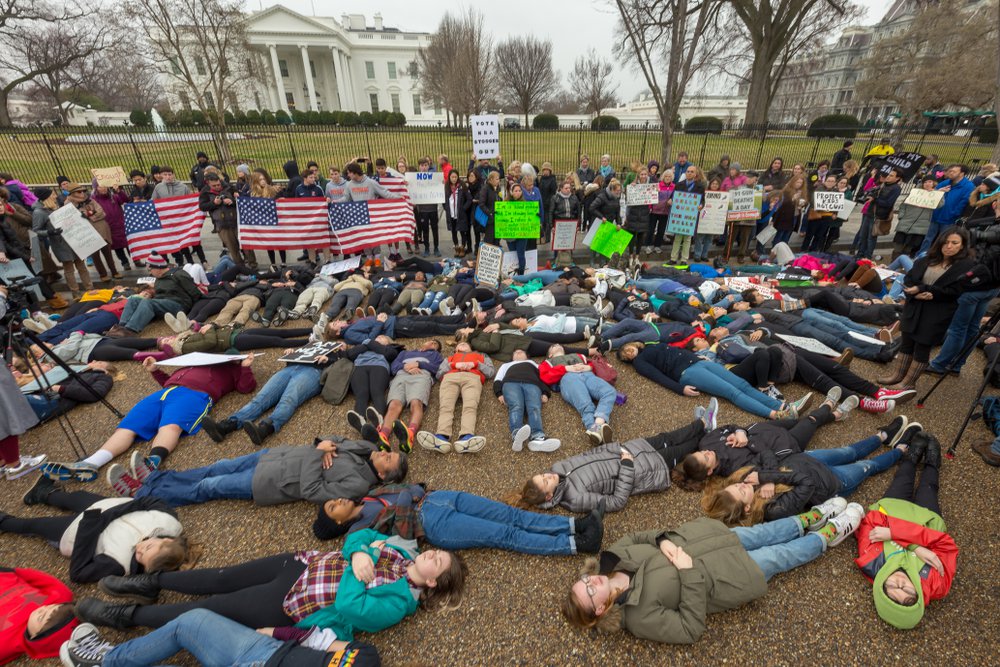
The activism sparked by the recent school shooting in Parkland, Florida, has been nothing short of awe-inspiring. But while much of the fury of the students-turned-activists has been met with admiration, many聽pundits criticize that this unwillingness to appeal politely to traditional channels of change will hurt the students鈥櫬爌ush for gun control.
But this kind of thinking careens right past a very different reality, which is this: The Parkland students are part of a much broader cohort of activists who have shown that calling BS on respectability can be an effective strategy for securing important concessions.
For one, the activism on display in Parkland provides a counter-narrative to the notion of a While they鈥檙e primarily white, middle-class suburban kids鈥攁 fact that鈥檚 certainly聽鈥攖he Parkland students鈥� anger about the innumerable failures, at all levels of government, that allowed the shooter to legally purchase an assault rifle has meant that they鈥檝e been unafraid, and indeed willing, to challenge opponents of sensible gun control. Even as the students deal with and their persistence has resulted in a nationally televised town hall, the introduction of legislation at the state and federal level, and even sympathetic statements from the president.
The students鈥� tactics have, in turn, shown that it鈥檚 sometimes beneficial to lean into perceptions of disrespect and anti-respectability. For instance, some people disparaged the way in which students spoke to聽Sen.聽Marco Rubio聽(Fla.-R)聽at the CNN town hall, and yet that moment has led to many notable and material victories, including concessions by the president and advertisers鈥� being convinced to end their partnerships with the NRA. While these victories are only in the preliminary stages and, in a sense, small, the students鈥� activism聽is emblematic of a much longer tradition that undercuts the idea that there鈥檚 a 鈥渞ight鈥� way to advocate for social change.
Indeed, this unrepentant activism didn鈥檛 start with Parkland. The movement to support undocumented immigrants has also created an important model for how working beyond the formal channels of advocacy can create real victories for activism. While the DREAM Act has struggled to pass Congress, this hasn鈥檛 prevented people, and even institutions, across the country from embracing it with compassion. Take how many schools have to more fully accommodate undocumented students, instead of treating them as they would international students (who often receive considerably less aid at both public and private institutions). In addition, many employers have been intentional about offering work authorization in their job postings, which signals that they鈥檙e accepting of people who might be on DACA status. These actions have taken place alongside the hundreds of demonstrations and other acts of civil disobedience that have held politicians accountable for deporting people who鈥檝e聽been living without legal citizenship status for most, if not all, of their lives.
This isn鈥檛 to say that activists haven鈥檛 stitched more traditional modes of advocacy into their approach: for instance, their push for a 鈥渃lean鈥� DREAM Act and for legislative fixes on background checks and bans on assault rifles. The deeper point is that the Parkland students and DREAM Act activists have specific goals in mind when it comes to policy, and they鈥檝e resisted allowing outside noise mute their critiques of state violence, apathy, and political incompetence more generally. Here, there鈥檚 a through-line to another key movement: Black Lives Matter.
As a recent Teen Vogue highlights, the work of combating police brutality has always included conversations around gun violence. In consequence, and largely as a result of Black Lives Matter, police agencies in over 24 states have introduced some 40 laws to curb police misconduct. On top of that, protesters convinced the Department of Justice under the Obama administration to investigate civil rights abuses that took place in a number of major police departments. (And of course, this history has an even longer tail: Today鈥檚 鈥渁ntagonistic鈥� activism follows the mid-century of bottom-up protest not beholden to two-party politics.)
On a cultural level, these three movements have forced sustained national dialogue about issues of gun violence, immigration, and police brutality, in a way that likely wouldn鈥檛 have been possible had these movements not been propelled by in-your-face tactics. As quick as observers often are to sanitize this brand of activism鈥攖o whittle it down to the policy agenda of a few self-appointed leaders鈥攑resent-day movements for social justice are identifying something that鈥檚 long been hiding in plain sight: Rarely has respectability been the most successful means for achieving equality. Purposeful anger, however, has been, and still is, quite effective.
More 国产视频 the Authors
Related

Engagement in a Civic Education Desert

Built to Last: How Leaders Are Creating Sustainable Early Childhood Funding

Pre-K Is Having a Curriculum Moment. A Professional Learning Movement Needs To Follow.
