
The President鈥檚 Speech
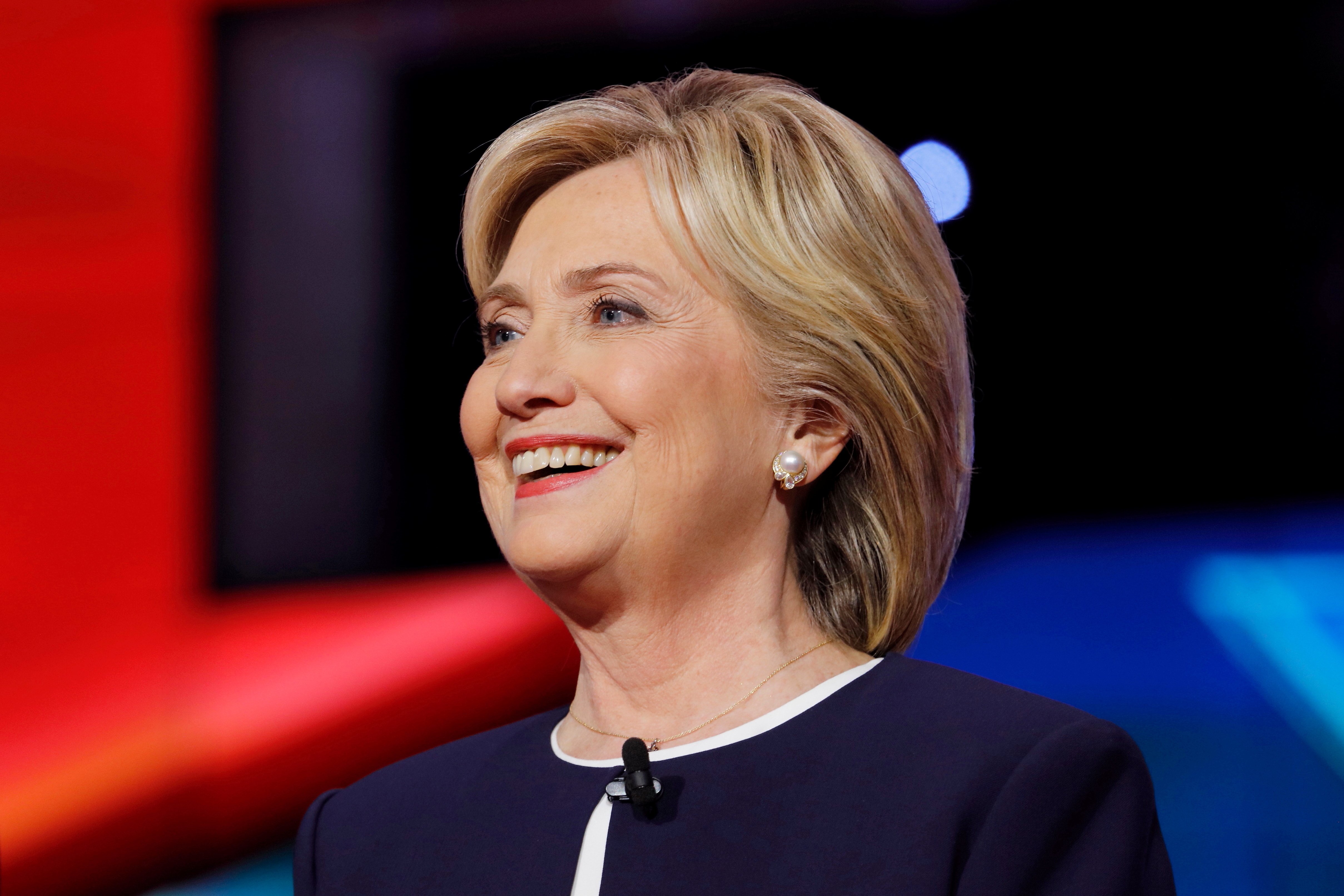
Regardless of your political affiliation, you know Hillary Clinton鈥檚 name and you know she鈥檚 running for president in 2016. Over the next year and a half, you will hear her opining and debating on social media platforms, in videos and commercials, and in interviews, debates, and stump speeches.
But even though we鈥檒l hear it again and again, we rarely consider her voice as a factor in and of itself. 聽According to academic studies and election experts, however, this factor could matter a great deal.
Evidence shows that we perceive deeper voices as more authoritative and trustworthy. This happens to be the case when we hear deeper voices coming from a woman or a man.聽聽found that subjects, when hearing a voice say 鈥淚 urge you to vote for me this November鈥� in lower and higher pitched voices, generally selected lower pitched voices in both men and women as their chosen candidate. The study also found that lower-pitched voices are perceived as characteristic of socially-dominant people.
While Clinton鈥檚 team of campaign advisors can concoct her image through clothing choices, word choice, and even logo rebranding, they can鈥檛 easily change the pitch of voice. Clinton鈥檚 voice is not particularly high, but it is inherently higher than all of her male opponents and has already garnered backlash from critics, whom have found fault with her for being 鈥溾�� when speaking forcefully or for speaking in .
While it鈥檚 difficult to pinpoint how much Clinton鈥檚 voice will impact her candidacy, other female world leaders have taken proactive steps to counter the potential negative effects of their own high-pitched voices. Margaret Thatcher, for instance, over the course of her career and was rumored to have received voice lessons. If you are so inclined, you can listen to the effects on this before-and-after .
, a sociologist, suggests in The Human Voice that Thatcher managed, artificially and independently, to reduce the frequency of her voice by 60 hertz. Karpf believes that as a result, Margaret Thatcher permanently damaged her voice鈥� in 2002 Thatcher announced that under doctor鈥檚 advice, she would no longer conduct public speeches.
So, how did Thatcher permanently lower her voice? As it turns out, we have considerable flexibility of where we place our voices within our natural vocal range. The study 鈥溾�� found that at least for English speakers, men tend to place their voices in the lower part of their registers and women tend to favor the midrange.
Gender identity and native language can be a strong predictor of this pitch self-positioning. Some evidence shows that women鈥檚 voices have dropped in pitch in the past century. A cross-sectional study conducted in 1945 and 1993 called 鈥溾�� found that Australian women speak on average 23 hertz lower than they did in the 1940s. Female newscasters on English and -speaking channels speak much lower than they did in the nineties.
This evidence could mean a lot of things. Japanese women鈥檚 voices, on the one hand, are believed to have dropped due to a decline of the traditional expectation for women to speak in high pitched voices in formal situations. On the other hand, it鈥檚 possible that as the expectation for women to embody femininity at all times has co-created pressure for them to exude 鈥渕asculine鈥� forms of authority, including in the pitch and tone of their voices.
Is there any way for Clinton to win the voice battle? Women who have lower-pitched voices are . Think of Thatcher鈥檚 doctor-mandated silence after years of vocal self-manipulation. Must Clinton damage her vocal cords to be as influential as the Iron Lady?
We should not be surprised to learn that world leaders hire speech coaches, but it may be surprising to learn that male politicians also face pressure to deploy an often unrealistically low-pitched voice in public. Isaac Herzog, the Zionist Union candidate in the 2015 Israeli general elections, was criticized for having a high pitched voice during the election. His voice was not very high but in contrast with Benjamin Netanyahu鈥檚 booming voice, it paled in comparison. This mismatch became such an issue that Herzog dubbed his campaign video with a deeper voice and took voice lessons to deepen his voice鈥攍argely to no avail, as Netanyahu won the election anyway.
I spoke with Christopher Moore, who is an associate professor of sociology at Lakeland College, about the importance of the president鈥檚 speech. When asked about Clinton鈥檚 voice, he pointed out that if 鈥渟omeone like Hillary Clinton is getting coached to sound more like a man and wins but continues to sound more like a man in office, she doesn鈥檛 change the norm of what we expect dominant speech to sound like. So, she鈥檚 changed [herself], not changed our perception.鈥�
While it seems ludicrous to suggest that Netanyahu鈥檚 deep voice won him the election or that Hillary Clinton鈥檚 higher-pitched tones will cost her the White House, the fact remains that we expect our leaders to communicate effectively and the sound of their voices鈥攍ike the ease or charisma with which they speak publicly鈥攊s an element in that calculus. At the same time, it behooves us to interrogate what seems most 鈥渘aturally鈥� pleasant鈥攂ecause our socialized perceptions about gender are embedded everywhere, including what we like to hear. Only 9% of head of governments are women and 19% of the U.S. Congress consists of women. Women鈥檚 vocal frequency is not the only reason women are underrepresented in politics and it may not even be a major reason. But as the studies mentioned above make clear, micro-level social interactions can accumulate to produce and reproduce macro-level gender inequality.
When asked about the possible effect of a Clinton presidency on these micro-level interactions, Moore reflected, 鈥淚鈥檓 not sure if simply having a woman president鈥s going to be enough to change the immediate future of how we associate deep voices with dominance.鈥� 聽It鈥檚 also important to remember that Clinton鈥檚 voice does not stand in a vacuum. Her words and voice also come with context and history.
If Hillary Clinton were to become president, however, it could be a game-changer鈥攅ven if we
don鈥檛 hear women鈥檚 voices as 鈥渄ominant,鈥� we might at least begin to perceive them differently. 鈥淚 think the more people we have with feminine sounding voices in positions of leadership, the more sounding like a leader is going to be less gendered,鈥� Moore observes. 鈥淭he problem is getting them there.鈥�
More 国产视频 the Authors
Related

鈥淧eace Through Strength鈥� Is Hard to Read

“Getting the Golden Ticket”: Participants’ Perspectives on Lexington’s First Assembly

Civic Assemblies: A Framework for Community Colleges
