A Profile in Courage: Orlando鈥檚 Chris Castro
An Interview with Orlando's Director of Sustainability
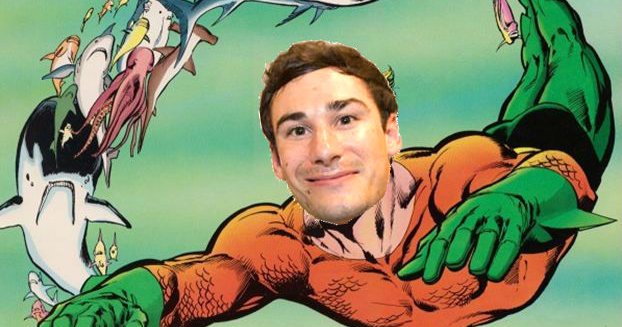
Chris Castro’s boss decided to name a day after him, and that was before he even started his new job.
“I don’t need a day,” he sighed in a recent interview.
“Anyway, we renamed it ‘Local Heroes Day,'” he quickly clarified.
Neither Castro nor his boss, the City of Orlando, could have known how apt their choice would turn out to be. Local Heroes Day, if the City Council had actually met to proclaim it, would have been June 13th, 2016, one day after the Pulse Nightclub shooting. That proclamation ended up unfurling not on paper but in the people of Orlando 鈥� in victim’s assistance tents, hospitals, command centers, newsrooms, and living rooms around the city.
But a crisis doesn’t really make local heroes; it just shows you who they were all along.
Back in May, Chris Castro dove into a riptide to save a drowning woman, at great risk to his own life, but it’s what he does every day as Orlando鈥檚 new Director of Sustainability that really makes him a hero.
He, no doubt, would tell you he’s just doing his job.
Castro鈥檚 job is to help make Orlando 鈥渙ne of the most environmentally-friendly, economically and socially vibrant communities in the nation,鈥� according to the city鈥檚聽. In the coming year, he said his efforts will include promoting energy efficiency in buildings, increasing the deployment of solar energy, converting city vehicles to alternative fuel, expanding the tree canopy, and turning the city鈥檚 food waste into compost, among other initiatives.
Achieving this ambitious agenda will not be easy.
First, there are significant environmental challenges. Florida is in many ways ground zero for climate change, or as the聽聽noted, the region is 鈥渆xceptionally vulnerable to sea level rise, extreme heat events, hurricanes, and decreased water availability.鈥澛燙astro noted that inland flooding, an increase in the number of high heat days, and more precipitation are already climate change-related challenges for Orlando.
In addition to hostile weather, Orlando has to contend with some hostile politics. State officials聽聽banned state employees from even using the term 鈥渃limate change,鈥� and, according to Castro, the state has policies on the books that discourage investments in solar and other alternative energy. He also noted that the current Governor dismantled progress toward some policies, such as a Renewable Energy Portfolio Standard, when he came into office.
So, what magic does Orlando have, to be so stalwart along the road to sustainability?
One important tool, according to Castro, is the city itself. The City of Orlando has 6.8 million square feet of property, about 550 facilities, a large vehicle fleet, and a strong聽聽rating, all of which can be leveraged to improve sustainability. So, for example, the city used a Power Purchasing Agreement with the Orlando Utilities Commission to put solar panels on the rooftops of city buildings.
Another important tool for Castro is an enthusiastic public. In the coming year, he hopes to encourage city residents to use聽, a new program that uses third party financing and property assessments to pay for home and business energy improvements. He also hopes to make more information about energy and water consumption in commercial and multi-family buildings available. 鈥淭hat act of transparency,鈥� he noted, 鈥渃reates a cycle of improvement. Building owners really want to measure up.鈥�
Getting the city鈥檚 building owners on board with this transparency and benchmarking plan was not necessarily easy, and that points to another reason for Orlando鈥檚 success: hard work. 鈥淚t involved extensive stakeholder engagement,鈥� Castro noted of the buildings initiative, which goes before the city council this month. The effort took more than two years and 260 in-person meetings, ranging from one-on-one sessions with building owners to citywide workshops.
Orlando also makes good use of external programs. In partnership with the Arbor Day Foundation, for example, the city developed 鈥�,鈥� which helps residents choose the right energy saving trees to plant 鈥� and then sends them the tree.
Ultimately, though, Castro said the most important ingredient for Orlando鈥檚 success is leadership, and that Mayor Buddy Dyer is 鈥渞eally the tip of the spear.鈥� It was Mayor Dyer who first initiated 鈥溾�� back in 2007, a plan to make Orlando the 鈥渕ost sustainable city in the U.S.,鈥� with ambitious targets for lowering greenhouse gas emissions and improving everything from water quality to livability.
To be fair, Orlando likely has resources most other cities do not. According to聽聽Magazine, it is the most visited city in America, with some 48 million people making the annual pilgrimage to the Magic Kingdom and other area attractions. And given the taxes on everything from hotel rooms to the short stretch of road leading into the Orlando International Airport, I can personally attest to the fact that tourists are a good revenue source.
Nonetheless, Orlando鈥檚 activism is important. Cities will have to lead the way for the nation on climate change, both because of toxic national (and state-level, in the case of Florida) politics, and because of the curious nature of this problem. Climate change is at once a challenge of scale and segmentation: it is a huge, global phenomenon with highly localized effects. It requires Federal policies and community action.
Indeed, we may all need to be local heroes if the country is going to successfully deal with climate change.
More 国产视频 the Authors
Issues
Programs/Projects/Initiatives
Topics
Related
Dutch Flood Experts Come to Help Protect Galveston
How Texas Is Trying to Pioneer a Disaster Preparedness Path
For Boston Climate Resilience, It’s Full Steam Ahead