
Ann Ravel
Fellow, 国产视频 CA
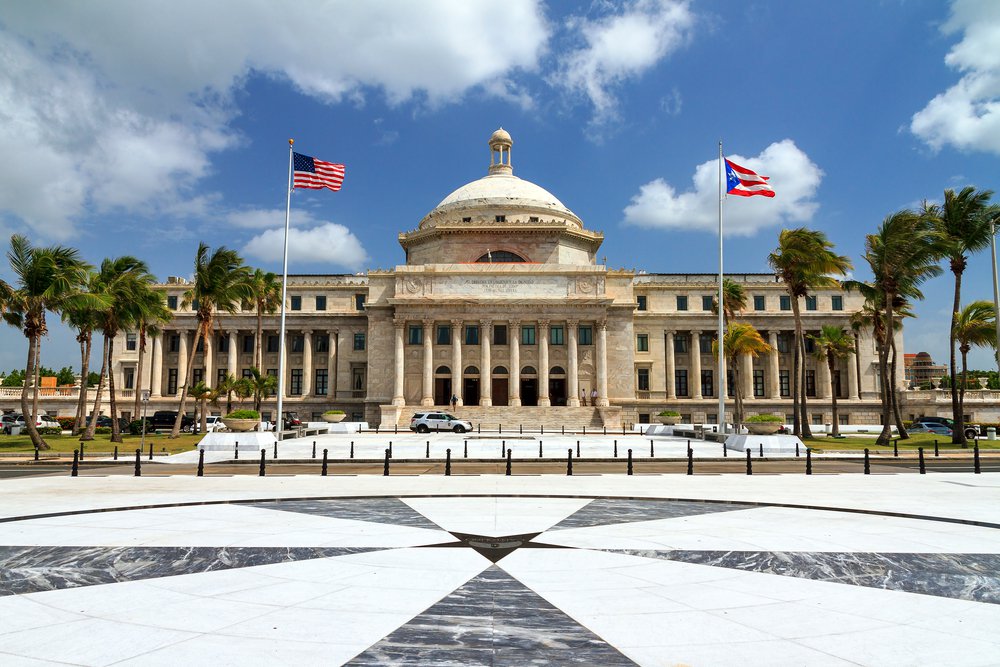
A few weeks ago, at the San Jose airport on my way to participate in an international election observation of Puerto Rico鈥檚 statehood referendum, the airline ticket agent asked me for my passport. This request surprised me: Puerto Rico is part of the United States, so a passport isn鈥檛 required for Americans to travel there. But as I soon discovered, through my work on the election, this request shone a light not only on the complex, and at times thorny, relationship between the United States and Puerto Rico that has persisted for over a century, but also on what true voter access and democratic engagement might look like.
To understand the dynamics of the referendum, which was the fifth time since 1967 that Puerto Ricans voted on their future (to be a Commonwealth, independence, or statehood), it鈥檚 helpful to look at the vote鈥檚 connection to the past. A hundred years ago, an Act of Congress provided American citizenship to Puerto Ricans and increased their democratic self-governance. But today, Puerto Ricans living in Puerto Rico don鈥檛 have all of the rights of citizenship. For one, Puerto Ricans residing on the mainland of the United States may vote for President, but the 3.5 million people who live in Puerto Rico can鈥檛, except in the primaries. Moreover, they don鈥檛 have full voting representation in Congress. This status chafes many Puerto Ricans, and it often leads to small peculiarities and indignities. A woman, for instance, told me about an incident in which she and her daughter were lost late one night after renting a car at the airport in Miami. She was stopped by a police officer and asked to show her license. The officer told her that she isn鈥檛 legally allowed to drive in the United States with a Puerto Rican license. I鈥檝e heard many similar stories.
The issues surrounding the relationship between Puerto Rico and the United States have been debated for many years, both in Congress and in Puerto Rico. Two recent U.S. Supreme Court cases caused much concern in Puerto Rico, when the Court issued decisions touching on the legal authority of Puerto Rico鈥檚 government. One of the cases, Puerto Rico v. Sanchez Valle, involved the application of the Constitutional prohibition on double jeopardy to criminal prosecutions in Puerto Rico. The court held that 鈥淧uerto Rico鈥檚 Constitution, significant though it is, does not break the chain鈥� of Congressional authority. In other words, this suggested that Congress has total authority over Puerto Rico.
The import of these decisions worried supporters of self-governance. Shortly after the ruling, Ricardo Rossello, a politician with the New Progressive Party, which advocates for Puerto Rico鈥檚 statehood, campaigned on a gubernatorial platform to hold a vote to request that Congress admit Puerto Rico as a state. After he won the election, the referendum (or plebiscite, called the 鈥淧lebiscite for the Immediate Decolonization of Puerto Rico鈥�) was held on June 11 of this year.
Half a million Puerto Ricans , with 97 percent of the ballots cast in favor of statehood. This was most likely because established political parties that were opposed to statehood boycotted the election, with only 23 percent of registered voters having cast ballots. But while 23 percent voter participation is incredibly low for Puerto Rico, it鈥檚 still higher than voter participation on the mainland in many U.S. state and local elections. For instance, in the March election for mayor of the city of Los Angeles (which has over 2 million registered voters), . And in 2009, the previous L.A. mayor was re- elected with .
Indeed, despite their murky citizenship status and diminished ability to control governance, Puerto Ricans are actively involved in issues facing their future and, notably, have an extraordinarily high rate of voter participation. According to a , over the course of the late 20th century, the turnout in Puerto Rico for the 鈥渜uadrennial elections was 50 percent higher than it was for Presidential contests in the 50 States.鈥� The voter turnout on the island is still higher than on the mainland, and is only exceeded by countries such as Sweden.
What might account for this remarkable voter turnout?
For one, high voter participation in Puerto Rico is in line with a long a tradition of civic engagement, as well as with a cultural belief that all people should participate in the political process. As the government official who accompanied me to observe the referendum put it, voting is 鈥渁 right that you have to cherish and protect.鈥�
But this noble idea doesn鈥檛 remain merely an idea鈥攊t鈥檚 turned into practice. Deliberate efforts are made to instill among citizens the importance of voting. People of all ages who haven鈥檛 previously participated in the voting process, for instance, are brought in to work at polling stations, often helping to verify registrations that will ultimately allow people to cast their ballot; volunteering on Election Day is also considered a shared responsibility of all political parties.
And it doesn鈥檛 stop there. The sorts of people who might be disenfranchised on the U.S. mainland (such as prisoners or, in some cases, even former prisoners) are encouraged to vote in Puerto Rico. All prisoners who are registered to vote are allowed to cast their ballots in voting booths set up in jails and penitentiaries throughout the Commonwealth. That鈥檚 because there鈥檚 a belief that prisoners鈥� participation in voting will ensure that they have a stake in the community once they鈥檝e served their time behind bars. By contrast, on the U.S. mainland, only Maine and Vermont allow people who鈥檝e been incarcerated for felonies to vote.
What鈥檚 more, poll workers are also stationed in hospitals to facilitate patient voting. I observed a patient who was lying in a hospital bed, attached to tubes, voting. Voting cards are even taken to the homes of homebound and disabled individuals to allow them to vote. Election officials speak proudly of their work in facilitating greater access to voting.
This isn鈥檛 to suggest that Puerto Rico鈥檚 electoral process is beyond critique. The issue of Puerto Rico鈥檚 political status is perhaps the most significant and longstanding political division on the island. The three most established political parties primarily differ on their position about the status of Puerto Rico regarding the United States. Prior to the referendum, the boycotting parties had condemned the holding of the vote, arguing that it was improper to even have a referendum before the U.S. Department of Justice approved the ballot language.
Still, the extraordinary efforts to bolster access to voting and participation in civic life have led to a high level of political engagement in Puerto Rico. This is especially striking when compared to voter apathy, feelings of dissatisfaction with the political system, and efforts to suppress votes on the U.S. mainland. What I saw in Puerto Rico was a sort of blueprint: a means through which we may, possibly, encourage all U.S. citizens to participate in civic life and in the electoral process.
Fellow, 国产视频 CA


