
‘Queer Eye’ and Sweet Potato Pie
My great-aunt Christine鈥檚 sweet potato pie recipe is a family secret. She was in her 80s when my mother asked her for the recipe, to make sure the recipe would survive after Aunt Christine died. She agreed to pass it down on one condition: My mother had to swear that she鈥檇 never share it with anyone who isn鈥檛 a family member. My mother recognized the recipe as a treasure of great value, and has kept Aunt Christine's memory alive through food. She鈥檚 taught me the importance of family traditions like this one. One day, I鈥檒l ask her to teach me the recipe, too.
That鈥檚 why 鈥淛ones Bar-B-Q,鈥� the third episode of the Season 3 of Netflix鈥檚 Queer Eye, had me wrestling with questions about legacy and family. This episode brings up, and doesn鈥檛 neatly answer, questions about the commodification and commercialization of family recipes and legacies.
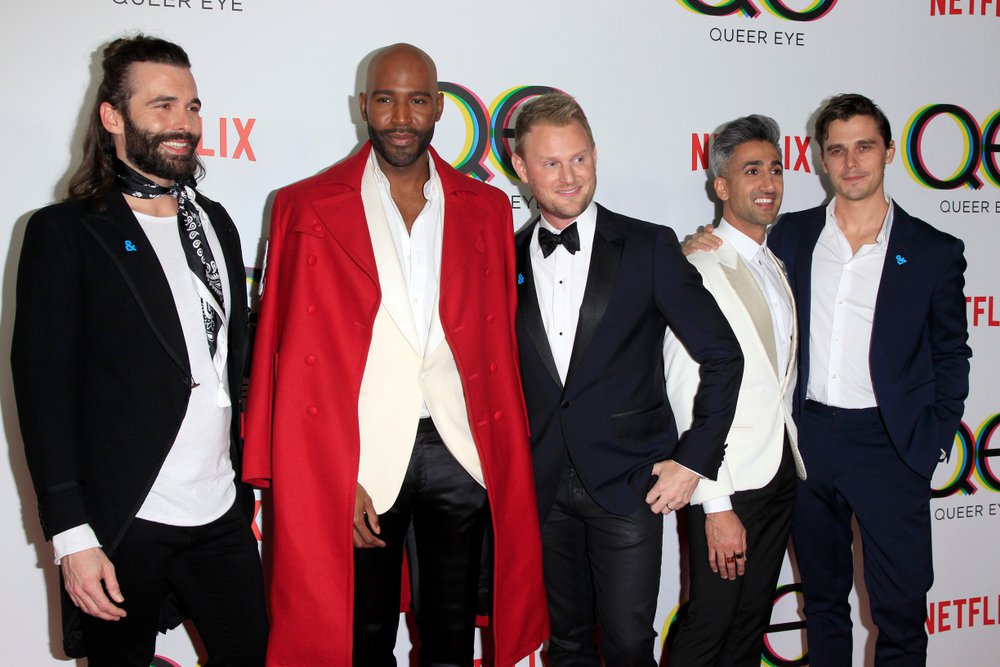
In the episode, the Fab Five, as the group is known, bring their weeklong whirlwind of clothing, grooming, food, design, and culture to the Jones sisters, Deborah and Mary, who go by 鈥淟ittle鈥� and 鈥淪horty.鈥� The Jones sisters are Kansas City pit masters and barbecue restaurant owners, and the Fab Five show up at the restaurant, meet customers, and help take and ring up orders. Little and Shorty are charming and funny, and they firmly refuse to give Antoni (the Queer Eye food guru) the recipe for their delicious barbecue sauce鈥攁 family recipe that their father created and sold at his barbecue restaurant, and that he passed down to his daughters. The Fab Five pledge to help the Jones sisters take their no-frills business 鈥渢o the next level.鈥�
For the Fab Five, a 鈥渘ext level鈥� business means that the restaurant gets a makeover courtesy of Bobby, who builds an outdoor seating space with hipster-chic potted plant and picnic table aesthetics; Tan finds clothing that helps both women feel sexy and confident, and includes his 鈥淔rench tuck鈥�; Jonathan cuts hair with aplomb and emphasizes self-care; and they all professionalize the branding via a logo on the space and employee T-shirts.
But what struck me most about this episode was when Antoni and Karamo (Queer Eye鈥檚 culture specialist) take Little and Shorty to Original Juan, a specialty food production company. (Original Juan has since been and is now called Spicin鈥� Foods). They鈥檙e met by food scientist Josh and chef Tommy, who, Antoni explains, are going to recreate the Jones sisters鈥� barbecue sauce for bottling and mass production, so they can sell it at their restaurant and potentially in grocery stores.
All the Jones sisters have to do is share the recipe.
There鈥檚 a moment during this outing when Little and Shorty seem to pause. They鈥檝e already refused to tell Antoni the secret ingredient in their sauce, and there鈥檚 a look on both sisters鈥� faces that鈥檚 hard to watch without thinking that something might be wrong. Deborah鈥檚 expression looks like a mix of discomfort, fear, and proprietary-ness, and persists for a while before she eventually starts getting into the process of making the sauce. Food scientist Josh tells the sisters, 鈥淵ou don't have to make [the sauce] in your restaurant.鈥�
Here, what stood out is the question of ownership. Shorty and Little had to tell someone who鈥檚 not their family the secret ingredient in their father鈥檚 sauce recipe. They also gave up control of production to an outside entity.
To be clear, the Jones sisters seem both pleased and proud that they now have a production system for their sauce. Deborah says, tearfully, 鈥淚 just never got this far.鈥� And at the end of the episode, they both proudly show their professionally produced and bottled sauce to family and friends. But there are interesting implications in the Jones sisters鈥� story and in the idea that taking a food business 鈥渢o the next level,鈥� on some level, requires giving up control of a family legacy to commercial actors to reach a certain scale.
One food show that takes a very different approach to the business of food and legacy is Netflix鈥檚 Salt, Fat, Acid, Heat. Based on her book of the same name, the show features chef and food writer Samin Nosrat, who travels the world and explores each of what she calls the 鈥渇our elements of good cooking鈥� by meeting farmers, chefs, and artisans and learning about the foods they make that exhibit these elements.
What other writers have about the food producers whom Nosrat visits鈥攆rom the miso maker in Japan to the butcher in Italy to the honey farmers in Mexico鈥攊s that they鈥檙e all masters of slow food produced in and in smaller quantities. Salt, Fat, Acid, Heat鈥攚ith its slow-motion shots of soy sauce dripping in a traditional press, its emphasis on long time-scales as essential to the production of parmesan cheese, and its underscoring of the history behind the harvest of honey鈥攅levates small production and family techniques to an art form. The show seems to argue that these foods are so delicious and valuable precisely because they鈥檙e steeped in legacy and tradition, and they couldn鈥檛 possibly be mass-produced or put into outsiders鈥� hands.
I can imagine a version of the Jones sisters鈥� Queer Eye episode where, to take Jones BBQ 鈥渢o the next level,鈥� the Jones sisters鈥� sauce is given the Salt, Fat, Acid, Heat treatment.
In this alternate reality, the sisters keep ownership of the recipe and means of production. Instead of taking them to Original Juan, where they hand over the literal secret to their success so that other people can make and bottle their sauce, the Fab Five either fit the restaurant with better kitchen equipment and more storage space where they can make and bottle the sauce themselves, or help Little and Shorty rent commercial kitchen space where they can make larger quantities of their sauce for outsourced bottling. In this version, the Fab Five works with the Jones sisters to plan for an expansion that involves hiring trusted people to scale up, giving them choices about whom to share the recipe with, and when to do so.
These are two drastically different approaches to the commercialization of a family legacy in the food business, and there鈥檚 no single correct choice to make. Certainly, in the case of Queer Eye, Shorty and Little Jones seem thrilled with the path that the Fab Five showed them鈥攁nd thanks at least partly to the show鈥檚 popularity, their business has been . But in these kinds of scenarios, it鈥檚 also important to think critically about who really owns a family recipe, and what sharing that recipe means for the ownership of a family legacy.
Businesses like Jones BBQ demonstrate the complexities of these questions, but different approaches to commercialization and owners matter to all kinds of people: the producers of sauces and spreads across the world who might want to use facilities like Original Juan; family restaurant owners; and, of course, anyone who holds a family legacy in the food they make.
My mother tends the secrets of Aunt Christine鈥檚 sweet potato pie recipe. While her brother and sister both bake, and both know that she has the recipe, they鈥檝e never asked for it. That means one day, it鈥檒l be my turn. And I know that if anyone outside the family asks me what鈥檚 in it, I鈥檒l give the only acceptable answer as cryptically as I can: 鈥淚t鈥檚 a family secret.鈥�
More 国产视频 the Authors
Related

The Shangri-La Series: AI for Middle Powers

OTI Welcomes SCOTUS Decision Extending Location Data Privacy

Everyone Agrees Financial Aid Offers Are Broken. Now What?
