
Jane Greenway Carr
Editorial Fellow
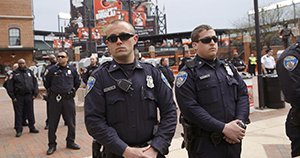
This was the second in the series From Moment to Movement: Conversations on Race in America, a collaborative partnership between 国产视频 and 聽Howard University.
鈥淏lack lives matter鈥� has become the rallying cry of the modern racial justice movement in America. But when it comes to translating that rallying cry into real change, 鈥渋n this country, black death matters more,鈥� said Professor Greg Carr, Chair of Afro-American Studies at Howard University at a recent 国产视频 event. Carr, who convened with other panelists to discuss new recommendations that emerged from the President鈥檚 Task Force on 21st Century Policing, explained that even as America has struggled to address racism as a structural problem historically, 鈥渢he only thing that moves this country to act at the federal level is the sacrifice of black folks.鈥� To make his point, he cited the Civil Rights Acts of 1964 and 1968 and the Voting Rights Act of 1965, all passed in the wake of violence鈥攖he deaths of little girls at a church in Birmingham, Selma鈥檚 鈥淏loody Sunday,鈥� and the assassination of Dr. Martin Luther King鈥攄uring a 鈥渟eason of blood.鈥�
Could these task force recommendations pave the way for a better future? Some of the panelists expressed tentative optimism, while others said they didn鈥檛 do enough. Among the most wide-ranging concerns in the discussion: since most policing happens at the local level, is it possible to identify and bridge the gaps between this federal report鈥檚 recommendations and the lived reality playing out in relationships between police officers and communities coast to coast?
鈥淚 think it鈥檚 a step鈥攊t is the beginning,鈥� said Tanya Clay House, Director of Public Policy for the Lawyers鈥� Committee for Civil Rights Under the Law. 鈥淲e are just seeing the tip of the iceberg of what needs to be done.鈥� House believes the report highlights the need for a 鈥渕ajor disruptive force鈥� to deal with implicit bias in policing and the criminal justice system 鈥渙n all levels鈥濃�攎unicipal, state, and federal.
It may deal with bias on all levels 鈥� but what about all sides? Sergeant Delroy A. Burton of the DC Metropolitan Police Department pointed out that 鈥渂ias is a two-way street鈥� between the police and citizens wary of trusting them. Bias may go both ways, objected Carr, but 鈥渋t鈥檚 one thing to have implicit bias when you don鈥檛 have a gun.鈥�
The biggest gap Burton sees between the report鈥檚 pages and real life on the streets is a 鈥渞esource problem.鈥� Of the more than 18,000 police departments in America, 鈥渕ost鈥� have fewer than 50 members (Carr cited a figure that half are 10 people or less) and therefore do not have the resources to implement the changes recommended by the task force. 鈥淭he fact of the matter is that in terms of training, professionalism, and all the things they talk about that they want the police to do, when it comes down to the actual pocketbook issue of paying for that kind of service, we balk,鈥� said Burton, who is Chairman of the DC Police Union and a Board Member of the District of Columbia Police Officers Standards and Training Board.
Carr echoed Burton鈥檚 assessment and added that the task force鈥檚 report missed critical opportunities to acknowledge recent and deep historical contexts for and patterns of racism in policing. For Carr, the gap between local and national concerns isn鈥檛 the report鈥檚 central disconnect; rather, it鈥檚 the 鈥渧ery clear evasion of the problem鈥� of the contrast between American ideals and real life. 鈥淎 generation ago it was , now it鈥檚 George Zimmerman,鈥� Carr said.
Another key problem Burton identified is that the police have become the face of political decisions made by others. Stop and frisk, for instance, was 鈥渘ot a policy instituted by the police department鈥� in New York City鈥攊t and other 鈥渂roken windows鈥� enforcement policies were 鈥渨hat the political establishment wanted鈥he people who had the power to change what was happening at Ferguson City Council and Ferguson City Hall didn鈥檛 use it,鈥� Burton observed. To take action and effect change, communities need to 鈥渆xercise their political power to shape who makes the decisions about who shapes the police department and what they want the police department to do.鈥�
In one exchange, Burton and Carr acknowledged and described the damage done when police officers and community members experience the worst of each other. 鈥淭he reality is,鈥� said Burton, 鈥淸that] I鈥檓 just dealing with the bad kids鈥攎ost kids are good.鈥� Trying to deal with social problems that 鈥渞equire interventions other than law enforcement鈥� can make police officers cynical. At the same time, Carr affirmed that the 鈥溾�� approach Burton said DC police officers are trained to use, which includes things like introducing themselves during traffic stops, did not match up with his own experience. 鈥淭he white officer who pulled me over鈥� did not introduce himself, Carr interjected. He said, 鈥淵ou got somebody to pick you up? Because you鈥檙e going to jail tonight鈥濃�攅ven before asking for Carr鈥檚 license and registration.
This problem of how to deal with a violent or racist few while serving a majority of 鈥済ood kids鈥� and officers who do protect and serve resonated with House. She agreed that while events like the deaths of Eric Garner and Tamir Rice may illustrate larger historical contexts and social problems whose impacts go beyond police departments, 鈥渨e still need have to deal with鈥� the consequences of these incidents on an individual level. 鈥淲e鈥檙e people鈥o each of us has to deal with our individual bias.鈥� For her part, House said she will soon have 鈥溾�� with her elementary-aged son, who is tall for his age, about how to interact with the police. She also participates in trainings for youth held by the National Bar Association whose 鈥渕ain message is that you need to survive that encounter [with the police]鈥hat is, unfortunately, the message that many feel has to be given right now.鈥�
Each discussant agreed on the need for robust community oversight over and better training and resource allocation for police departments. 鈥淭here can be national oversight but it has to be informed by local reality,鈥� said House. She and Burton both suggested that federal and state governments should offer incentives to localities to apply for grants that could help fund better implementation of uniform standards of conduct and training. Carr compared police officers to teachers as undervalued members of the 鈥渃ivic polity.鈥� 鈥淲e know what we value in this country by how we help people achieve a standard of excellence,鈥� he said. 鈥淧olice officers should be well trained, they should be well-educated, [and] well compensated鈥攖eachers the same way.鈥�
Towards the end of the conversation, Burton captured the mood of the discussion鈥攁 mix of consensus and principled disagreement. 鈥淐onversations like this need to take place,鈥� he said. 鈥淚鈥檝e seen a lot of demagoguery on both sides, and if we talk past one another and never listen to the other person鈥檚 perspective, we鈥檒l be back here in about a year or two when the next incident happens.鈥�
Editorial Fellow


