
Reimagining American Muslim Narratives
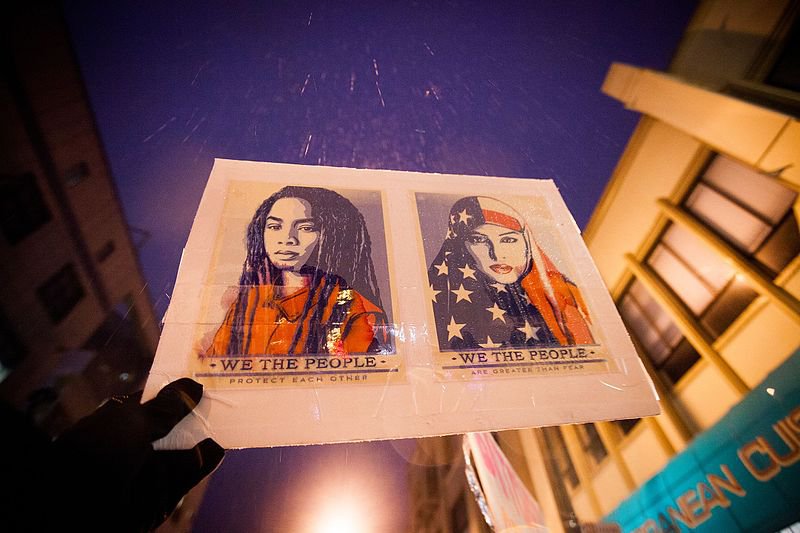
What is the American Muslim narrative鈥攂eyond what is defined through the prism of 9/11, anti-terrorism, and national security? Are there any alternative narratives with which Americans can associate when they meet a fellow American of the Muslim faith?
The answers to these questions lie in the current state of America鈥攊n the American Muslim community, in particular鈥攁nd in highlighting stories that show the community鈥檚 humanity, diversity, and values.
Recent data can give us a pulse on at least some of the prevailing sentiments regarding American Muslims. A shows that Americans view 鈥渕ore warmly鈥� the seven other religious groups鈥擩ews, Catholics, mainline Protestants, evangelical Christians, Buddhists, Hindus, and Mormons鈥攎entioned in its survey on how Americans feel toward different religious groups. These sentiments are also reflected in the American Muslim experience, especially 聽in the aftermath of last year鈥檚 heightened campaign rhetoric that only reinforced the 鈥淢uslim equals threat or terrorist鈥� trope. Indeed, another new survey, this one by the (ISPU), shows that the 鈥渕ajority (60 percent) of American Muslims [have reported] some level of religious discrimination鈥� in the last year. And the FBI reported similarly disheartening figures: a 67 percent surge in anti-Muslim hate crimes from 2015 to 2016.
What is particularly alarming is that each of these recorded incidents and inferred sentiments is a narrative that entrenches the 9/11 or national security frame that all too often straightjackets American Muslims. American Muslim community leaders, organizations, activists, and scholars are most often reacting to anti-Muslim sentiments and actions. The term 鈥淚slamophobia,鈥� for example, now has currency in US mainstream media and policy circles. But while there is more awareness that American Muslims face discrimination because of their faith, this reactionary positioning of American Muslims also reinforces the notion that Muslims are to be feared.
In his book on framing in politics, Don鈥檛 Think of an Elephant, cognitive scientist and linguist George Lakoff not only argues that 鈥渘egating a frame鈥� 鈥渁ctivates鈥� rather than diminishes that frame, but he also highlights that the 鈥渕ore it is activated, the stronger it gets.鈥� He defines a frame as an idea or a mental structure that forms the way we see and comprehend our surroundings, rather than a mere slogan or sound bite.
Applying Lakoff鈥檚 reasoning to the American Muslim context today calls for a more proactive approach to addressing the rise of prejudice against the American Muslim community and, more specifically, to countering the national security narrative framed around American Muslims.
This isn鈥檛 to suggest that incidents of prejudice and discrimination against American Muslims shouldn鈥檛 be condemned or resisted. 鈥淲hen you are dealing with xenophobia of any kind, you are most likely going to react to incidents of bigotry as they occur,鈥� argues Arsalan Iftikhar, author of Scapegoats: How Islamophobia Helps Our Enemies & Threatens Our Freedoms. These efforts are also important if we want to safeguard the rights of American Muslims as citizens and uphold the values of American democracy. However, Ifitkhar adds, to 鈥減roactively combat Islamophobia,鈥� American Muslims 鈥渘eed to highlight human interest stories鈥� and therefore create alternative narratives that reflect their diversity and contribution to America.
So how can we reimagine these narratives?
In Lakoff鈥檚 world, producing alternative narratives is a matter of reframing, which he describes as 鈥渟ocial change,鈥� that requires time, strategy, and commitment. Akin to any process of social change, reframing is driven by values and by not cosmetic tokenism or sniffy sound bites that only capture facts and figures about the community; Muslim Americans need to communicate their values in order to be better understood.
This is where personal storytelling comes into play. Storytelling has, historically, been an effective means to shape identity and to build community. Personal stories are vessels carrying our experiences鈥攅motional and physical鈥攁s well as the values shaped by these experiences. Once these personal stories are shared with others across diverse communities, these human experience and values form what Harvard University Professor and community organizing expert Marshal Ganz calls 鈥渁n empathetic bridge,鈥� one that helps to connect people together despite their differences.
By generating and sharing their own personal stories, American Muslims will not only own their own narrative, but also shape the frame that has been created and repeated continuously by others post-9/11. What do I mean? For example, there is certainly a positive narrative that can be produced about American Muslim contributions to the economy and society. As Iftikhar notes, 鈥渕ost Americans don鈥檛 know that even though Muslims represent 1 percent of the American population, [they] represent 10 percent of doctors across the United States.鈥� In addition to repeating this statistic on the airwaves, personal stories of American Muslim doctors and their valuable work in their locales would 鈥渉umanize鈥� the American Muslim community and, as Iftikhar argues, 鈥渓essen the impact of Islamophobia at the local grassroots level.鈥�
Such proactive engagement requires courage鈥攚hich is particularly challenging in our current politically polarized environment. ISPU鈥檚 survey shows that American Muslims are 鈥渁mong the most likely to negatively react to the electoral outcome,鈥� with 18 percent making 鈥減lans to leave the country 鈥榠f it becomes necessary.鈥欌��
However, there鈥檚 also hope in the initial response of the American Muslim community to the post-election political reality. The same survey shows American Muslims increasing their donations to their faith-based community organizations and volunteering for the first time in civic organizations. These are certainly positive indicators about a new shift in a community that has been 鈥渧ery insular in the United States,鈥� according to Joseph Lumbard, Professor the Arabic and Translation Studies Department of the American University of Sharjah.
鈥淭o change the narrative Muslims need to continue the process of being engaged,鈥� Lumbard says, emphatically. Additionally, this engagement must include a clearly defined reframing strategy with personal storytelling at the heart of it in order to introduce new narratives about the American Muslim community, illustrating their humanity, their diversity, and their values through mediums that are not solely built into the national security or terrorism paradigm.
As Ganz notes, a social movement tells a new 鈥渟tory.鈥� And it鈥檚 within these new stories鈥攚here American Muslims continue active civic engagement鈥攖hat hope ultimately lies.
More 国产视频 the Authors
Related

Children Belong in School Learning, Not Left to Languish in ICE Detention

A National Review of Early Childhood Cost Models: Findings on Children with Disabilities and Developmental Delays

Gender Equity in High-Quality Youth Apprenticeship: A Deeper Dive into the PAYA Data
