
A Return to Common Conservation Ground
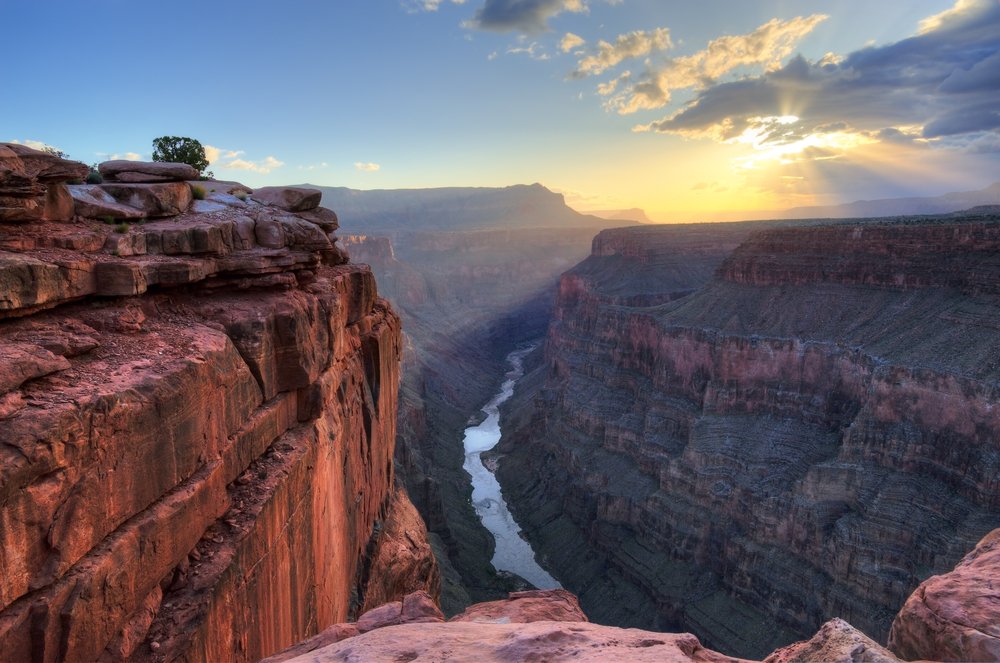
鈥淟eave it as it is. You cannot improve on it. The ages have been at work on it, and man can only mar it.鈥� 聽So聽a Republican president about a timeless symbol of America.
The president was Theodore Roosevelt, and the symbol in question was the Grand Canyon. But he was hardly alone in espousing what is now taken to be a hyper-liberal view. Congress signed the Antiquities Act in 1906. Since then, every president has had the power to declare landmarks of historical or scientific interest to become 鈥淣ational Monuments.鈥� And, since then, every president, save three, has used this power to conserve land and water across the United States, creating a foundation for our National Parks system. In 110 years across political rivalries, economic recessions, war, and peace, the majority of presidents from both parties have determined that conservation efforts should persist. This determination has created a natural American identity: The depths and red gradients of the Grand Canyon, the snow-topped peaks of Mount Rainier, and the super-sized behemoth trees of the Redwood Forest are entrenched into the public imagination of what the United States is. And in public activity, too: the parks received 307 million recreational visitors in 2015聽.
But, thanks to that other nature鈥攈uman nature, and its tendency to turn consent into contestthe century-old bipartisan consensus is becoming less popular among one side of the political spectrum.
When the presidents first started proclaiming National Monuments, they did so for reasons of human history, education, scientific exploration, and even recreation. They remained starkly silent on wildlife or ecosystems, only occasionally mentioning their beauty to be beholden for the 鈥渆nrichment of the human spirit鈥�, as Harry Truman聽it. But this began to change with the environmental movement of the 1960s and 70s. 聽Still, however, conservation was understood as a bipartisan, long term good. The first president to speak of conservation for environmental purposes was聽, a Republican, who expanded the Buck Island Reef National Monument 鈥渢o insure the proper care and management of the shoals, rocks, undersea coral reef formations.鈥� Thereafter each president expanded his arguments to elevate the status of nature to coincide with human gain as a rationale for National Monuments proclaiming it appears to be in the 鈥減ublic interest鈥� to protect these fragile, threatened, or rare ecosystems. Even our most recent Republican president, George W. Bush, continued this trend by protecting聽vital marine ecosystems (one of which was聽聽than Yosemite National Park). In each聽, he went into great detail in describing the unique ecosystems and the importance of their protection, sometimes hardly even mentioning the human advantages. 聽Despite these gains, the all-encompassing political divide has begun encroaching on the long, bipartisan history of presidents and National Parks. This is evidenced by the only three presidents who have not created National Monuments: Richard Nixon, Ronald Reagan, and George H.W. Bush, all Republicans still looming large in the modern Republican identity.
Their inaction, however, does not mean they were opposed to conservation efforts.聽The聽Republican platform聽from this year鈥檚 convention, on the other hand, called for amending the Antiquities Act to seek Congressional approval before a national monument can be established, which is essentially a call to slow down one of the few conservation tactics that is quick, and long-lasting. The platform also calls for 聽turning the National Parks over to state and local control and to allow 鈥渁ppropriate activities like hunting, fishing, and recreational shooting鈥� within the public parks. The early presidents may have created National Monuments for human reasons such as history, education or innocent recreation, but never has a president thought to use the parks for the gain of humans at the behest of the nature.
Conservation has been, and should be a common ground for Democrats and Republicans alike. We are at a point of peak polarization, and that invites parties to create politics where there were none. But so, too, are we at a point in history where environmental challenges are growing more complex and we therefore need to use the few instances of bipartisan environmental action as a model for future action instead of uprooting the foundations we have already laid. 鈥淧reservation of our environment is not a partisan challenge; it’s common sense.鈥� So聽a Republican president, Ronald Reagan, about a timeless notion. It鈥檚 time now for America to remember that.聽
More 国产视频 the Authors
Related

Engagement in a Civic Education Desert

Built to Last: How Leaders Are Creating Sustainable Early Childhood Funding

Pre-K Is Having a Curriculum Moment. A Professional Learning Movement Needs To Follow.
