
Ryan Budget Brings Little New to the Table
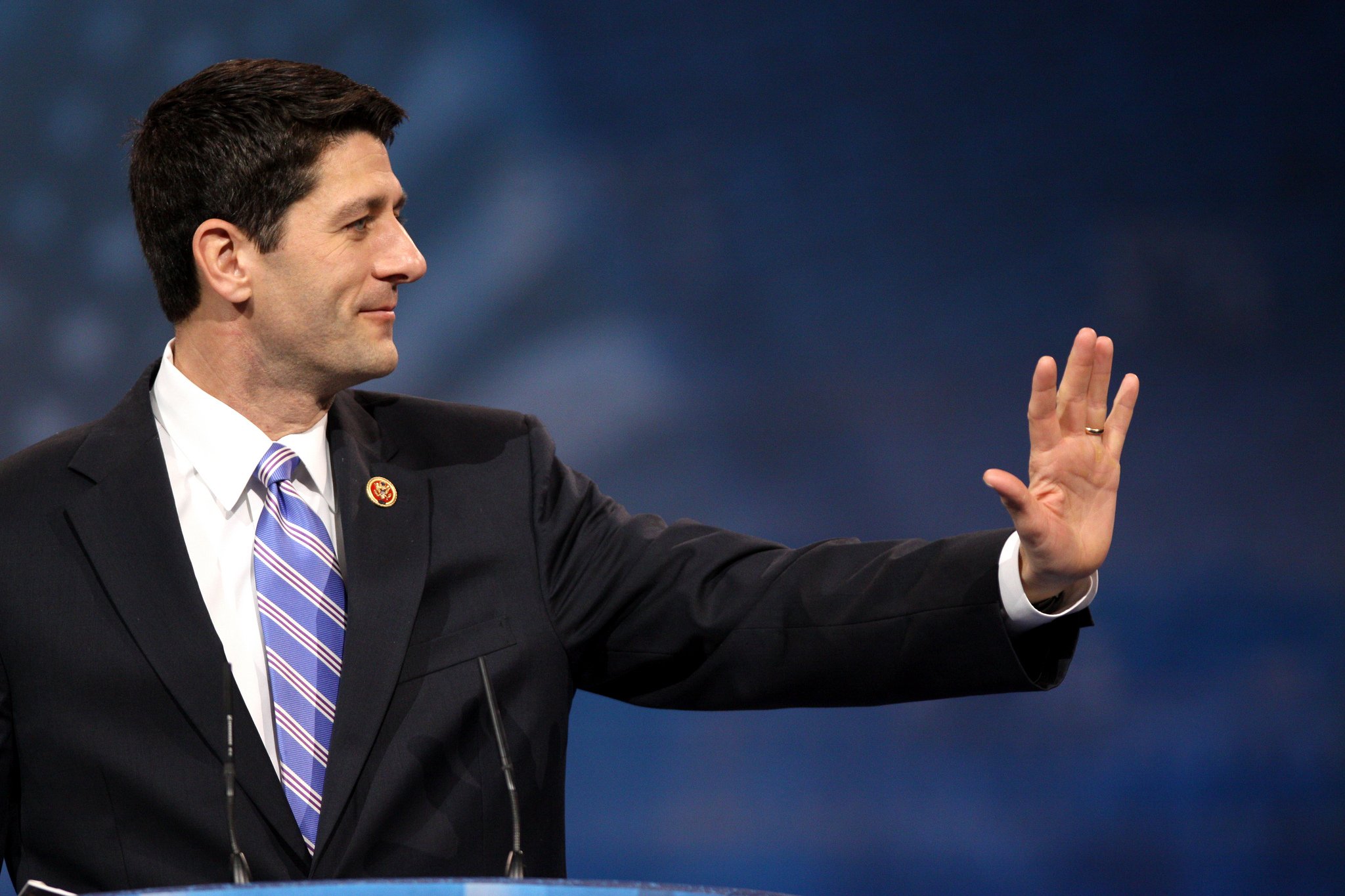
Rep. Paul Ryan (R-WI), chair of the House Budget Committee, this morning released his own . The budget, if the House adopts it, would serve as that chamber鈥檚 2015 budget resolution, establishing spending and revenue targets for the upcoming fiscal years. (The Senate has not to pass a budget resolution, so even if the House version passes, there will be no joint fiscal year 2015 resolution.)
There are few differences between Ryan鈥檚 proposed 2015 budget and , at least in terms of education policy. But there is one point worth noting: The Ryan budget abides by the overall discretionary spending targets he negotiated with Senate Budget Committee chair Patty Murray (D-WA) last year, passed into law through the Bipartisan Budget Act of 2013. That鈥檚 no surprise, given how involved Ryan was in creating the targets, but it does mean spending under his plan is well above the targets originally set by the Budget Control Act of 2011. And it means the Senate, which plans to use the Bipartisan Budget Act limits as well, will be exactly aligned with the House in terms of overall spending targets.
In fact, Ryan鈥檚 budget even complies with the defense/non-defense breakdown of spending agreed to in the Bipartisan Budget Act 鈥撀爄n its first year, at least. Later years make significant cuts to non-defense spending and restore much of that funding to the defense budget. But Ryan鈥檚 commitment to sticking with those caps, even for just one year, could make the politics of passing appropriations bills in fiscal year 2015 simpler than it has been in recent years.
That doesn鈥檛 mean education programs are entirely in the clear. Because the Ryan budget proposal seeks to balance the budget over its 10-year spread, and sacrifices non-defense spending in later years in favor of defense spending, some education programs would see cuts. (Though it should be noted that, even if the House passes this bill, its provisions would have to become law separately through appropriations bills or other legislation also signed into law.)
Ryan鈥檚 commitment to sticking with the spending caps, even for just one year, could make the politics of passing appropriations bills simpler.
Most of the education provisions in the 2015 budget proposal also made it into Ryan鈥檚 2014 budget 鈥撀燼nd in some cases, seem to be cut-and-pasted from last year鈥檚 version. Ryan would consolidate more than 50 workforce and training programs and a number of K-12 programs to eliminate bureaucracy and avoid duplication of federal efforts. He would “encourage innovation” in fields like online education and give renewed consideration to available to students.
Whereas last year, he proposed maintaining the then-maximum Pell Grant of $5,645 for the full 10-year budget window, this year he proposes maintaining the 2013-14 maximum award of $5,730. In both years, he proposed rolling back reforms that made Pell Grants available to more people (for example, resetting the family income at which families鈥� expected contribution is automatically zero). And as in prior proposals, Ryan鈥檚 budget notes additional changes that could be made to reduce the costs of the Pell Grant program, including a maximum income cap and making the awards unavailable to students who attend college less than half-time.
But changes to the Pell Grant program aren鈥檛 the hot topic they used to be. Given that the Pell Grant program is actually in 2015, it鈥檚 unlikely Congress will spend much time pecking around its edges, so those proposed reforms probably won鈥檛 see much action in Congress this year. Moreover, these reforms aren鈥檛 necessarily that significant. Depending on the level at which he set the income line, the Congressional Budget Office it could save about $700 million over 10 years 鈥撀燼 relative pittance in a $35-billion annual program. The elimination of less-than-half-time student awards, CBO , would save about $300 million over 10 years; again, that鈥檚 relatively little given the size of the program.
Ryan also proposes changes to the Return of Title IV Funds requirement 鈥撀爄ncluding requiring students to attend classes for longer before being eligible to withdraw from school without debt owed. That, he says, will make it more likely students finish school 鈥撀燼nd less likely the program will be used for fraud. And he would eliminate the administrative fees schools receive under the , although he doesn鈥檛 propose any changes to the widely derided funding structure of those programs.
On the student loan side, Ryan would also make a few changes to the student loan program. He would the interest-free benefit for undergraduates, whereby students with Subsidized Stafford loans don鈥檛 begin accruing interest on those loans until they leave school. And he notes, as on many occasions, that income-based repayment (IBR) in its current form may overly benefit graduate and professional students. Instead, he says, IBR should be repealed and reformed to better target its benefits before expanding it.
Finally, one of the most significant鈥揳lbeit least understood鈥搑eforms would restructure the way the government calculates the costs of the loan program altogether. Currently, the cost calculation excludes an added cost for the 鈥渕arket risk鈥� of lending to borrowers. Also included in last year鈥檚 proposal, Ryan notes that the House Budget Committee has already passed a bill to switch to 鈥溾�� 鈥撀爊ot just for student loans, but for federal housing and other government lending programs, as well.
More 国产视频 the Authors
Issues
Related

Don鈥檛 START Now

Room to Grow: Expanding Access to Early Education by Rethinking Physical Space

Cosmetology Students Deserve Better Than Debt and Broken Promises
