
Sarah McBride: ‘Even If We No Longer Have a Friend in the White House, We Can Still Open Hearts and Change Minds’
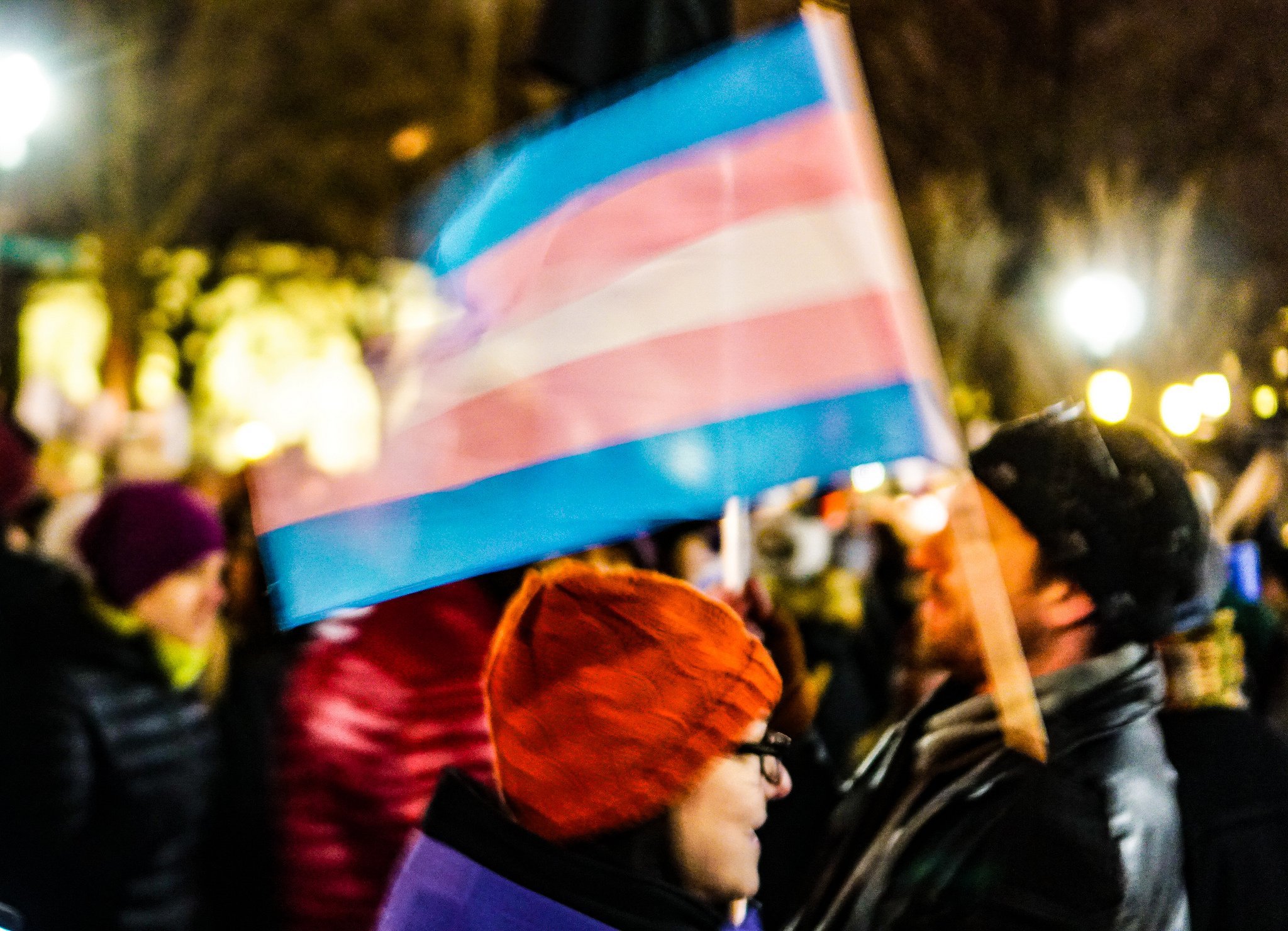
2016 was a banner year for transgender visibility. On the final night of the Democratic National Convention, before Hillary Clinton spoke about becoming the first female presidential nominee to address a major party convention, another woman made history on that stage: then-25-year-old Sarah McBride became the first openly transgender person to speak at a national party convention.
鈥淢y name is Sarah McBride, and I am a proud transgender American,鈥� she said. 鈥淭oday in America, LGBTQ people are targeted by hate that lives in both laws and hearts.鈥� Part of what has made McBride, who came out as transgender several years ago while she was the student body president at American University, such an indelible part of conversations about equality in the almost year since she spoke at the DNC is her ability to reflect personal lives. Her work hinges on narratives peopled by, well, people鈥攖ransgender people鈥攁nd she adds nuance, texture, and, ultimately, knowability to lives that are all too often seen, and maligned, as otherworldly.
I sat down with McBride to talk about the unique challenges facing the transgender community, her work as the National Press Secretary of the Human Rights Campaign, and what lies ahead for progressives looking to push back against an administration actively unraveling the gains of transgender people over the last decade. A lightly edited transcript of our conversation is below.
When you spoke at the Democratic National Convention last year, you became the first transgender person to speak at a national party convention. Could you explain why this was such a crucial moment not only for you, but also for the whole country?
The convention was an incredibly powerful moment for me. The reality is that, for so long, transgender people have been invisible within larger political debates. Growing up, the only instances where I saw myself or people like me portrayed on, for instance, television were either as a punchline in a comedy or as a body in a drama. So to be able to stand on that stage in front of an arena full of people on national television and to declare that I am a proud transgender American was an incredible experience to be a part of, certainly on a personal level.
But also, I hope that moment provided hope and comfort and security to transgender people across this country who are wondering whether the heart of this country is big enough to love them, too. I hope it showed young transgender people鈥攚hether in Delaware or in Kansas or in California鈥攖hat they can grow up and pursue their dreams, and that they鈥檙e going to have millions of people who see them and who love them and who are fighting with and for them.
I think 迟丑补迟鈥檚 what the experience of the convention exemplified, and I hope it鈥檚 just one part of a larger move toward transgender people鈥檚 being seen by and visible to American society.
Do you have stories about how your experiences have changed over the past year?
There鈥檚 been a shift toward more transgender people coming out and changing workplaces and schools across the country鈥攂ecause we know that when you know people鈥檚 stories, it becomes much harder to discriminate against them. When you know someone who鈥檚 transgender and you鈥檙e exposed to his or her story or life, whether in person or not, that knowledge and that familiarity can create an incredibly powerful ally among so many cisgender folks.
And you know, for me, too, the most powerful experiences I鈥檝e had since the convention have been going around and meeting the families of young transgender people and hearing about their journeys and, in some instances, finding out that my experience on that stage meant something to that young person or that family. For instance, I was in Maryland the other day and the mother of a young transgender boy told me that it was the night of my speech that her son came out to her as transgender. They were watching the convention on the couch in their living room and the mother, who had sort of suspected that maybe her child is transgender, after I spoke turned to her child and said, 鈥淒o you see that? A transgender person spoke at the convention. You can be transgender and pursue your dreams鈥攁nd reach them.鈥� And she added: 鈥淒o you have anything you want to tell me?鈥� And her son said, 鈥淵es: I鈥檓 a boy.鈥� That began their family鈥檚 journey to embracing their child and allowing their child to live openly鈥攁nd authentically.
I鈥檝e had a few moments like that since last year that have shown me that identities and dreams don鈥檛 have to be mutually exclusive. That gives me the fuel I need to keep working.
Still, the landscape for transgender folks鈥攅specially for transgender women of color鈥攕eems bleak. And with the likes of Attorney General Jeff Sessions and Health and Human Services Secretary Tom Price leading key parts of Donald 国产视频 administration, we can鈥檛 really look to our political top brass for help. What are some of the biggest challenges facing the transgender community?
There鈥檚 no question that we鈥檝e seen some progress鈥攖here鈥檚 no question that we鈥檝e seen increased visibility. But the reality for so many transgender people is still one of discrimination, fear, and, very often, even violence. It鈥檚 a reminder that our progress isn鈥檛 always linear. At the same time as we鈥檙e seeing increased visibility of transgender folks, we鈥檙e also seeing, in many cases, more transgender people facing discrimination. Most notoriously, in February, President Donald Trump overturned former President Barack Obama鈥檚 Title IX guidance, which steered schools to protect transgender students鈥� right to access facilities that match their gender identities. This made clear that the Justice Department has no interest in protecting their rights [according to a 1972 civil rights law]. We鈥檙e also seeing a large package of anti-equality bills being introduced in state legislatures all across the country [last month, the Human Rights Campaign was more than 100 bills in 29 states it considered anti-LGBTQ]. Another challenge is being more inclusive, particularly of transgender women of color, when we talk about transphobia.
And the challenges go beyond the more blatant examples of being fired from a job or being denied housing, though these are common experiences. There are also smaller daily indignities: the fact that more than two-thirds of transgender people report some sort of mistreatment in health care settings, ranging from a physician denying them care outright, to a provider refusing to touch them, to being blamed for whatever medical condition they come in with.
So there鈥檚 no question that we have significant work ahead, that transgender people still face significant discrimination in the workplace, housing, and public spaces, that transgender people experience violence sometimes merely for walking down the street as the person they are. All too often, that violence is fatal. Visibility is important, but it鈥檚 a tool to create full dignity and equality for transgender people. It isn鈥檛 an end in itself.
Picking up that thread of visibility as a tool, could you tell me a bit about the work you鈥檙e doing to build on previous moves toward equality, as well as to resist rollbacks?
For eight years, we had an ally in the White House like we鈥檝e never had before. Obama and his administration pushed equality forward in ways that, I think, defied expectations and brought real, tangible change for people of different backgrounds within the LGBTQ community. And in Trump and Mike Pence, we have a president and a vice president who are hostile to the dignity and equality of LGBTQ people. Within a matter of a few weeks of taking office, the Trump administration took direct aim at the rights of transgender students when it rescinded life-saving guidance upholding the safety of transgender young people in our nation鈥檚 schools. And we鈥檝e seen the appointment, repeatedly, of individuals with a long record of discrimination. For instance, Mark Green, who鈥檚 championed anti-LGBTQ discrimination within the Tennessee state legislature, has been nominated to succeed Eric Fanning, an openly gay army secretary.
So this is an administration that presents a lot of challenges for our community. But we鈥檙e still resolved to rise up and defend the progress of the last eight years, as well as move equality forward in workplaces, hospitals, and homes across the country. The reality remains that even if we no longer have a friend in the White House, we can still open hearts and change minds. We can still push forward within the courts, and we can still move non-discrimination protections and equality legislation forward in city halls and state legislatures鈥攁nd 迟丑补迟鈥檚 what we鈥檒l continue to do. It鈥檚 also important to note that when we鈥檙e talking about defending dignity and progress, we鈥檙e not just talking about it in terms of sexual orientation and gender identity-explicit issues. We鈥檙e also talking about pushing back against all hate emanating from the White House, because LGBTQ people are women and Muslim and people of color and people with disabilities and immigrants and all combinations of these and more. And when Trump and his administration attack any one of us, they鈥檙e attacking all of us.
More 国产视频 the Authors
Related

Children Belong in School Learning, Not Left to Languish in ICE Detention

A National Review of Early Childhood Cost Models: Findings on Children with Disabilities and Developmental Delays

Gender Equity in High-Quality Youth Apprenticeship: A Deeper Dive into the PAYA Data
