
Aaron Loewenberg
Senior Policy Analyst, Early & Elementary Education
The first post of a multi-part blog series
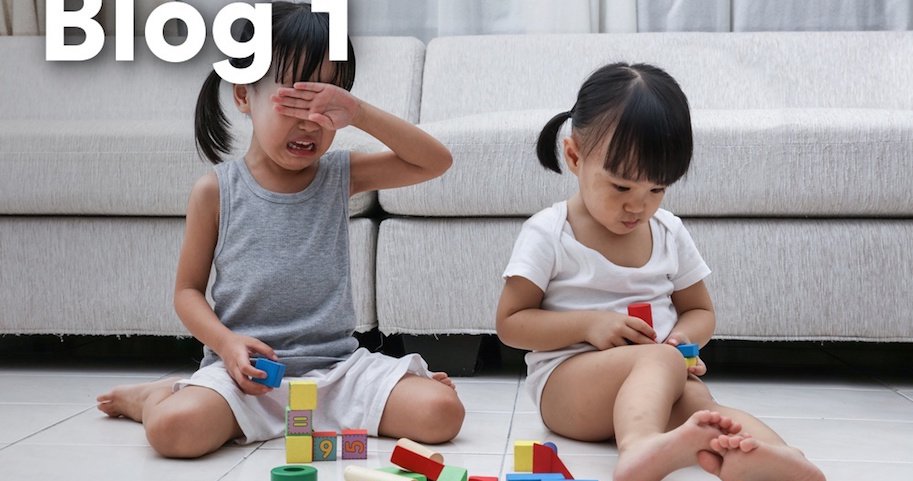

A few weeks into my first school year as a pre-K teacher* I had an important realization: While much of class time was spent engaging in center-based activities that helped grow students鈥� early skills in math and literacy, perhaps the most important lessons I would teach all year were focused on things like learning how to share and take turns, how to make friends when surrounded by unfamiliar people, and how to resolve conflict peacefully. I distinctly remember observing a three-year-old boy push the student in front of him while they lined up to go outside. When I asked the boy why he had pushed another student, he calmly explained his logic: 鈥淚 wanted to go outside and he wasn鈥檛 moving fast enough.鈥�
Social-emotional learning (SEL) has been in the news a lot lately, and this recent surge of news about SEL has come with a good deal of misinformation. In this blog series, we鈥檒l attempt to set the record straight on SEL by exploring the benefits and importance of SEL for young children, highlighting its recent politicization, and understanding what polling tells us about the best way to communicate with parents about the topic.
What is SEL?
If you had to put a technical label on it, that lesson about not pushing other students and subsequent lessons about getting along with peers, managing strong emotions, and developing friendships are all a part of what is called 鈥渟ocial-emotional learning (SEL).鈥� According to the , SEL 鈥渞efers to a wide range of skills, attitudes, and behaviors that can affect student success in school and life,鈥� such as critical thinking, emotion management, conflict resolution, decision making, and teamwork.
Social-emotional learning (also known as life skills, whole child development, soft skills, character education, self-regulation, and a myriad ) is a fundamental component of healthy development for young children. While not as well known as the core education topics of literacy and math, social-emotional skills are also skills that must be taught. It is especially important in early learning settings, as pre-K or kindergarten are many children鈥檚 first encounters with formal education settings.
Early childhood is an important developmental period where developing these skills can have an impact in multiple areas . Young children who learn to understand and manage their emotions, develop healthy interpersonal relationships, and practice social problem solving have increased success in and life. These skills by and reducing negative social behaviors like . Strong social-emotional skills in early childhood also predict in the areas of mental health, financial stability, civic engagement, substance use, and interactions with the carceral system. Social-emotional skills are malleable and teachable, meaning they shift and change as children are exposed to new experiences and environments, such as classrooms.
The current controversy over SEL
While the topic of social-emotional learning is relatively commonplace in America鈥檚 schools, recently it has generated considerable controversy among some conservative parent groups. For example, Minnesota鈥檚 Child Protection League 鈥渢he latest child-indoctrination scheme鈥� and linked SEL to critical race theory. Parents Defending Education, a prominent conservative parent group, has gone so far as to include several SEL examples in their which purports to illustrate places where activists are imposing a harmful agenda onto children. Conservative media is chock full of articles , such as critical race theory. Recently, education leaders in Louisiana looking to adopt new early learning standards due to the inclusion of social-emotional topics in the standards. And a bill introduced in the Oklahoma Legislature public schools from using state, federal, or private funds to purchase or implement any sort of SEL curriculum.
How widespread is SEL?
According to , 81 percent of principals and 60 percent of teachers in elementary schools across the country reported that their schools implemented an SEL program during the 2021-22 school year. Some schools might pay for a specific social-emotional curriculum to use in their classrooms, such as the I used when teaching pre-K and kindergarten. Other schools might teach social-emotional concepts in an informal manner that is embedded in lessons throughout the day.
What鈥檚 clear is that schools seem to be increasingly realizing the importance of SEL, in large part due to impacts from the pandemic. Total district and school spending on SEL between November 2019 and April 2021, rising from a total of $530 million to $765 million. And, according to, about a third of districts plan to spend some of their federal COVID relief funds on SEL for things like curricula, classroom materials, and training.
The recent backlash to SEL comes as a surprise to many teachers and other education professionals who view the core principles behind SEL as central to helping students succeed both in school and life. After all, it would seem that if there鈥檚 one thing both political parties could agree on it鈥檚 that students, especially young students, need to learn basic lessons about managing their emotions, feeling empathy for others, and making responsible decisions.
So what do parents think about their children developing these skills in the classroom? In the next post in this blog series, we鈥檒l talk with of to learn more about a recent nationally representative poll of 2,000 parents that helps to illuminate parental views on SEL and how to more effectively communicate about SEL topics.
* Author Aaron Loewenberg was a pre-K teacher in Washington, D.C.
Enjoy what you read? Subscribe to our newsletter to receive updates on what鈥檚 new in Education Policy!
Senior Policy Analyst, Early & Elementary Education
Policy Analyst, Early & Elementary Education


