
The Shell Game of Self-Reflection
Just after my freshman year of college, I was sexually assaulted on the Washington, D.C., metro en route to a summer internship. I remember most of the details: I was wearing a knee-length khaki skirt, and a man standing behind me reached under my skirt and pushed his fingers into my vagina as I was exiting the train.
I froze, then kept walking. A woman came up to me and said, 鈥淚 saw that. Are you OK?鈥� I told her that I was fine. She asked, 鈥淒o you want to report him to the police? I鈥檒l go with you.鈥� I looked back to see if he was following me. He stayed on the train, but he was pacing back and forth in the car, watching me, waiting to see if I鈥檇 do anything. He was about twice my size, wore an oversized black T-shirt, and his face was menacing. 鈥淭hat鈥檚 OK,鈥� I told her. 鈥淚鈥檓 fine.鈥� I don鈥檛 recall telling anyone, but if I did, it was probably in a joking, cool-girl way鈥攑retending to be too seasoned to be bothered by a handsy creep. Still, I avoided that metro stop for the rest of the summer, opting instead to walk from a stop farther away and arrive to work sweaty.
That wasn鈥檛 the only time I鈥檝e been sexually assaulted. But it feels like the only one I can talk about, because the man involved is now a vague, hazy monster in my mind鈥攏ot a former boyfriend, not a friend of a friend, not someone I can name.
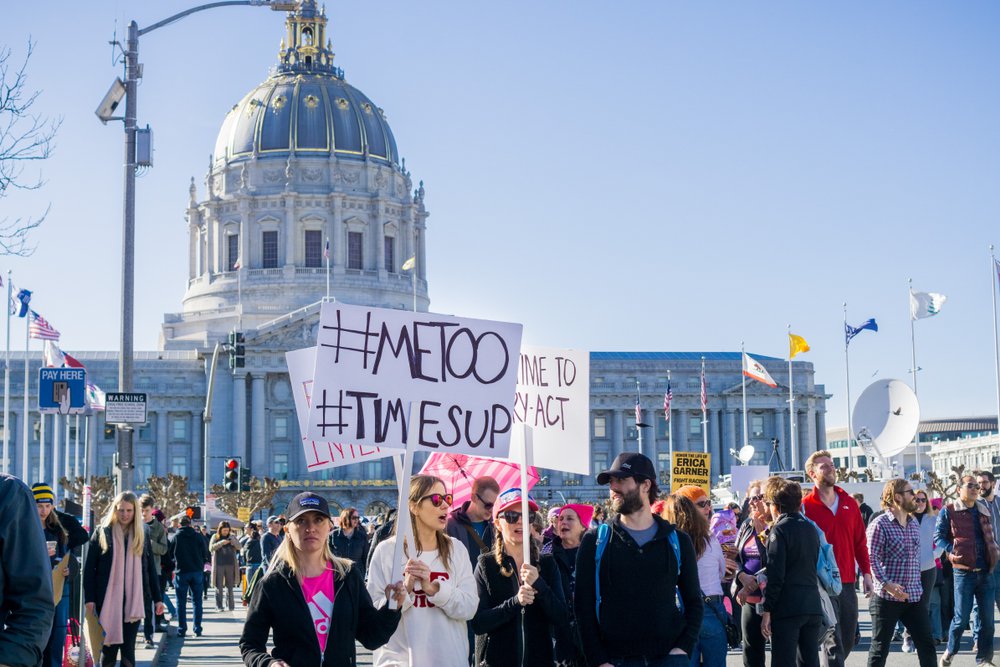
鈥淚鈥檓 a victim of sexual assault,鈥� Kellyanne Conway, a counselor to President Donald Trump, expressing her empathy for Christine Blasey Ford, who in a testimony to the Senate Judiciary Committee last week described an alleged assault by Supreme Court nominee Brett Kavanaugh. But Conway added: 鈥淚 don鈥檛 expect Judge Kavanaugh or Jake Tapper or Jeff Flake or anybody to be held responsible for that.鈥� Her sentiment conveys something I鈥檝e noticed more broadly around #MeToo: that the many stories of assault are often abstracted from the fact that there was a perpetrator. Some high-level abusers have been named and held accountable, yes, but a key element of #MeToo has been sharing these stories that nearly every woman has鈥攕o where are all the assaulters?
Most remain unnamed figures. This isn鈥檛 the fault of those telling the stories, who have reason鈥攕afety, for instance鈥攖o keep their memories anonymous. Rather, it doesn鈥檛 seem that alleged abusers, most of whom are men, are offering accountability of their own volition. Even the men I know who鈥檝e spoken up about #MeToo have offered solidarity but little self-reflection. Which makes me wonder: How can our culture ever truly change if people don鈥檛 acknowledge their role鈥攐r their complicity鈥攊n violence?
I often travel internationally for work, and thinking through the ways in which my identities and privilege play out is essential to what I do. More specifically, I can鈥檛 work in another country in support of women鈥檚 rights and not consider how the perspective I bring results largely from things like my gender, race, nationality, and financial situation. Or I could, but then I鈥檇 be bad at my job. And still, I know that I have lots of work to do: I can go deeper, interrogate myself more rigorously. It鈥檚 difficult but necessary work to disentangle our prejudices from our practice.
Maybe that鈥檚 why I find it so strange that, a year into #MeToo, there鈥檚 been no explicit wave of self-reflection among alleged abusers鈥攏o active seeking, on their part, to right wrongs. I haven鈥檛 seen it privately鈥攆rom the men I鈥檝e witnessed be abusive towards women鈥攐r publicly. Indeed, it seems as though the few who have grappled with their misconduct have been forced to do so, usually as a result of their celebrity status or an intense media investigation. It鈥檚 like #MeToo stories exist only passively, offering some solace and solidarity but soliciting nothing in return.
This point has come into greater focus in light of many Senate Republicans鈥� reactions to Kavanaugh鈥檚 testimony. Somehow, Ford鈥檚 story of sexual assault has been detached from her alleged assaulter: During her hearing, Senate Republicans her on all counts except one鈥攖hat her named abuser was there. Instead, they suggested that the man who was in the room with her that night, in the 1980s, was a hazy monster, someone and the single beer she reportedly drank that night.
Like , I鈥檓 distraught over how Kavanaugh鈥檚 alleged abuse has been managed by the Senate. I鈥檝e been angry about鈥攁nd in fear of鈥攕exual assault for most of my life, and these feelings have shaped me: They鈥檝e affected my relationships with men, my experiences in the world, my sense of self. Yet in the past year, even with all its bracing openness, I鈥檝e been plagued by questions: What鈥檚 a reckoning with the participation of only one side? Have abusers, broadly, become more aware of the consequences of entitlement鈥攐f how it can ? Kavanaugh鈥檚 testimony, , suggests not.
Instead of thoughtful self-reflection, people in a position to abuse their power have become . That, to me, signals that those who might be held responsible for their behavior aren鈥檛 interested in changing it. They鈥檙e just gripping the edge of their seats.
In the consciousness-raising feminist movement of the 鈥�60s and 鈥�70s, women would huddle together and talk about how they were being oppressed. This communal experience was important because it helped women understand the methods and means of their own marginalization, and that helped to usher in an important cultural shift.
Historically, men have dealt much less intentionally with the ways in which gender has shaped their behavior, choices, agency, and power鈥攏ot unlike how white people have grappled much less meaningfully with how race has helped determine their place in society. And yet, in both cases, this examination is imperative鈥攁nd long overdue.
So, here we are once again: The cultural burden for addressing sexual assault has . Watching Ford鈥檚 testimony felt to me, as I imagine it did for many women, like ripping open an old wound. I鈥檝e thought back to that man on the metro, and how afterward I threw out that skirt and couldn鈥檛 sleep alone for years. So many women are re-traumatizing themselves for the sake of changing the way we, as a society, think about sexual misconduct and violence.
Crucially, I don鈥檛 want to crowd public discourse with the voices of alleged abusers, when survivors who were once silenced finally have a platform. (In my own work, I鈥檝e seen that engaging men in the process of transforming gender norms can be attended by risks, because power has a way of feeding itself.) Instead, I want sexual assault to stop. And I want people who鈥檝e had privilege bestowed on them purely because of constructed gender identities to reckon with themselves. I want them to understand why so many other people are angry, and to think about the times they may have heard someone brag about sexual conquests in the locker room but said nothing. I want them to think about the times they may have been silent when they could鈥檝e spoken up. I want them to think about the times they may have doubted someone who shared a story of assault.
And then, next time, I want them to act differently, to do the work, in whatever form that work takes, to fuel change. I want them to demand their own accountability鈥攏ot rely on others to demand that accountability from them.
More 国产视频 the Authors
Related

Disability in the United States at 250

From 鈥楻isky Business鈥� to 鈥楳ission: Possible鈥�: Why ECE Learning Cohorts Work
State Education Budgets in Turbulent Times
