
Louisiana Faces Worst Fiscal Crisis in 30 Years
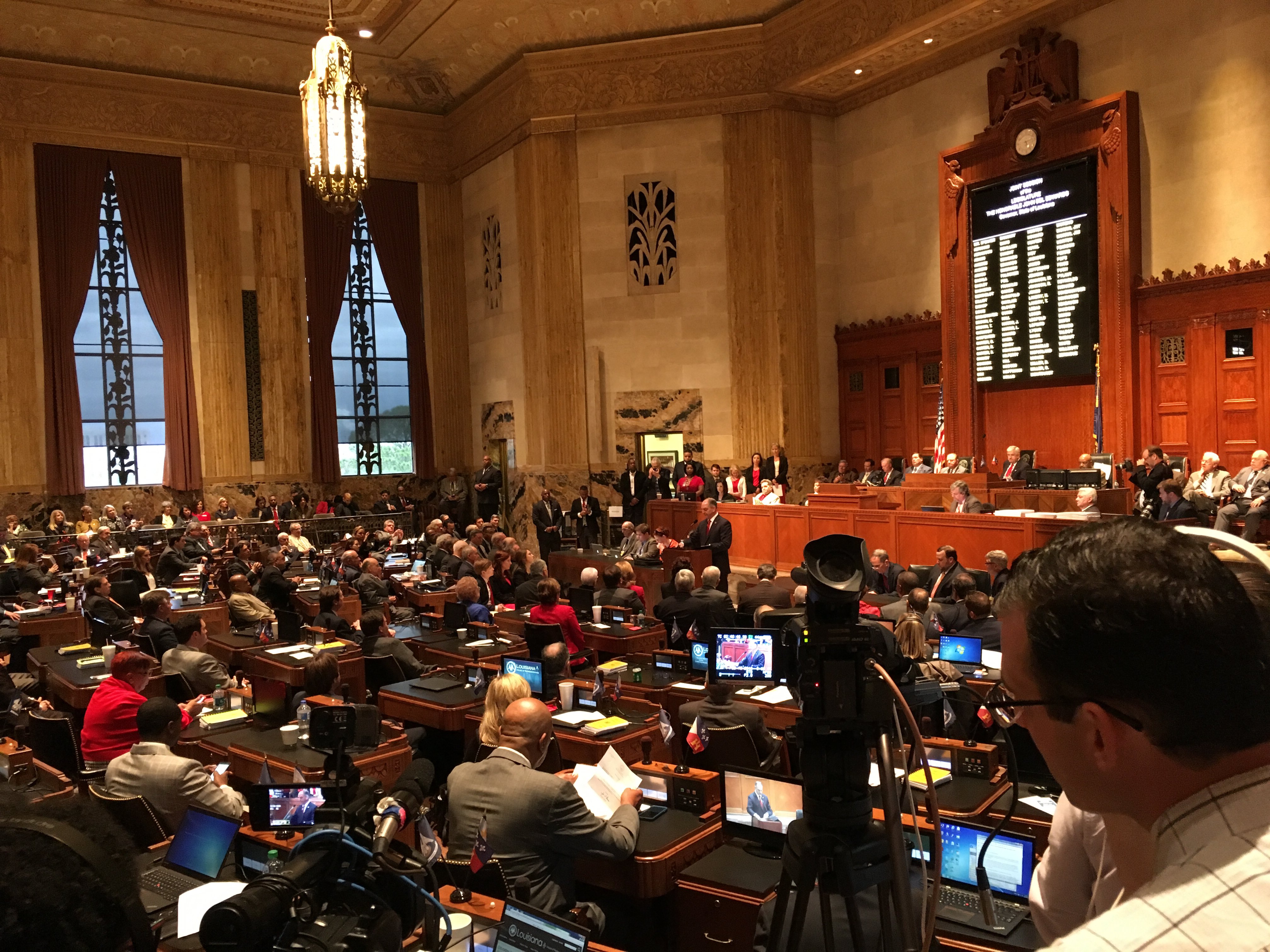
BATON ROUGE, La. — On Sunday, February 14, Jon Bel Edwards, the newly elected Democratic governor of Louisiana, addressed a packed audience on the first day of a special three-week session designed to solve the worst budget crisis in the state鈥檚 modern history.
Within the next four months, Louisiana must fill a $940 million budget deficit. Edwards has proposed a series of severe cuts over range of programs, but that most significantly affect healthcare and higher education because those are the two main areas of spending that are not protected by the state’s constitution. Additionally, he is proposing new sales taxes. The short time-frame means that no personal or corporate income taxes can be used for this year, which means that Edwards largely hopes to rely on a series of sales tax hikes to increase revenue. Edwards does want to increase income taxes in order to plug the nearly $2 billion deficit for next year. As of now, the Edwards administration hopes to achieve many or all of these changes in the next three weeks.
However, the Republican-dominated legislature, asserting newfound independence from the governor鈥檚 office, appears skeptical about raising new revenue. A few weeks ago, the House of Representatives broke with tradition when they rejected Edwards鈥� pick for Speaker of the House, a Democrat, and instead voted for Taylor Barras, a Republican. The stage is set for an epic three weeks under extremely difficult circumstances.
In his address this evening, Edwards utilized lofty rhetoric about the state coming together to fix the financial crisis. The governor is in a difficult position. He ran on a pledge to not increase taxes, but he is now proposing very large increases. In his speech, Edwards defended himself by noting that the state didn鈥檛 even know there was a deficit until five days before he was elected (that initial November deficit estimate has since doubled in size).
Edwards pledged to not raise taxes, but circumstances have changed dramatically since his inaguration.
鈥淚f you insist on saying that I never said I would raise taxes 鈥� that I’m going back on my word 鈥� that’s fine,鈥� said Edwards in his speech. 鈥淕et it out of your system, and then please come back here ready to work with me to do the job we were all hired to do.鈥�
Edwards also took a shot at his predecessor, Bobby Jindal, who was deeply unpopular by the time he left office and widely criticized for seeking the GOP鈥檚 presidential nomination (and being frequently absent from the state) during last year鈥檚 budget crisis.
鈥淟et’s ignore the self-serving voices of candidates running for office, after all, that’s what got us in this mess,鈥� said Edwards to laughter and applause. That quote was also directed towards a man shaping up to be one of Edwards鈥� chief foils, State Treasurer John Kennedy, who is now running for U.S. Senate. After Edwards gave a historic televised address on Thursday night, Kennedy issued a rebuttal in which he argued that Louisiana doesn鈥檛 鈥渉ave a revenue problem, [it] has a spending problem.鈥�
Louisiana鈥檚 Many Problems
Many people involved in the crisis have sounded genuinely fearful when discussing this year’s crisis. That jumps out because Louisiana has been facing budget crises (especially as it relates to higher education funding) for many years. On Saturday, after being prompted to think of a time worse than this for the state, one person, who has worked as a staffer in the legislature for 30 years, said the fiscal situation, and potential devastation of the cuts, has never been this bad.
What鈥檚 going on? Too many things at once.
Despite the fact that the United States鈥� economy overall is relatively healthy and growing, Louisiana is already in a recession, according to Greg Albrecht, one of the state鈥檚 chief economists. The steep drop in oil prices means not only less tax revenue, but fewer jobs, and, therefore, less income tax revenue and fewer sales tax revenue. But the recession only partly explains the crisis, which many have been predicting for years and came to a head just as Jindal left office.
That鈥檚 because Jindal used a series of pots of 鈥渙ne-time money鈥� that allowed him to cut taxes or keep them low, without raising new revenue (he also made cuts to higher education). Now, Edwards claims the state is basically out of one-time money (although he wants to dip into the rainy-day fund: to be fair, one could聽consider it to be raining so hard that it’s a monsoon). Unfortunately, just as the state runs out of one-time money, the state is facing a severe recession, meaning it鈥檚 harder to raise revenue and not a great time to try since businesses and families are already hurting.
There are lots of other weird things happening in the budget, including the fact that the corporate income tax this year will generate a cost. That is, the state is paying out more in corporate tax credits than corporations are paying into state coffers in taxes.
Structurally, Louisiana legislators have limited options because much of the budget, including K-12 spending, is constitutionally protected, meaning things like higher education, prisons, and certain health care programs bear the brunt of any cuts. Which leads us to right now.
Higher Education Cuts
By far, the most controversial cut so far to any part of the budget is to the TOPS program. TOPS is a merit-based scholarship which pays full tuition to in-state students going to any public university who meet the requirements of a 2.8 high-school GPA and ACT score of 20. This program is a popular middle-class benefit that has gotten more expensive over the years because as the state cut direct subsidization of universities, the schools increased tuition, which was covered by TOPS. On Thursday, the Edwards administration announced that the state would be unable to pay out the remaining money for TOPS this year.
People flipped out. For a brief moment, it was unclear if parents would be receiving a retroactive bill to make up for the lost TOPS scholarship. The Edwards administration quickly clarified that, no, the universities would be responsible for that cost $28 million) for this year, but parents and legislators are now on alert.
People are freaking out about cuts to the state’s merit scholarship
Today, at a joint budget committee hearing, much of the discussion centered around TOPS. Edwards鈥� budget for next year (that one with the $2 billion shortfall) only funds TOPS at 20 percent if the legislature does not agree to raise taxes. That would mean only people with an ACT score of 28 or higher would qualify. Most students don鈥檛 get a 28. Indeed, current Commissioner of Administration Jay Dardenne, a Republican and the former lieutenant governor, now serving in the Edwards administration, admitted during the joint budget committee meeting today that he didn鈥檛 get a 28 on the ACT. On Yik Yak, the anonymous, location-bound social-networking site that is popular with the youths, students are talking about the new ACT requirement and are not happy about it. In any case, TOPS seems sacred, and legislators will likely do their best to keep that program funded.
As far as the rest of higher education, public universities in the state will likely face at least a $70 million cut for this fiscal year, which ends in June, though it could potentially be much worse. During testimony today, the heads of the four main public higher education systems testified that without any new revenue, they would likely have to close their doors before the end of the year. This would lead to incompletes for all students, disqualifying the football team from playing next season (that鈥檚 a big deal). While few truly see that as an option, the schools say they need some type of revenue to keep the lights on past April. F. King Alexander, president and chancellor of the LSU system, said that while LSU could theoretically try to condense the semester, he’s worried about running afoul of their accreditation.
The high level of uncertainty is, according to various higher education officials, having a negative impact on athletics recruitment. Additionally, any loss in TOPS money would hurt recruitment in any sports outside football and basketball. That’s a big deal because people are crazy about LSU鈥檚 baseball team, which has been really good for a long time.
Arguably in even worse shape than LSU is the historically black Southern University System, as well as Louisiana鈥檚 Community and Technical College System. Some Southern campuses are already in financial exigency, and a deep enough cut could cause some campuses to close for good. Some legislators pressed the schools on cost-cutting measures, such as merging schools. In response, the heads of the systems said these savings were not a magic bullet, and that since merging campuses takes years of planning, it wouldn’t be helpful in the current crisis.
Time Is Not On Their Side
Each day that the legislature deliberates further enhances the crisis. An extra day of a sales tax obviously means increased total revenue, but it matters in terms of cuts as well. If certain jobs are furloughed now, that saves more money than if the state waits until the end of March to furlough the same position. Some in the legislature seem to have not fully internalized the crisis.But even for those who understood the severity in the abstract, just how quickly things were moving has clearly not sunk in for many members. Democratic Senator Francis Thompson, for instance, expressed disbelief at how little time the legislature had to decide what to cut, and openly sparred with Commissioner Dardenne today in the Joint Budget Committee hearing.
Dardenne called the $38 million cut an “easy vote”
One of the few who did seem to recognize the pace of events was Republican delegate Cameron Henry, who is Chairman of the House Appropriations and will be one of the key players in the unfolding drama. Henry attempted to push the budget committee to focus on the matter at hand: the Joint Budget Committee was voting on $38 million in cuts to “statutory dedications”, or spending mandates that the committee may cut by 5 percent when the state is running a deficit. The cuts to TOPS are not included in this. Of the $38聽million, $4 million would hit higher education. $1.6 million of that cut will be absorbed directly by the universities, the rest would affect the Board of Regents.
The Edwards administration does not want to cut spending, but Commissioner Dardenne鈥檚 comment on this $38 million cut was revealing in terms of the fight ahead. Dardenne called it聽an 鈥渆asy vote.鈥� Wait until the legislature confronts the difficult ones.
This article has been updated to clarify what the Joint Committee was debating about. Also, a few other places because it’s hard to keep track of everything.
听“
More 国产视频 the Authors
Issues
Programs/Projects/Initiatives
Related

Cosmetology Students Deserve Better Than Debt and Broken Promises

Quality Principles for Workforce Pell Programs

