Leslie Villegas
Senior Policy Analyst, Education Policy
This is the second in a two-part blog series aimed at聽cultivating a deeper understanding of the Latino community鈥檚 roots, priorities, power, and economic聽opportunities. Read the first part here.
To know one Latino in the U.S. is to know one Latino. While the broad statistics point to a young and diverse group, the true fabric of the U.S. Latino experience is much more complex. Despite the prevailing narrative of Latinos as a 鈥渕igratory鈥� people, their identities are deeply rooted in the United States.
In the midst of political rhetoric about immigrants, predominantly from Latin America, that flattens and oversimplifies the Latino experience, we sought insights from Latino leaders in policy, philanthropy, technology, and conservation. They shared their perspectives on the current landscape and their hopes for the future.
Throughout our conversations, several key points emerged around the need to expand the community鈥檚 belief in its own power and potential; cultivate greater understanding and awareness about the Latino community鈥檚 roots and priorities; and invest in leadership development and education to ensure this growing demographic can access the economic opportunities of today and tomorrow.
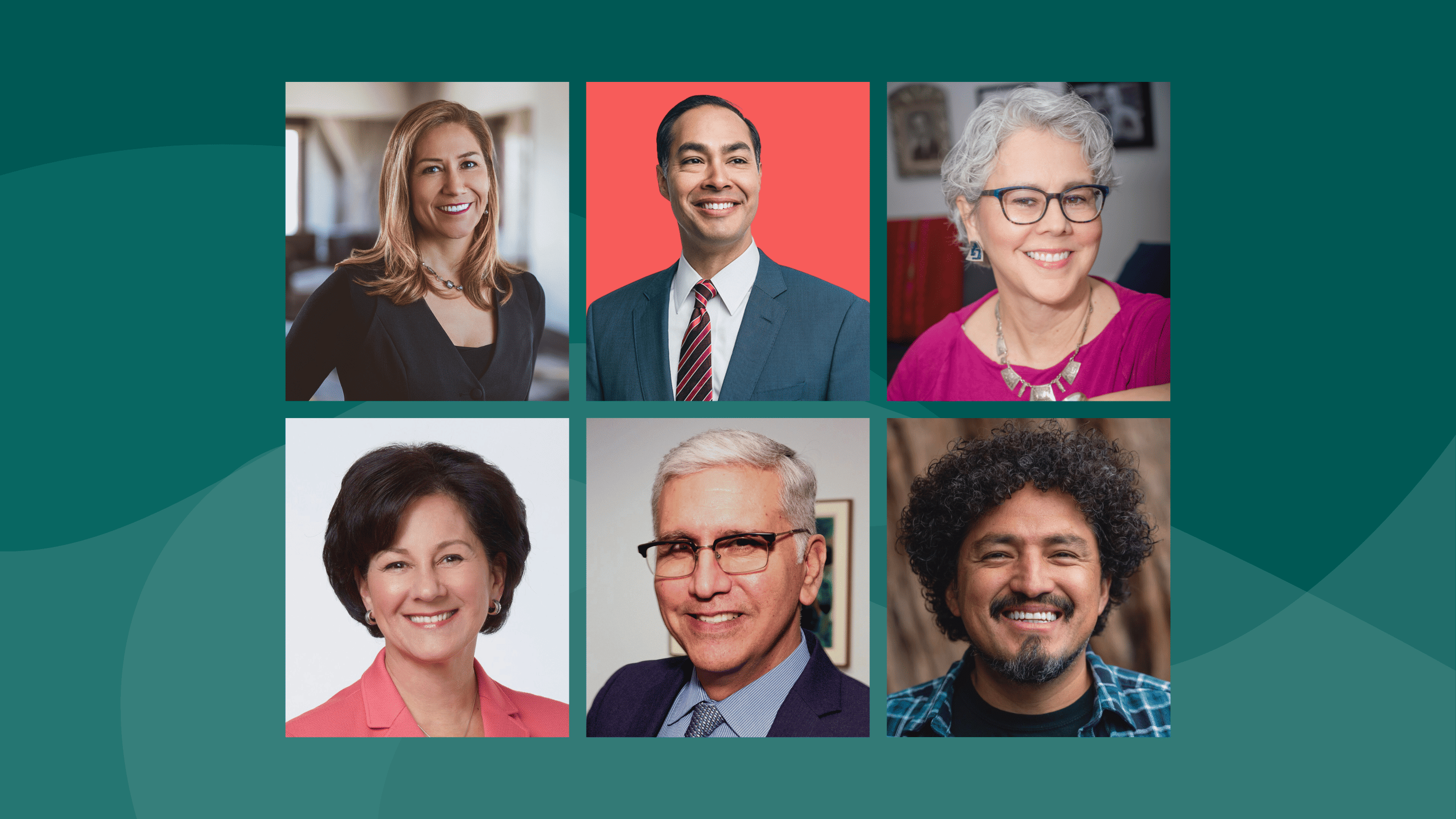
The leaders we spoke with include:
Below are some takeaways from our conversations, edited for brevity and clarity. For more detailed data on Latinos in the United States, see the first part of this series.
Our conversations with these six influential leaders highlighted that while numbers are increasing, the absence of Latinos in positions of leadership means that decisions impacting Latinos communities are being made without their input. Nonetheless, we heard a lot of optimism, and the insights below reminded us that sustaining and expanding on the gains in Latino leadership representation will undoubtedly require deeper investments in future generations.
Juli谩n Castro: 鈥淚 see the leadership of Latinos evolving in several ways. First, they鈥檙e taking on bigger challenges. More Latinos are their county executives, state senators, and governors. And soon, likely after the 2024 elections, more of them will be senators, so they鈥檙e taking on bigger, bigger roles. [And as part of that] the Latino community understands it鈥檚 not only about representation. Yes, representation matters. It鈥檚 wonderful to have more people who look like you in office, but it鈥檚 fundamentally about what you do with that office. So [Latinos are] bringing a variety of skills, fantastic leadership, and an understanding of making the best use of their time in office.鈥�
Jos茅 Gonz谩lez: 鈥淔irst of all, what is Latino or Latina? What does that mean in the U.S., right? It continues to be a challenge, an evolving concept and label鈥� because, what does it mean to be Latino? If you鈥檙e born in the U.S., you鈥檙e given that identity, and you become that identity when you migrate to the U.S., whether you come from political climates as different as Mexico, Venezuela, Argentina, or Cuba鈥攁nd then to try to account for that [complexity] in the U.S鈥hat a beautiful mess of an identity. For me, we essentially need Latino leadership to reflect this diversity and variety of our community. You want to be a voice for the people, not the voice for the people.鈥�
鈥淵ou want to be a voice for the people, not the voice for the people.鈥�
鈥�Jos茅 Gonz谩lez
Monica Lozano: 鈥淚n terms of advancing democracy, it鈥檚 not just civic engagement and political participation. I think it鈥檚 really about having decision-makers within various sectors that can use their influence to both identify opportunities for growth and prosperity across society and [those who] recognize the unique role that Latinos will play. And I have certainly seen that in corporate America. We鈥檙e seeing it in academia. We鈥檙e definitely seeing it within our nonprofit organizations.鈥�
Cecilia Mu帽oz: 鈥淭he really good news is that there are more of us and that we鈥檙e much more visible in political leadership. But I think the downside is that we鈥檙e the largest minority in the country. And I think most of the country doesn鈥檛 know that. I actually think maybe most of us don鈥檛 even know that. And we鈥檙e not reflected nearly as well in the kind of decision making positions, in visible positions at the highest levels, really, of any sector, including policy and political leadership, but also the corporate sector, the philanthropic sector, you name it.鈥�
Henry A. J. Ramos: 鈥淭hings are changing, but they鈥檙e changing too slowly for the rate of our growth and the impact we鈥檙e having on our society and economy鈥� When we look at pockets of power and influence, you have to think about things like major media. If you鈥檙e not present and you鈥檙e not influential in major media, it鈥檚 almost like you don鈥檛 count. We need a massive shift in our presence in the major media, in higher education, as public intellectuals, and in shaping the debate. We have really talented people, but we haven鈥檛 organized or galvanized our presence in American discourse enough to have [our voice] really take off.鈥�
Amanda Renteria: 鈥淥ur community runs the full spectrum of political ideologies, religious beliefs, and regional representation because we come from various Latino/Hispanic histories and at different times in American history. This diversity challenges the traditional categorization of communities of color. Year after year, we have seen the electoral process deduce communities to one or two issues to appeal to their vote. This won鈥檛 work for the Latino community. Instead, we will continue to push candidates and institutions to understand the nuances of the Latino community to capture our vote and understand the impact our community will have on the country. We need unapologetic leaders and organizations that aggressively protect the ability to write our own narrative.鈥�
The dominant narratives about Latinos in the U.S. are rooted in prejudice and fail to acknowledge the wide range of experiences, cultures, and concerns within and across Latino communities. The leaders we spoke to shared frustration around the national conversation, but also a hopefulness that as more Latinos gain access to positions of power and influence, they will be the ones telling their own stories, identifying priorities, and defining their role in a multicultural United States.
Juli谩n Castro: 鈥淟atinos for generations have faced stereotypes. Those stereotypes have included that they just don鈥檛 care about voting; that they鈥檙e not particularly interested in their child鈥檚 education and want to take a more hands-off approach; that they don鈥檛 feel a sense of ownership in their community or the country. All of those stereotypes are false. What I鈥檝e seen throughout our country is a community that deeply cares about the future of this country鈥擺a community] that has contributed to it mightily in many different ways and works hard, aspires, and is part of the fabric of this country鈥檚 success.鈥�
Jos茅 Gonz谩lez: 鈥淲e are defined [as] others define us. For example, the idea that Latinidad is always new鈥攚e鈥檙e always immigrants鈥攂ut that鈥檚 not true if you鈥檝e been here for ten generations, right? That鈥檚 not true if your family has been here since before the founding of the state, before the founding of the country, and it comes [down] to that [level of] complexity.鈥�
Monica Lozano: 鈥淲e need to identify the issues that motivate Latinos to participate. There has historically been a misunderstanding of what those key motivations are. We have been polling the Latino community for decades. It鈥檚 not unusual for the number one issue to be centered around the economy鈥攅conomic opportunity and prosperity, jobs and wages, affordable healthcare, [and] affordable housing. And yet, when you think about the national dialogue [and] where Latinos might be motivated [to participate], very often you [hear about] issues like immigration or the border, when in fact, it is not among the top ten issues. When you think about what motivates Latinos to participate, it really is about looking for economic prosperity and opportunity for them, their families, and the community at large. And I think all of that bodes well for American democracy and society overall.鈥�
鈥淲hen you think about what motivates Latinos to participate, it really is about…economic prosperity and opportunity for them, their families, and the community at large.鈥�
鈥�Monica Lozano
Cecilia Mu帽oz: 鈥淭he common assumption has been since forever that if you want to talk to our community, the first conversation you have to have is about immigration. Now, obviously, that鈥檚 an important issue for our community, but it is also true that the majority of us are native-born to the United States, and a good chunk of our community has roots that go back centuries. So in some ways鈥攁nd I say this as someone whose deepest expertise is in immigration policy, this is the area that has been my life鈥檚 work鈥攂ut [the issue of immigration] is a big obstacle to the advancement of our community. Not because so many of us are immigrants, but because so many people assume that all we care about is immigration.鈥�
Henry A. J. Ramos: 鈥淲hen you look at the demographics and the numbers, they don鈥檛 lie. We鈥檙e a massive growing force in our economy, culture, and politics. But we鈥檙e largely taken for granted. Oftentimes, the critique against the Democratic Party is that we are underrepresented in leadership, that we鈥檙e under-invested in terms of bilingual and bicultural election messaging; that we are too rarely targets of visits by the leading candidates. Certainly on the [political] right, there鈥檚 a lot of concern about the messaging鈥攖he way that the Trump forces have referred to us, calling us animals, targeting of Latinx communities as somehow enemies of the state, people who are murderers, rapists, and criminals. These are things that have truly misinformed, in a really underhanded way, the larger population about the significant contributions that we make as workers, as investors, as future and current leaders鈥攑eople who are contributing more than they鈥檙e taking.鈥�
Amanda Renteria: 鈥淭here鈥檚 a unique pressure among Latinos and those who like to categorize us on where we fall on the spectrum of holding onto our cultural roots to fully assimilating into the American system. We are a big enough community and continuing to grow. Instead of seeing our cultural roots [as being] in conflict with being American, we have the opportunity to debunk [the false] trade-off between cultural roots and American assimilation. Instead, we can role-model the beauty of America because it is better for the [diverse] cultural roots that different groups of people bring to our country. This validation of our cultural diversity is what makes America truly great. Diversity is our strength.鈥�
While there is so much opportunity for Latinos to leverage advancements in digital technology, barriers to access and misinformation and disinformation persist, with limited opportunities for Latinos to drive innovation. Investment in digital fluency and education are key to ensuring the Latino community can discern truth from misinformation and fully participate in the digital economy, as the takeaways below highlight.
Juli谩n Castro: 鈥淯nfortunately, Latinos have been on the wrong side of the digital divide. At the same time they are communities [that are] often early adopters of new technologies. One of the most promising things is that the Latino community is particularly young. It鈥檚 a community that is more comfortable with new technology when it gets its hands on it. That gives me a lot of hope. What I think we need to see more of is greater educational opportunities for people to enter into technology-based careers. And as we see the emergence of AI鈥攁nd we know how much that鈥檚 going to change the workforce鈥擺it鈥檚 important] that the Latino community is prepared and able to adapt to meet this new reality.鈥�
Jos茅 Gonz谩lez: 鈥淭echnology can connect our community both in the United States and in our countries of origin like never before. But as cliche as it is, technology is a tool. And we need to support the critical thinking and education that goes with how you use that tool in a way that鈥檚 in service for democratic values, as opposed to being used against us.鈥�
Monica Lozano: 鈥淭here鈥檚 three things that we need to do. First, ensure that there鈥檚 access鈥t is through technology that you鈥檙e able to pretty much do everything, so imagine what that gap means in terms of your ability to effectively participate. Second is what I call digital fluency or competency: How do you discern between the information that you鈥檙e getting, the sources of that information, and whether or not it is accurate? Third, let鈥檚 make sure that we鈥檙e skilling up so that we can participate in the digital economy. Right now, Latinos are only from a workforce point of view鈥攁nd let鈥檚 not forget that Latinos have one of the of any community in this country鈥攂ut there are lots of things that we can do to ensure that we鈥檙e getting the training and the skill to be able to participate [in the digital economy].鈥�
Cecilia Mu帽oz: 鈥淐onnectivity is still an issue for our community. So in some ways it has to start there. [But] I also think the notion that technology itself, and innovation, is being driven in a certain part of the country by a certain kind of person, usually male, usually white鈥攖hat that鈥檚 kind of our perception of how it鈥檚 happening鈥攁ctually serves as an obstacle. I think it鈥檚 harder for us to see ourselves in those kinds of creative and innovative roles. And, I think that鈥檚 a tremendous obstacle [to] our potential as drivers of the innovations that will shape our future.鈥�
Henry A. J. Ramos: 鈥淚 think technology is a double-edged sword. There鈥檚 the good, the bad, the ugly, right? Gratefully, for the past three or four generations, [our community has] produced increasing numbers of highly talented, informed, university-educated young people who are becoming professionals and who are very adept in their use and understanding of technology and communications. And one good thing about the current positioning of our communities [is that] even as we gain more technological prowess, we remain in some ways鈥攑articularly among our more senior and middle-aged populations鈥攙ery wedded to basic communication fora, [such as] person-to-person [engagements] in real-time, spoken exchange. I think in some ways, ironically, that protects us from the extent and level of misinformation that more mainstream audiences are subject to. But it鈥檚 something we have to pay more attention to and make a part of our political formation.鈥�
鈥淲e鈥檙e a massive growing force in our economy, culture, and politics. But we鈥檙e largely taken for granted.鈥�
鈥�Henry A. J. Ramos
Amanda Renteria: 鈥淲e must educate our communities about the challenges and opportunities of technology. If not, Latinos are especially vulnerable to disinformation because we are very engaged on social platforms but often more disconnected from mainstream sources of media where fact-checking is more prevalent. Furthermore, with emerging tech like AI, educating others about our community is even more important. We know that today鈥檚 datasets, which will be the foundation for building generative AI tools, are largely white and male. As AI evolves, it will be critical to ensure the Latino community is both protected and benefits from this powerful technology.鈥�
One of the biggest mistakes politicians and campaigns make when appealing to Latino communities is thinking that immigration is the one issue that Latinos care about most. Getting the government and political campaigns to realize the breadth and depth of issues that motivate Latinos was a central theme in all of our discussions.
Juli谩n Castro: 鈥淭he fundamental premise of democracy is about being responsive to a community. And responsiveness begins with listening, so policymakers can get better about understanding the needs of the Latino community. The Latino community exists everywhere in the country today, not just in California, New York, Texas, or the usual-suspect states. So I hope people will be better about listening. I also hope that through our democracy, more Latinos and Latinas will become leaders, people who understand the community and can represent it well. And finally, we need to make sure that the Latino community is participating at the ballot box, that they鈥檙e making their voice heard by voting, by getting registered to vote, and by voting at high rates.鈥�
Jos茅 Gonz谩lez: 鈥淚 think about [the availability of] public funding for public resources because we need them. The Latino community isn鈥檛 looking for free stuff. What they want is [for] their work ethic, their innovation, their resourcing [to] count. So something like street vending鈥攖hey are out there participating in economic activity like we want everyone to do. What if structurally there were policies to support them?鈥�
Monica Lozano: 鈥淟atinos are typically much younger. Latinos turn 18 every year, so their ability to substantially impact the future of this country through both elections and policy development is impressive. What we need to do is identify ways in which [we] can motivate this younger population to not just be informed, but to turn out and to participate. And that鈥檚 where identifying the issues that really matter [to them], not having [their] vote taken for granted, not showing up to the community late in an electoral cycle, and assuming that Latinos are going to vote in a particular way or against particular issues. We need to be very thoughtful about how we ensure the long-term prosperity of the country. And do that hard work over time and consistently, as opposed to just thinking about civic participation as being tied to electoral cycles.鈥�
Cecilia Mu帽oz: 鈥淲hen you think about it, education policy is our issue. We are a super young population鈥攐verrepresented among young people in the school systems and still underperforming dramatically and not being well served in our school systems. Health care policies are our issue. Workforce policy is our issue. What Latinos want is what other Americans want. We want a good education for our kids and the opportunity to get ahead and have a roof over our heads and access to college and economic success and happiness for the generation that we鈥檙e raising, and respect. We want the economy to be functioning in a way that serves our needs. That is no different really than the needs and desires of any other American.鈥�
鈥淓ducation policy is our issue… Health care policies are our issue. Workforce policy is our issue. What Latinos want is what other Americans want.鈥�
鈥�Cecilia Mu帽oz
Henry A. J. Ramos: 鈥淲e need a new public investment model and a new consensus that it is the government鈥檚 role, at the end of the day, to significantly invest in essential things that every human being requires to be successful. Preschool, childcare, K鈥�12 education that鈥檚 free and accessible, living wages and jobs, safe housing, workable transportation that gets people where they鈥檝e got to be to contribute. We will not have a democracy for very long without a significant reinvestment that creates jobs, that lifts all boats鈥攖hat creates economic security and opportunities. And that鈥檚 the reason why this election is coming full circle. This is why the election of 2024 is so existential, and its implications [are so critical] for where we go from here as a society and as Latinos.鈥�
Amanda Renteria: 鈥淭o really [address] the barriers the Latino community faces requires a micro-targeting approach because it is not only important to understand the barrier, it is equally important to test the solutions. From there, policymakers can identify successful patterns and discern what is most impactful across the country. This will be imperative if we want to unleash the full potential of the Latino community.鈥�
reports that major philanthropy dedicates of resources to Latino- or Latina-led nonprofits. The importance of representation at the top echelons of philanthropy was a common theme in our conversations. However, along with expanding representation, there was also discussion about shifting mindsets and approaches.
Juli谩n Castro: 鈥淩ight now, big philanthropy dedicates less than two percent of its resources to Latino- or Latina-led nonprofit organizations. That鈥檚 a problem because it bypasses so much excellent work that鈥檚 going into creating success for Latinos in the arts, education, health care, and economic development. Like elected officials, philanthropies also have work to do in better understanding the Latino community and being responsive to it, including by investing in those homegrown, grassroots organizations that are doing the best, most impactful work in the Latino community. At the , we鈥檙e proud that over the years we have invested in more than 300 Latina- and Latino-led nonprofits. It makes a big difference because they鈥檙e rooted in community, they understand the needs and they're making a big difference there.鈥�
鈥淟ike elected officials, philanthropies also have work to do in better understanding the Latino community and being responsive to it.鈥�
鈥�Juli谩n Castro
Monica Lozano: 鈥淚 am heartened by what I see as a shift away from the traditional approach of grant-making, directed by a foundation鈥檚 theory of change, which has historically been very top-down, to what has now been termed 鈥榯rust-based philanthropy.鈥� This notion that we as foundations need to be in listening mode, we need to understand the lived experience of individuals [is a positive shift]鈥� And [we need] to think about a larger transformative change that replaces a system that doesn't advantage Black and brown communities in particular, with a system that can build opportunity.鈥�
Cecilia Mu帽oz: 鈥淲e are just reaching the point where there are consistently one or two of us in governance positions in major philanthropies. But there鈥檚 still way too few of us in CEO positions in philanthropy, or even working at senior levels. This gulf with respect to just even representation among decision-makers and philanthropic leadership roles makes a difference. Frankly, there are varying levels of understanding who we are. Our centrality on issues like immigration sort of obscures how central we are in other sectors and as drivers of solutions to disparities in health care, educational outcomes, and economic opportunity. I think it鈥檚 possible that we have more work to do to produce the leaders who can be well-positioned to be drivers.鈥�
Henry A. J. Ramos: 鈥淥ngoing investment from philanthropy in higher education and K鈥�12 education is essential. We need a lot more traction in terms of our success in supporting career pathways towards the health sector, arts and culture, the financial fields and banking鈥攁ll the spaces and places where power is dispensed.鈥�
Amanda Renteria: 鈥淒ance with us and don鈥檛 assume the beat. We are different and interesting on so many levels because we all come from various histories, so our views aren鈥檛 the same based on generation, geography, history, or our pathway to becoming American. This confluence of factors makes it more challenging to create an impact model or the perfect intervention to capture us all. Instead, start the learning at a micro-targeted level and move nationally. The old approach of grouping us all [together] has been ineffective and demoralizing to investors and the community. The Latino puzzle of outreach and impact is easier to see when you build it from the ground up.鈥�
These leaders are trailblazers in their fields and we couldn鈥檛 conclude our conversations without learning more about the inspiring work they鈥檙e doing to pave the way for a brighter future for Latino communities.
Juli谩n Castro: 鈥淭he mission of the Latino Community Foundation is to unleash the civic and economic power of Latinos. Part of the way we do that is by investing dollars in Latino- and Latina-led nonprofits for civic engagement. So in 2024 alone, we invested in 19 different civic engagement organizations that register voters, educate voters, and mobilize them to vote to make their voice heard in our democracy. We believe that has a fundamental impact on the direction that policy and resource investment takes. We believe that to the extent that Latinos make their voice heard at the ballot box, the policy that comes out of city councils, state legislatures, and the federal government, and the way they invest their resources, is going to better serve not only Latinos, but all Americans.鈥�
Jos茅 Gonz谩lez: 鈥淲hether it鈥檚 been my work through , through several other coalitions, or through my start as an educator, I鈥檝e always [tried] to be conscious and interrogate, re-shift, and redesign the narrative around what 鈥淟atino鈥� is. We鈥檝e been a part of [many movements] within environmental work. For example, you hear so much about Rachel Carson鈥檚 Silent Spring [a 1962 book documenting the harm of using DDT, a synthetic pesticide] and the success of the Environmental Defense Fund lawsuit that gets DDT banned as an environmental win. While this story is true, it鈥檚 also incomplete because it leaves out the , even after the ban went into effect. And it was Chicano lawyer who filed the lawsuit, on behalf of a California Rural Legal Assistance, which ended up being combined with the other lawsuits to make it stronger. But we [still] never hear about those farm workers.鈥�
Monica Lozano: 鈥淚 have come to this concept of radical hope. You can鈥檛 be in this business if you鈥檙e not hopeful. It's not enough to just say, well, wouldn鈥檛 it be great if things were different? Radical hope actually means that you鈥檙e going to apply yourself, and you are going to do what鈥檚 necessary to work in the community to advance the change that you want to see. I am working on what I consider to be a cornerstone of civic infrastructure: rebuilding and reinvesting in the local news ecosystem. And why do I find that so important? Because with the pressures and the stresses on the commercial model that have led media companies to downsize, to let people go, to not have the capacity to report on local issues, that void either gets filled by misinformation or it doesn鈥檛 get filled at all. We鈥檙e working in Southern California and the Los Angeles area [to reinvest] in local news through a nonprofit ecosystem model. We are raising money from philanthropy and concerned individuals who believe in democracy, who understand the role that local media plays in having a sense of agency, understanding the issues, holding elected [officials] accountable, and participating in civic life.鈥�
Cecilia Mu帽oz: 鈥淲e have, theoretically, huge power as a community. We wield extraordinary economic power. We have tremendous economic clout. We just don鈥檛 know it. We have unbelievable political clout. We haven鈥檛 realized it ever. Our understanding of our potential and our development of all kinds of leaders, across geographies, is really how you do that. The generation coming up after mine is so much better prepared, more effective than we were. And that鈥檚 what you hope for, especially when you鈥檝e made a career in trying to elevate a community. I spend a lot of my time and energy supporting folks who are emerging leaders, particularly Latinos. And, you know, they鈥檙e amazing and really so much better prepared鈥攁nd that鈥檚 what you hope for. There are a lot of younger Latinos that I am really, really excited about.鈥�
Henry A. J. Ramos: 鈥淚鈥檓 trying to find a way to rebrand and replace the , a media platform that I created as a graduate student at the Harvard Kennedy School of Government in the mid-1980s. In the subsequent 40 years, [it had become] a leading platform for giving [Latinos a] voice in the Harvard community, highlighting our policy positions, from elected and appointed officials to business and labor leaders, to community organizers and advocates. Unfortunately, last year, the outgoing dean of the school decided to end the journal. The Journal is one of the few English language platforms that we have developed to garner attention in major circles of influence and we need to keep something like it going. We鈥檙e in a conversation now about how to create a national digital platform for hard-hitting policy analysis that can really lift up our voices and our positions on consequential issues in our times.鈥�
鈥淸We are] a powerful, complex story that epitomizes the beauty of the American dream.鈥�
鈥�Amanda Renteria
Amanda Renteria: 鈥淣o matter what happens in this election, no matter how dehumanizing the rhetoric against Latinos becomes, who we are is a powerful, complex story that epitomizes the beauty of the American dream. I can鈥檛 wait for us to fully own and tell our story, and I know that day will come because our truth and courage derive from the strife and strength of generations before us. And we鈥檝e never been closer in history than we are now. For most of my life, I have been one of the few at the table, sometimes the only or the first. Today, my work in technology and policy implementation includes bringing my career and lived experience to ensure the Latino community can access government benefits intended to empower economic mobility. As a political analyst on TV and radio in the U.S. (ABC) and the UK (BBC), I provide a base of knowledge from which I share my perspective on American politics and policy. Finally, as Vice Chair of an accountability nonprofit, , I am part of building an organization that can ensure Latinos are at every leadership table across the country.鈥�
We thank these leaders for sharing their valuable wisdom with us and for their efforts to build a future where Latino voices are heard, celebrated, and integrated into the broader American narrative.
Juli谩n Castro serves as Chief Executive Officer of the Latino Community Foundation, the nation鈥檚 largest Latino-serving foundation. Inspired by a legacy of leaders working to safeguard our democracy and strengthen community, Castro has dedicated his life to public service.
Jos茅 Gonz谩lez is the Founder of Latino Outdoors, a nonprofit that connects youth and families with nature. A professional educator with training in the fields of education and conservation, Gonz谩lez engages across different artistic endeavors鈥攐ften exploring the intersection of the environment and culture.
Monica Lozano is the former President and Chief Executive Officer of College Futures Foundation, a California-based private foundation. College Futures Foundation partners with organizations and leaders across the state to catalyze systemic change, increase college degree completion, and close equity gaps. Before College Futures Foundation, she worked for thirty years as a senior media executive.
Cecilia Mu帽oz is a national leader in public policy and public interest technology with over three decades of experience in the nonprofit sector. She served in President Obama鈥檚 White House, including five years as the first Latine to lead the White House Domestic Policy Council. She is the author of the award-winning .
Henry A.J. Ramos is a senior fellow at The New School Institute on Race, Power, and Political Economy. He is also a past author, editor, and project consultant at Arte Pu虂blico Press, based at the University of Houston.
Amanda Renteria is the CEO of Code for America, a nonprofit, social impact organization that helped launch the civic tech ecosystem. Today, Code for America partners with governments and community-based organizations leveraging technology to create 鈥渁 government by the people, for the people in the digital age.鈥�
Senior Policy Analyst, Education Policy
Vice President, Technology & Democracy, 国产视频
Senior Data Analyst, Political Reform Program
Senior Program Associate, 国产视频 Chicago
Senior Director, PreK鈥�12 Education


