
Iris Palmer
Director, Community Colleges
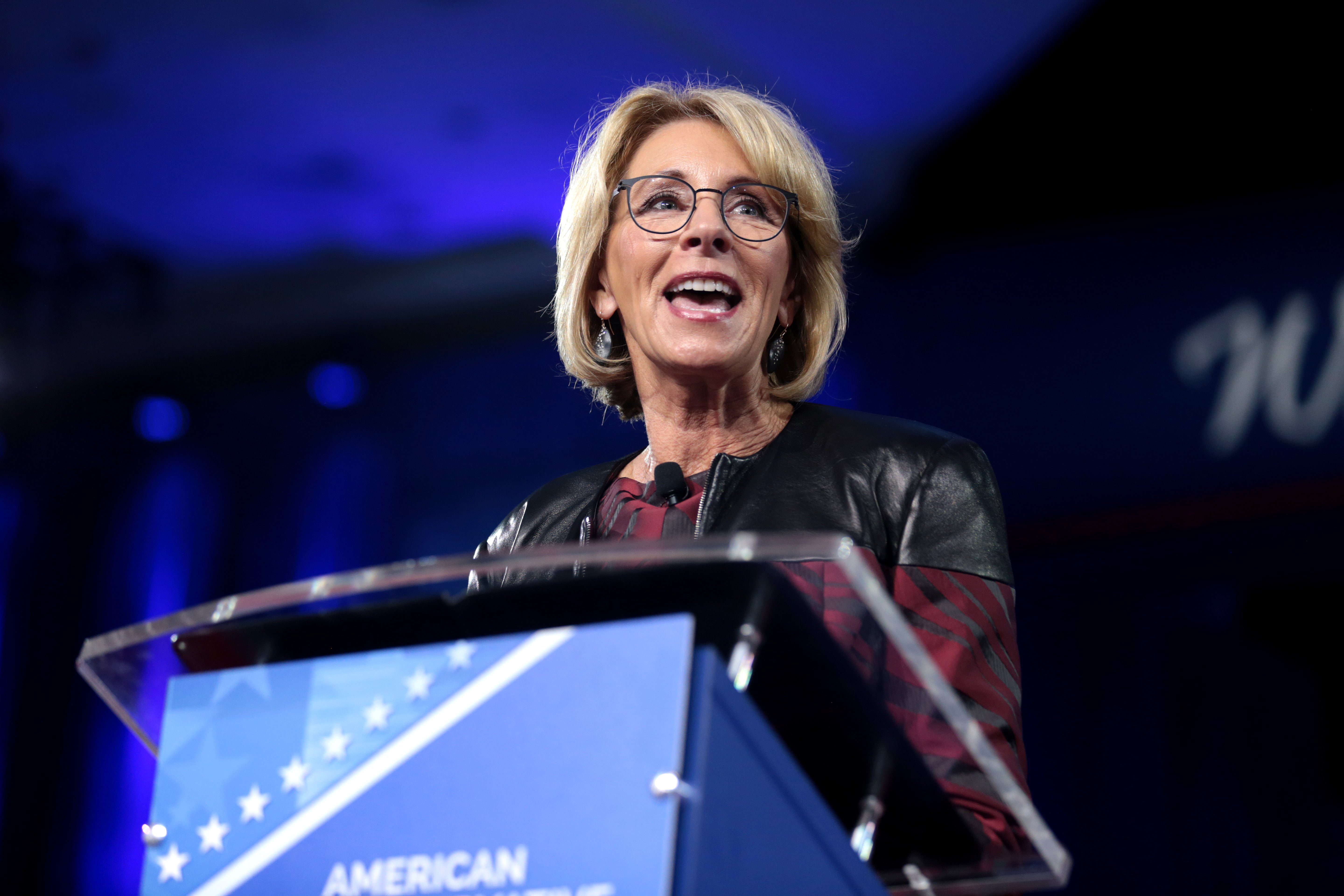


Update 3/29:聽Despite Secretary DeVos that year-round financial aid is under consideration, the Trump administration this week reportedly to cut another $3 billion in current-fiscal-year spending from the Department of Education’s budget, including $1.3 billion out of the Pell Grant program’s current surplus. If that were to happen in conjunction with the proposed $3.9 billion reduction in FY 2018, nearly half of the program’s entire surplus would be gone in an instant–risking the long-term financial footing of the program without any increased spending on the students for whom those dollars were originally designated.
Today, the Trump Administration its 鈥渟kinny budget鈥� request to Congress–a stripped-down version of the full budget proposal that will come later this spring. The Administration had weeks ago that the budget would make huge cuts to non-defense spending to pay for a huge increase in the defense budget, to the tune of $54 billion. Today, they made good on that promise, proposing to cut the Department of Education鈥檚 budget by 13 percent from last year鈥檚 total and targeting some popular higher ed programs for severe cuts.
Specifically, the budget request calls for deep cuts to some student financial aid programs–like the Supplemental Educational Opportunity Grant (SEOG) and Federal Work-Study–but largely preserves the size of the federal Pell Grant program. Instead of cutting the maximum Pell Grant or narrowing eligibility, the budget would find savings by pulling $3.9 billion out of the program鈥檚 current $10.6 billion surplus.
The preservation of Pell at the expense of the program鈥檚 surplus sends an important message from the DeVos Education Department–if it holds. The skinny budget doesn鈥檛 include details of mandatory funding, so cuts from the Administration could still be proposed later, in the full budget that will come out this spring. Still, given that Pell is the Department鈥檚 largest program, many had worried it would be vulnerable to cuts in an effort to make up for defense spending. Pell is the cornerstone of the federal financial aid program, and provides up to $5,815 annually to the lowest-income students; more than 70 percent of its recipients come from families making less than $30,000 annually. Ensuring students continue to have access to those grants, without cutting the size of the award, has been a priority for advocates and institutions alike. The Trump Administration appears to be protecting the Pell Grant program even in the midst of major budget cuts; but those stakeholders will no doubt still be watching closely later this year to see whether the White House proposes to keep the mandatory funds the program currently receives in place. Without those funds, the maximum Pell Grant would fall significantly over the next few years.
Meanwhile, SEOG and Work-Study weren鈥檛 spared from budget cuts. The budget blueprint calls on Congress to eliminate SEOG entirely. Though the budget blueprint describes SEOG as 鈥渓ess well-targeted,鈥� presumably because funds are distributed first by institutional need and then to students, SEOG recipients鈥� income levels are comparable to Pell recipients. Seventy-one percent of dependent undergraduate recipients from families making less than $30,000 per year and 76 percent of independent recipients earning less than $20,000.
It also calls for cutting Work-Study dollars 鈥渟ignificantly,鈥� and proposes to 鈥渞eform鈥� allocations to schools for the remaining funds. This makes some sense. Nearly two-thirds of dependent undergraduate Work-Study beneficiaries have incomes over $30,000 annually, making up roughly half the entire population of Work-Study recipients. Moreover, Work-Study dollars disproportionately go to private nonprofit institutions. But of the Work-Study program have shown students receiving Work-Study are more likely to graduate and be employed after graduation. And these positive effects are larger for low-income students who attend public institutions. One-third of American undergraduates are working 35 hours per week and half are working at least part-time. Finding ways to help these students balance their jobs with their studies is more needed than ever. Reallocating the Work-Study allocation makes sense; cutting it significantly does not.
Student financial aid programs aren鈥檛 the only ones that took a significant hit in the President鈥檚 budget request. Both TRIO and GEAR UP, college access programs that provide grants to nonprofits, institutions, and other organizations to help disadvantaged students enroll in and complete college, took hits themselves. These changes aren鈥檛 likely to go over especially well with those grantee communities; TRIO鈥檚 lobbying association, the Council for Opportunity in Education, doesn鈥檛 like change very much.
The Administration proposes cutting the TRIO programs by about 10 percent, from $896 million in FY 2017 to $808 million in FY 2018. Specifically, they suggest cutting funding to TRIO programs in the areas that have limited evidence of effectiveness in improving student outcomes. That鈥檚 a bit of a puzzling condition to place on funding (even if it is a welcome sentiment), since Congress literally banned TRIO programs from the random assignment of students for the purposes of evaluation in 2008. But to date, there have been other types of for some TRIO programs, which revealed potentially positive impacts for the Talent Search TRIO program, modest positive effects through Student Support Services, and a questionable study that drew few conclusions about the Upward Bound program.
Meanwhile, the budget proposes to cut GEAR UP by nearly a third, from $321 million to $219 million. The Department is of running new GEAR UP state and partnership grant competitions for FY 2017; the budget blueprint notes that the entirety of GEAR UP funding will be reserved for continuation awards for existing grantees. It also notes that the continuation awards are pending the completion of a rigorous evaluation of a portion of the program. So at least the Department was consistent in using evidence to drive its budget cuts–though GEAR UP doesn鈥檛 have the random assignment ban that exists in TRIO, there鈥檚 still shockingly little evidence outside a available as to the early outcomes of those interventions.
The budget also calls for maintaining federal Title III and V dollars to historically black colleges and universities (HBCUs) and minority-serving institutions (MSIs), to the tune of $492 million. In reality, that鈥檚 not quite maintaining–in FY 2017, Aid for Institutional Development programs received $459.9 million in discretionary dollars, and Hispanic-Serving Institutions received another $116.9 million, for a total of $577 million. Since the skinny budget doesn鈥檛 include program-level figures, we鈥檒l have to wait and see where they plan to make the cuts. But the pro-HBCU and -MSI framing is hardly surprising, given Secretary DeVos鈥檚 last month, when she referred to HBCUs as a model for school choice rather than a necessary byproduct of Jim Crow laws. Still, this superficial overture is unlikely to make the Administration new friends in the HBCU community, when coupled with huge cuts to social services, slashing-and-burning through the TRIO and GEAR UP programs, and less student financial aid.
All told, this budget request is nothing more than that–a request to Congress, unlikely to be heeded and subject to the tinkering and votes of hundreds of members of Congress. But it鈥檚 an indication of the priorities of the Trump Administration. In that sense, it offers some important guideposts for the Administration鈥檚 goals: smaller government, deep cuts both to student and institutional aid, and all-words-and-no-action when it comes to helping U.S. students access a better education and well-paying jobs.
Director, Community Colleges
Senior Writer & Editor, Higher Education