
Social Protection: not just a catch phrase

It seems that in the field of international development, there is a new catch phrase being thrown around: 鈥淪ocial Protection鈥�. If you haven鈥檛 heard it yet, you will. It has been a key focus of poverty reduction strategies at such institutions as the International Labour Organization, the World Bank, and the United Nations. As a matter of fact, the 50th session of the UN Commission for Social Development, which began on February 1st and will continue through February 10th, has placed the at the . In Deputy Secretary-General Asha-Rose Migiro鈥檚 to the commission on the first day of the session she said:
鈥淲e have three years to reach the Millennium Development Goals. We must do everything possible to speed up progress and to keep our promise to the world’s poorest and most vulnerable people鈥he poor want to lift themselves out of poverty. That is why we have to invest in social protection. That means food, education and basic services鈥攅specially for the poorest鈥he Social Protection Floor is an important initiative. UN agencies and our partners are using this to integrate our strategies so that we can help protect people from falling or being trapped into poverty.鈥�
Often and for various reasons, aid doesn鈥檛 quite trickle down to the poorest of the poor. This is why the Deputy Secretary-General鈥檚 comments are an important recognition that aid must be directed at the ultra-poor–whether it be for stipends so children can attend school (often a dual expense, because school costs money and attendance means children are unavailable to provide assistance at home), for employment opportunities, or for financial support for disabled and elderly populations.
As we gear up for the Summit this summer, Social Protection will continue to be an important piece of the sustainable development agenda. The European Union is developing their plans for the Summit and although the primary component of their is the relationship between a green economy and development, Social Protection is acknowledged as an integral part of the equation.
The of the Global Assets Project is working to expand our knowledge on social protection, because of the dire need to reach the most vulnerable. We advocate that one noteworthy way to build on social protection as a component of sustainable development is to link social protection payments to savings mechanisms. G2P payments are a prime opportunity to provide access to bank accounts and to enable savings鈥攅ven among the poorest. For instance, , which provides one hundred days of wage-employment per year to rural households, is transitioning from cash payments to electronic deposits in no-frills bank accounts. This not only saves the Government of India a significant amount of money by preventing leakages and improving efficiency, but it also provides the recipients with access to their very own bank account.
In addition, we believe that savings is a crucial component to the poor lifting themselves out of poverty, because it allows them to build up their own financial assets鈥攚hich is key to avoid 鈥渇alling or being trapped into poverty鈥�. So while Social Protection may be the new buzz word(s), the idea offers an approach to poverty alleviation that has the potential to impact the lives of the most vulnerable.
More 国产视频 the Authors
Issues
Programs/Projects/Initiatives
Topics
Related
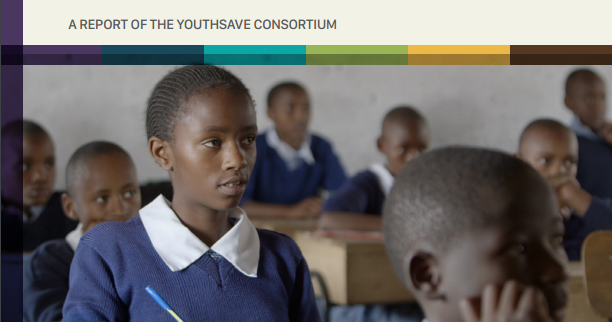
85,000 Low-income Youth Open Savings Accounts through YouthSave
A Conversation on the Weekly Wonk: Should We Bank On It?
Global Anti-Poverty Targets Tepid