
Shalin Jyotishi
Founder and Director, Future of Work and Innovation Economy Initiative
Even with budget limitations, states can promote workforce innovation at community colleges
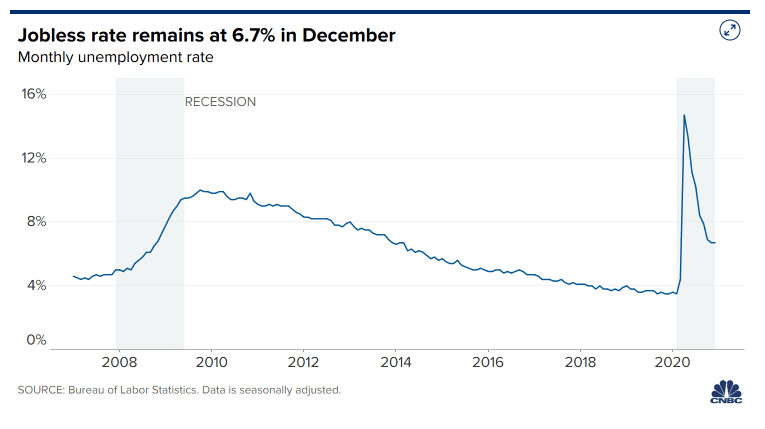
This month, the U.S. Department of Labor reported that the American unemployment rate is stubbornly stuck at 6.7% — a . Many of those jobs may not return as automation, digitalization, and cultural shifts transform the labor market. While a vaccine is coming, now more than ever, we need new strategies to get more Americans back to work in good jobs.
Colleges can help workers upskill by creating and scaling high-quality, affordable, non-degree programs that lead to quality jobs.
Indeed, , , and are all embracing non-degree credential programs like certificates, industry certifications, licenses, and apprenticeships. These programs can help equip learners with the skills they need to secure quality jobs without needing to invest the time and money into a traditional associate鈥檚 or bachelor's degree鈥攚hich isn鈥檛 always necessary to secure a decent job.
In particular, community colleges have long been at the forefront of offering these flexible, employer-aligned non-degree credentials. Community colleges serve many of the most economically vulnerable learners in the nation– first-generation, low-income, Black, Latino, and Indigenous students from the working class. Many community college students are also 鈥渘on-traditional鈥� and above the age of 25.
Unfortunately, it isn鈥檛 always easy for community colleges to finance non-degree credentials:
The pandemic has put community colleges in a particularly challenging environment. by the COVID-19 pandemic in order to support themselves and their families. Even federal pandemic relief has compared to their proportion of students served. Enrollment declines have hit community colleges the hardest compared to 4-year colleges and universities.
Yet especially with busy working adults juggling caregiving and paying their bills. Many Americans are looking to return to the labor market quickly.
But asking community colleges to do more with less is a lot like planting a vegetable garden without providing quality soil, sunlight, or water.
Fortunately, one long-used state financing strategy could work to sustain and expand quality non-degree credential offerings at community colleges鈥攖he revolving loan.
What is a 鈥渞evolving loan鈥� and how can they finance non-degree credentials?
Twenty years ago, Kentucky established a $1.5 million state-supported "venture capital fund" designed to help colleges jump-start online learning programs without having to go through sluggish budget procedures or apply for competitive, time-intensive federal grants.
Under the model, colleges could apply for interest-free loans to kick-start online projects. The was one group that sought a loan. Compared to a traditional budget proposal process (which could take up to a year), KCTCS secured funding in a fraction of the time which allowed them to quickly capitalize on the booming online education market. If awarded, the college could have cash in hand within a month. The college would have two to three years to pay back the amount.
That was twenty years ago when online programs were the height of innovation in higher education, but these 鈥渞evolving loan鈥� structures could empower states to help finance new quality non-degree programs at community colleges.
In what scenario would a revolving loan be useful at a community college?
We have learned that one struggle for community colleges is in finding the 鈥渟tartup鈥� funds for non-degree programs. Let鈥檚 say that American City Community College wants to start an ophthalmic assistant apprenticeship program at the behest of their local employers. The college needs to hire new faculty to create the curriculum, teach the program, and get the program recognized by the specialized accreditor.
The college also need to purchase all of the tools and equipment needed, so students can practice in their Related Technical Instruction (RTI) before they start at the employer work site.
The college has exceeded the amount of money in the budget they use for startup funds this year. The employers are willing to chip in some of the equipment but not all and they are unwilling to chip in funding for hiring and curriculum development.
Much like how KCTCS secured a revolving loan to finance its first online programs. American City Community College could secure a revolving loan to finance the startup costs associated with the ophthalmic assistant apprenticeship program.
Over time, American City Community College would pay back the zero-interest loan–keeping the state coffer sustainable.
Revolving loans are an innovative state-driven solution, but federal and private investments are still needed
To be sure, if we鈥檙e serious about restoring economic mobility and opportunity in this country, our states and federal government need to re-invest in quality public community colleges as a whole. Employers, too, need to do their fair share to pay for the training their companies need.
Automation, accelerated by the pandemic, has brought the future of work to our doorsteps. Over the next decade, many millions of Americans without college degrees will be forced to transition to 鈥渘ew鈥� work. This 鈥渨ork of the future鈥� will hopefully be higher-paying, more enjoyable, and associated with better benefits like paid sick leave and time off.
. However, without a significant re-investment in American public 2-year (and 4-year higher education) system, our standard of living will decline and the United States will decline as a world leader.
Revolving loans are a worthwhile innovation for states to consider implementing if we are to expert our community colleges to pioneer quality, quick, and affordable non-degree programs.
Do you have other creative ideas for financing quality non-degree credentials at community colleges? Contact me at [email protected] or on Twitter .
Enjoy what you read? Subscribe to our newsletter to receive updates on what鈥檚 new in Education Policy!
Founder and Director, Future of Work and Innovation Economy Initiative


