
Summer Reading: Here鈥檚 Johnny鈥檚 Addiction
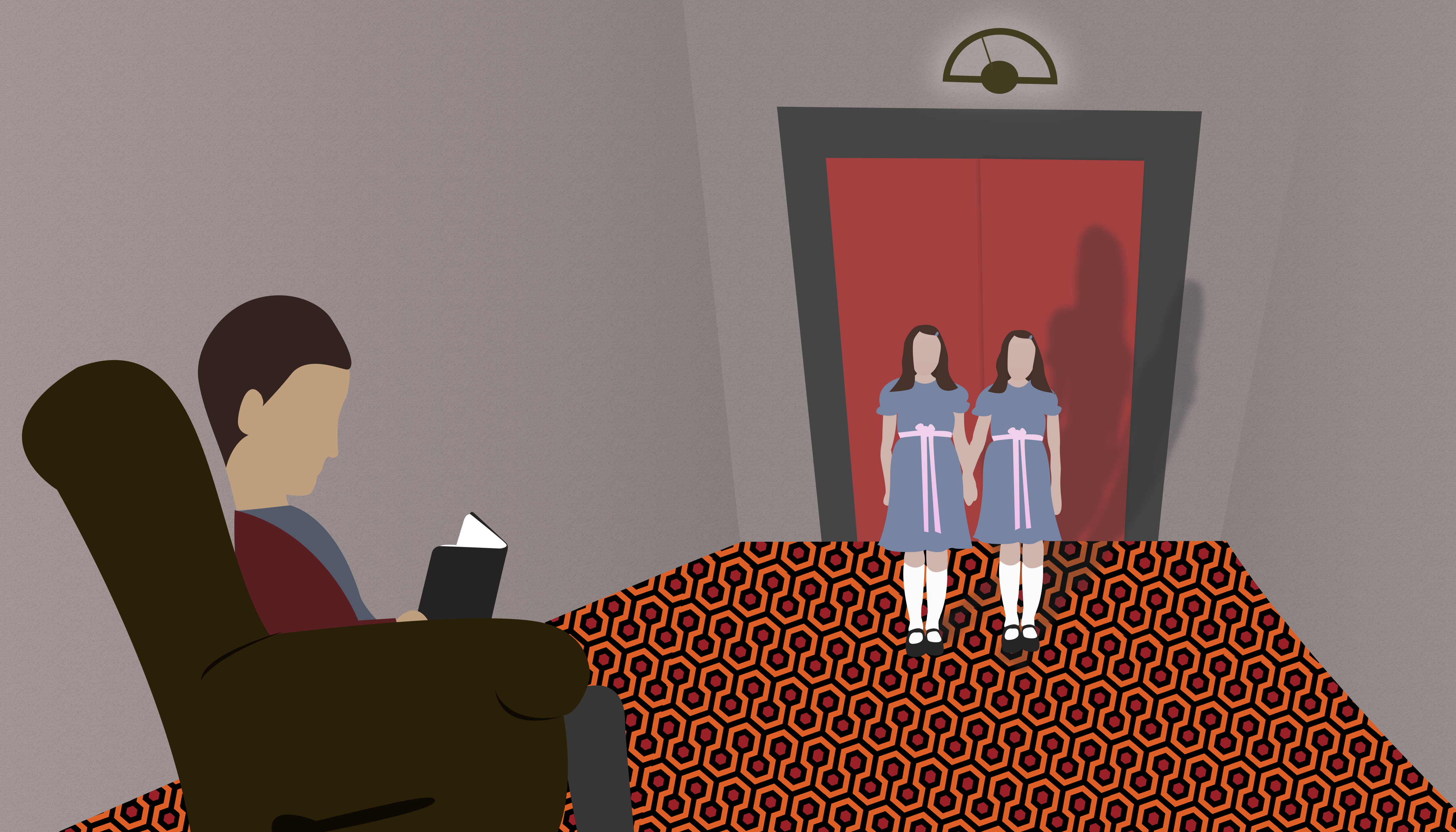
His hand closed brutally around her ankle.
鈥淛ack! What are you鈥斺��
鈥淕otcha!鈥� he said, and began to grin. There was a stale odor of gin and olives about him that seemed to set off an old terror in her, a worse terror than any hotel could provide by itself. A distant part of her thought that the worst thing was that it had all come back to this, she and her drunken husband.
The monsters of Stephen King are numerous, notorious creatures who work their way into the shadows of your bedroom: the nightmare clown Pennywise, the ghost of Sarah Laughs, deranged fan Annie Wilkes, a reanimated (but nevertheless very dead) cat who thumps down dark hallways. But for me, the monster who dug deep at my fears, and the one who made me fall in love with horror, was Jack Torrance鈥檚 addiction.
In case you aren鈥檛 familiar with The Shining鈥檚 plot: Jack Torrance is an ill-mannered but well-meaning alcoholic nineteen months into sobriety when he assumes his job as winter caretaker of the Overlook Hotel. He has had a rough run with alcoholism, but intends to walk headlong into recovery by spending quality, isolated hotel time with his wife and son. But the Overlook, forever collecting permanent guests, uses Jack鈥檚 alcoholism to turn him slowly, almost imperceptibly, into a murderer. Once the family is snowed in and completely cut off from the outside world, Jack unravels: in addition to creeping topiaries and a dead woman in a bathtub, the hotel offers Jack a bar full of glittering liquor bottles, and he falls鈥攈ard鈥攐ff the wagon.
You probably know the famous scene from the film. Jack Nicholson, face smashed between splinters of a broken door, axe in hand, greeting his wife with a sinister, 鈥淗eeeere鈥檚 Johnny!鈥� In that dramatic and horrible moment, we see what addiction can do. It can turn a person into somebody else, and that somebody, to put it mildly, might not be very nice.
My mom has been an alcoholic for as long as I can remember. It鈥檚 important to me that this fact is not presented as all she is: She is also a giving, creative, quietly funny woman who cares very much for my two little brothers and me. She is kind and humble. She is working hard at recovery.
But there is a reason that King鈥檚 horrifying portrait of alcoholism resonates. Growing up with an alcoholic parent means acquainting yourself with the idea that alcohol can make a person unpredictable, even unrecognizable. It can mean having a perfectly pleasant conversation with someone who looks like your mom, but acts like someone else entirely. And the fear that results can be all-consuming鈥攕omething that doesn鈥檛 always make sense to people outside of the fray, given that the average alcoholic (my mother included) is no Jack Torrance.
But it makes sense to King, who wrestled with his own alcoholism and cocaine addiction for decades. In an with The Guardian, King talked about hitting the famed addict鈥檚 鈥渞ock bottom.鈥� For him, the experience was no 鈥淗ere鈥檚 Johnny.鈥� He was at his son鈥檚 Little League baseball game with a can of beer in a paper bag. The coach approached him and warned, 鈥淚f that鈥檚 an alcoholic beverage, you鈥檙e going to have to leave.鈥� Though tame, the interaction shamed him. 鈥淭hat was where I said to myself, 鈥楾hat鈥檚 something I鈥檒l never be able to tell anyone else. I鈥檒l keep that one to myself.鈥� I drew on that memory.鈥�
As a writer, he says, 鈥測ou鈥檙e looking for something that鈥檚 really harsh鈥濃�攕omething that gets at the essence of experience, even if it isn鈥檛 literal. And that鈥檚 where King鈥檚 monsters come in. Misery鈥檚 Annie Wilkes, for example, is King鈥檚 personification of cocaine: 鈥淪he was my number-one fan,鈥� . 鈥淪he never wanted to leave.鈥� And Jack Torrance? Though King is pretty mum when it comes to analyzing himself or his characters, it鈥檚 not hard to find the writer鈥檚 own fears in Torrance鈥檚 unraveling. King used horror to explore his own relationship with addiction, recognizing, as he writes in The Shining鈥檚 sequel Doctor Sleep, that memories 鈥渁re the real ghosts.鈥�
You鈥檇 be hard-pressed to find many narratives that reflect experiences like King鈥檚 or my mom鈥檚. And it鈥檚 not lost on me that, in most of those that do exist (The Shining included), the addict is the villain. This year鈥檚 presidential election began with of addicts, like Chris Christie鈥檚 law school friend and Carly Fiorina鈥檚 step-daughter, who were lost despite the family and friends who loved them. The main takeaway: We need to acknowledge addiction as a pressing mental health issue. But as we move into the general election, that train of thought has mostly faded away. It鈥檚 important for us to keep talking about people like my mom鈥攚ho are not villains at all, but people coping with a tough mix of genetics, circumstance, and brain chemistry. Jack Torrance is a nightmarish possibility, but we need to keep talking about the addicts who must exist outside of fiction, often in secrecy and shame.
Still, fiction can bring its own kind of truth. When I first read The Shining, it felt like someone had held a horrible funhouse mirror to my life. I was a young teenager grappling with the balancing act of loving an addict. My mom鈥檚 addiction often feels like the axis of my world, to the point where prioritizing (or even recognizing) my own needs can be difficult. I鈥檓 not unique in this sense: The mantra of Al-Anon, an AA-style support group for family members of alcoholics, is to put yourself first. Even King , glibly, that if you grew up around an alcoholic, your final moments are more likely to show flashes of their life than your own.
So reading this horror story allowed me to recognize and feel something I had trouble admitting, even to myself: Loving an alcoholic is legitimately and inherently terrifying. Not because that alcoholic will actually come after you with a roque mallet or axe, but because seeing alcohol turn someone you love into a different person is deeply unsettling.聽It sparks fear, not only of what damage that person could do to others, but of what damage they could do to themselves.聽The fact that it took a fictional hotel full of ghosts for me to come to grips with that idea might seem strange, but maybe that is the power of fiction, even of the blood-soaked, popular variety. Horror can give your internal ghosts substance, and doesn鈥檛 that make them easier to acknowledge?
I first engaged with King鈥檚 monsters mired by characteristic child-of-an-alcoholic questions: Can I recognize my own fears while still prioritizing the all-consuming struggle of the addict I love? Is there room, in other words, for me to be afraid? Stephen King, with the sinister voice of a haunted hotel, finally gave me an answer: Yes. It鈥檚 okay to be afraid. Be very afraid.
More 国产视频 the Authors
Related

Everyone Agrees Financial Aid Offers Are Broken. Now What?

What the Iran MOU Gets Right, Gets Wrong, and Leaves Unresolved

Prenatal Connection to Early Intervention: A Snapshot of Current and Future State
