
Taking Voting Rights Beyond the Court
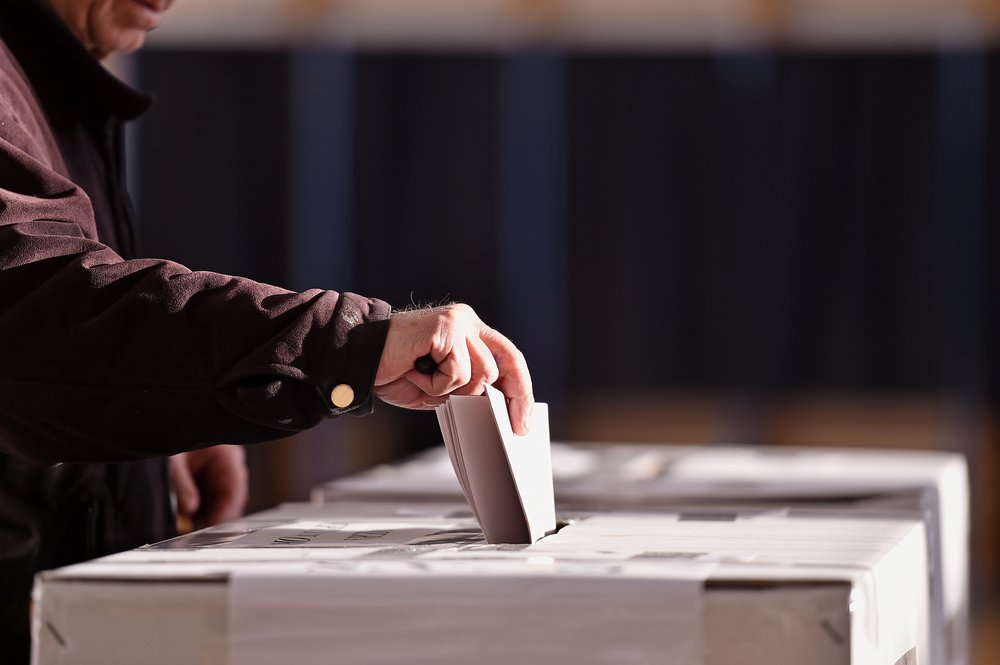
Last week, the Supreme Court handed down its in Cooper v. Harris, reversing years of ambivalence on the question of racial gerrymandering and handing a strong victory to opponents of racially based redistricting schemes. But for the聽 of Americans who didn鈥檛 turn out to vote last year, our electoral system still presents numerous barriers to making their voices heard. Entrenched bureaucracy may hold water as an explanation for nonsensical election days, but the of policies like voter ID laws belie their historical connection to the dark legacy of Jim Crow-era voting restrictions.
So if voting is to become more accessible and equitable in the United States, the court鈥檚 opinion in Cooper v. Harris聽ought to be a first step, not an endgame, that tackles the issue head on.
Outright voter suppression takes many forms, from of undesirable voters to limiting early voting and imposing rigid registration requirements. Amid an of new restrictions on voting, civil rights proponents must contend with legal challenges as well as the political challenge of countering the that voter fraud is a rampant problem鈥攁 myth propped up by a president who tweets incendiary statements to his millions of followers and who has even gone so far as to appoint a . This isn鈥檛 the first time a president鈥檚 insecurity over a popular vote loss has morphed into policy鈥攙oter fraud was the basis for President George W. Bush鈥檚 to clamp down on voting rights.
This toxic narrative has also been the basis for a patchwork of state-level voting restrictions, with Texas, Georgia, North Carolina, and Wisconsin all passing legislation on the issue in the past four years. These restrictions have their roots in the that rendered section 5 of the Voting Rights Act toothless. That opinion, written by conservative Chief Justice John Roberts, famously argued that the Voting Rights Act had already achieved its goals of racial equity and no longer served its purpose鈥攁 dubious claim, especially to the thousands of voters in swing states who were from accessing the polls last year.
Without section 5, states with extensive histories of racially motivated voter suppression are free to pass voting restrictions without federal review. And given that the court seems to be acting on the belief that racial equality has already been achieved, it might shock you to learn that many of the states that were under section 5 restrictions in the first place just so happen to have that disproportionately affect black Americans and the working poor.
This history is more than unsavory鈥攊t鈥檚 damning. The lack of democratic responsiveness to black voters contributes to the extreme inequality they face across numerous . From to to police violence to to , black Americans are routinely disadvantaged by American institutions. So When the Cleveland police officer who murdered 12-year-old Tamir Rice can be , but not for shooting a young boy, it鈥檚 easy to understand the discontent and outrage ultimately expressed by Black Lives Matter protesters.
In the face of voter suppression and poorly designed electoral procedures, direct action is often a more effective method of political participation for disadvantaged Americans. Politicians and pundits who of protesters as unfounded and hysterical have ignored the ways our political system disenfranchises black voters and have, instead, given credence to the of white nationalists who during the 2016 election.
Ultimately, practices that restrict who gets to vote and how much their vote counts poison our democracy. Americans鈥� general discontent can be seen in the tenor of political discourse, , and the low approval ratings of , the , and鈥攆or the 鈥�. Our civic life is already far from vibrant, and continuing to block citizens鈥� access to their primary way of exercising political power will only exacerbate these issues. Now, more than ever, it鈥檚 essential that every vote counts and every voice is heard.
Later this year, the court will have another opportunity to enhance our elections鈥� responsiveness when it hears a challenge to the practice of partisan gerrymandering in . Opponents of gerrymandering hope that a of measuring partisan bias, called 鈥渢he efficiency gap,鈥� will allay the court鈥檚 previous misgivings about not having a consistent test to detect partisan gerrymandering.
In addition to preventing votes from being diluted and suppressed, we should also positively reform how our system works in order to expand ballot access and improve our democracy鈥檚 responsiveness to voter needs. Simple ideas like automatic registration or election holidays can improve turnout, while more complex reforms like ranked-choice voting or multi-member districts could revolutionize the way voters鈥� voices are heard and the influence of special interests in our democracy.
Of course, there are, unfortunately, barriers to more complex electoral reforms. For instance, the recent by Maine鈥檚 Supreme Court halted an attempt to implement ranked-choice voting in the state. Ranked-choice or 鈥渋nstant runoff鈥� voting allows voters to rank their votes in elections with more than two candidates. That way, if the winning candidate only receives a plurality of the vote, the candidate with the least votes can be eliminated and that candidate鈥檚 supporters have their second choices tabulated. This process would repeat until one candidate receives a majority. However, Maine鈥檚 constitution stipulates that the candidate who wins a plurality in the initial tabulation must be declared the winner. Passing a constitutional amendment through Maine鈥檚 divided legislature will be difficult, to say the least.
With a Justice Department increasingly hostile to claims of voting rights violations and discrimination, there will likely be even more setbacks over the course of the next few years. But our civil rights have always been something worth fighting for. Despite the arguably dull nature of a topic like electoral reform, it鈥檚 possible to bring constituents, advocates, and policymakers together to make our democracy more responsive to and accessible for everyone. Whether it happens is up to those of us who firmly believe in our fundamental right to vote.
More 国产视频 the Authors
Related

Children Belong in School Learning, Not Left to Languish in ICE Detention

A National Review of Early Childhood Cost Models: Findings on Children with Disabilities and Developmental Delays

Gender Equity in High-Quality Youth Apprenticeship: A Deeper Dive into the PAYA Data
