Michelle Forest
Senior Communications Associate, Open Technology Institute
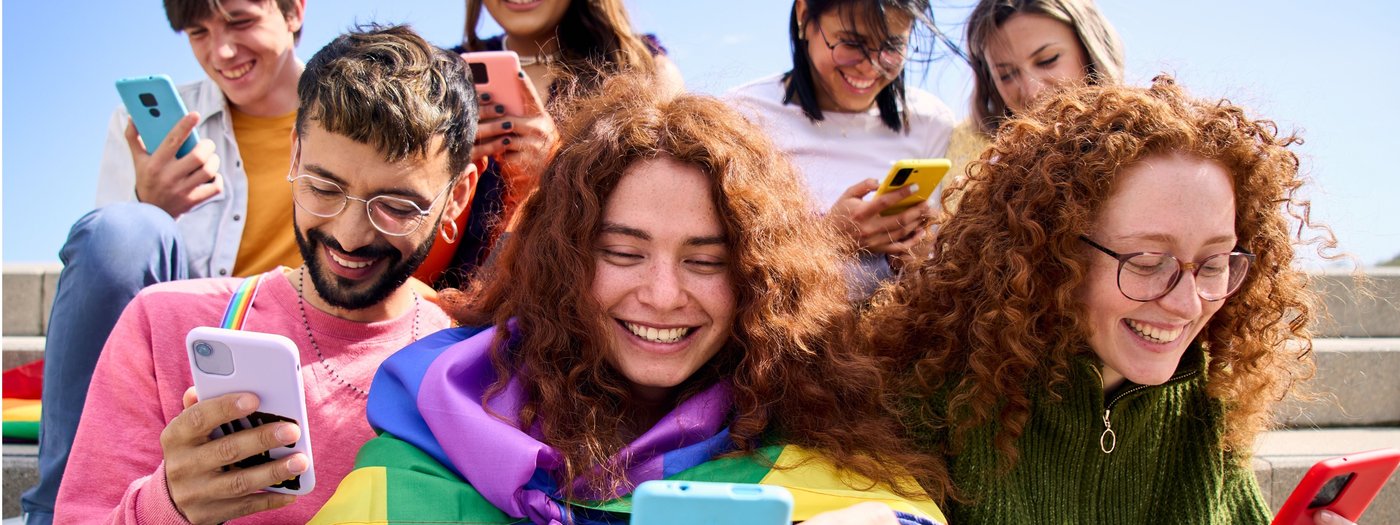
In 2023, a record 510 anti-LGBTQ bills were introduced in various states. Concurrently, several bills in Congress have threatened to ramp up online surveillance and content filtering that can put LGBTQ students at risk of being outed and restrict access to LGBTQ information.
Tech policy decisions are increasingly shaping the online experiences of LGBTQ youth, presenting significant challenges as access to supportive communities are under threat.
With efforts to safeguard LGBTQ youth online evolving, the Open Technology Institute’s Communications Associate Michelle Forest sat down with Better Life Lab Communications and Research Associate Jasmine Heyward to discuss how their experiences growing up online helped them explore concepts like sexual orientation and gender identity. Our conversation has been edited and condensed for brevity and clarity.
Tell me a bit about where you come from.
I grew up in Virginia, only about an hour south of DC, but the culture there is different. Ten years ago, we didn鈥檛 really have people who were out by choice, and very few people who were out at all. I was also raised in an evangelical Christian community, and so I approached queerness with the typical beliefs that one would have鈥攁 lot of stereotyping.
How would you describe the era in which you grew up online?
I am someone who definitely grew up with all of the online things. I was on Twitter (now X) in 2009, when I was 12. I probably got on fanfiction.net when I was around 13 years old, and on YouTube my freshman year of high school. I got into Tumblr somewhere around then, as well.
From there, I started engaging with the fandoms, which are online spaces dedicated to communities who consider themselves fans of specific artists or productions. And over time, as the fandoms I was in changed, I eventually got into fandoms where there were a lot of queer fanworks, which is art based on artists or productions, created by fans. A lot of people were talking about that.
I actually dug up a bunch of emails I had sent at 13 where I discussed with other people which characters could or could not be gay based on my feelings about those characters and no other pieces of information. These people were very, very patient with me, when I was being pretty ridiculous.
And so, the social internet was how I met people and shifted how I think about queerness, which was great for me in college, as I started figuring myself out.
How did being online help you come into your own, when it comes to your own identity?
My views have changed on so many issues, and a lot of that started online.
Before I even figured out my own identity, I was really fortunate that I was able to break down some of my beliefs first. I grew up in a school where there weren鈥檛 really any out queer people. Online, I was able to meet and share ideas with queer people, and I realized, 鈥淥h, these people are just people.鈥� In the work that I do now on , we find that when people meet other people of diverse backgrounds and lifestyles, opinions shift. If I hadn鈥檛 been able to work out my beliefs before I started figuring myself out, I think there would have been a lot of internalized shame, and hatred, which I managed to avoid.
I think those online spaces are also what led to me being aware of things that were happening in the news and in policy. I remember when the marriage equality decision came out in 2015. The only reason I had known about that before it was decided was because of social media. Upon engaging with more of these stories online, I realized queer experiences were incredibly diverse, which led to less prejudiced beliefs about other people and made me start to realize that my own lived experience may fall under the umbrella of queer.
There鈥檚 been a big push, recently, for restrictions on minors鈥� ability to use social media and other online platforms. What鈥檚 at stake here?
A lot!
There鈥檚 a question about social support, and there鈥檚 a couple of things underneath that.
If, in your 鈥渞eal life鈥� environment, you don鈥檛 have people around you who can understand your experiences, having online access to your community is really important. When you lose access to those communities, there are tough consequences.
The second thing is that it鈥檚 important for young people to have a space in their life where they feel comfortable talking about unfair experiences. Without this space, young people can internalize this idea of 鈥渆verything is my fault,鈥� which is associated with so many really negative health outcomes and life outcomes, like self injury and suicide.
I also think online spaces provide access to important information. There鈥檚 been a lot written about how kids are to access information about queer health issues if they鈥檙e in a school district that鈥檚 banned teaching about it. Giving young people the most information to make good choices is important.
And then鈥攁lso鈥攁ccess to information to just discuss challenging topics, such as mental illness, trauma, family problems, sexual assault, and discrimination. It鈥檚 so easy to say, teenagers shouldn鈥檛 be talking about things that are 鈥渟uper heavy鈥濃�攂ut those things are happening to teenagers anyway, and isn鈥檛 it better if they can get engaged with issues and conversations that can create meaning and purpose?
What do you want readers of The Thread to take away from this conversation?
For queer youth and any other marginalized community, the internet and social platforms are really important venues for seeking both social support and identity exploration. There鈥檚 a lot of work to be done, but cutting off access to online forums is not the answer.
Senior Communications Associate, Open Technology Institute
Entertainment Initiative Senior Associate, Better Life Lab