
Melissa Tooley
Director, Educator Quality
How dismembering ED will hurt our students and communities
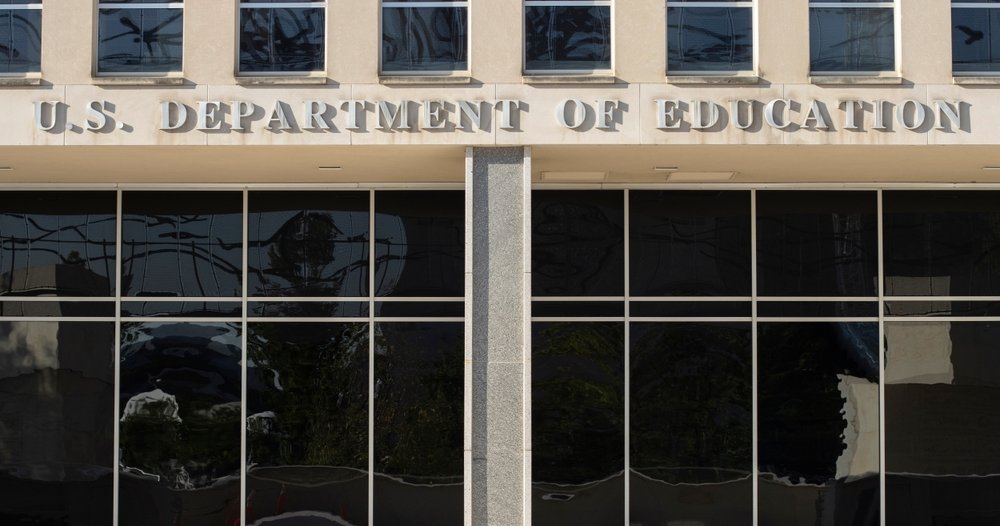







The U.S. Department of Education (ED) was created to help ensure that every student has access to a high-quality public education. The Trump Administration鈥檚 decision last week to move many of our country鈥檚 core education programs to other federal agencies will severely hurt its ability to fulfill this goal.
In addition to being on questionable legal ground, the administration鈥檚 to 鈥渃o-manage鈥� education programs will increase inefficiency and create unnecessary confusion. Administering programs to protect students and improve their outcomes requires much more than being a 鈥減ass-through鈥� for funding. It requires deep expertise of the evidence on what educational strategies are likely to work and which aren鈥檛. The interagency agreements implicitly acknowledge this by requiring ED staff to provide expertise, oversight, and myriad other support functions to the four agencies where education programs will be moved (the Department of Health & Human Services, the Department of Interior, the Department of Labor, and the Department of State). The back-and-forth required between agencies to execute this plan will detract from the real work of ED, which is to protect students鈥� rights and provide guidance and support to states, schools, and other educational entities to ensure students have the resources to succeed. And the massive staff cuts this year will make this even harder.
The programs in these interagency agreements are vital to the function and quality of our public education system and society as a whole. We acknowledge these programs aren鈥檛 perfect, but improvement should be the goal, not increased inefficiency that hurts states, localities, and, ultimately, students. Below are examples of the damage to come from the convoluted Rube Goldberg contraption that emerges from the agreements to parcel out and weaken ED鈥檚 programs.
The administration plans to move the Office of Elementary and Secondary Education, which runs more than two dozen programs, to the U.S. Department of Labor in what it calls the .
Moving Title I and Title III Elementary and Secondary Education Act programs to DOL are two of the most troubling aspects of the administration鈥檚 actions. Among its many functions, Title I provides grants to states and local educational agencies (LEAs) to improve the academic achievement of economically disadvantaged students. In return, it requires states and LEAs to monitor students鈥� academic achievement and create and implement improvement plans to address poor and/or inequitable outcomes. Title III of ESSA is the only federal grant program that is specifically geared towards supporting English learners (ELs) and recent immigrant students in the classroom and ensuring they are provided with the services they need to develop English proficiency. Administered by the Office of English Language Acquisition (OELA), the funds support the National Professional Development grant program to help prepare educators to effectively support ELs鈥� learning, as well as the a repository of data, toolkits, fact sheets, reports and other resources for state and local education leaders, educators, families, and students. The Title I Office and the OELA also engage directly with state and school level staff to answer questions and ensure compliance with federal laws.
Meanwhile, the Office of Special Education Programs (OSEP) remains at ED, separated from programs supporting English learners and children from low-income families. This is concerning because students are not one-dimensional, but multifaceted鈥攏early of all students with disabilities are English learners eligible to receive Title III support, and attend Title I schools. Yet, rather than receiving a comprehensive set of programs to address complex needs, students with disabilities and their families and educators will receive slower and less coordinated support amid a tangle of red tape.
The future of Title I and Title III had already been cast into doubt as a result of the Trump administration鈥檚 far-reaching personnel cuts and disruption to the Department of Education. For example, OELA has already seen its staff reduced down to one person, greatly diminishing their capacity to support states and LEAs. It is unclear whether staff at DOL have the content and technical expertise needed to provide technical assistance, guide resource development and provide the leadership necessary to ensure ELs do not get left behind..
Now, with reduced staff, ED officials will have to spend time providing guidance to DOL, and DOL will need to build new systems for communicating with and sending funding to state agencies and school districts when these systems already exist at ED. This additional red tape will likely delay the support that states and school districts are seeking, and could also affect the disbursement of funds getting to schools. This move is yet another signal that this administration does not prioritize our neediest students, those for which a federal role in education is most critical in ensuring they have the opportunity to meet their full potential.
Moving these elementary and secondary education programs, plus so many others, to DOL also shows a clear lack of alignment with what students and families see as the purpose and value of public education for children and youth. It reveals a view of even our youngest children as merely future workers, emphasizing labor over learning. This flies in the face of comprehensive research from the Brookings Institution showing that Education should be about developing thoughtful, thriving, productive citizens that positively contribute to their communities, now and in the future.
For the 15 percent of U.S. students who receive special education, breaking ED into pieces has immediate and lasting consequences. As noted above, even if the Office of Special Education Programs stays in ED, students with disabilities will likely be affected. These students have needs that are met by programs that are now supposed to be administered by DOL. Rather than receiving a comprehensive set of programs to address complex needs, students with disabilities and their families and educators will receive slower and less coordinated support amid a tangle of red tape.
The Individuals with Disabilities Education Act (IDEA) is still the law, but, because of previous cuts, staff levels in the Office of Special Education Programs are greatly reduced. States will lose the guidance, technical assistance, and oversight they rely on to follow IDEA. ED plays a critical federal role: administering roughly $15 billion in annual special education funding, holding states accountable for using those funds appropriately, identifying civil rights violations, and ensuring consistent protections nationwide. Without that role, the quality of education for students with disabilities will vary dramatically from state to state, and parents鈥� rights to fair education processes will be far more vulnerable.
The timing could not be worse. States already face severe shortages of special educators and early intervention providers, leaving long waitlists and unfilled positions, especially in rural communities. Eighteen state directors of special education are new to the position, yet now have no federal partners to call for guidance. IDEA turns 50 this year, a reminder that before federal oversight, millions of children with disabilities were excluded or segregated. Weakening ED risks reversing that progress.
Another interagency agreement announced last week is called the. The agreement involves moving dozens of grant programs administered by Higher Education Programs (HEP) to DOL. The grants are intended to broaden access to higher education and strengthen the capacity of colleges and universities to improve academic quality and services to students. In 2025, the grants provided which primarily went directly to institutions of higher education but also includes some grants to non-profit organizations and state agencies. Much of the funding is intended to improve college access and success to low-income and first generation students, and individuals with disabilities through programs like the Federal TRIO programs. It also goes to lower-resourced institutions that serve large populations of low-income students and students of color to help improve educational quality including funding to Historically Black Colleges and Universities (HBCUs) and American Indian Tribally Controlled Colleges and Universities.
According to the agreement, DOL will take on a growing role administering select higher education programs by managing grant funds, providing technical assistance and integrating the programs into DOL programs. But, similar to its role with the elementary and secondary programs noted above, ED will still be conducting oversight of DOL鈥檚 administering of the funds, oversight of the programs, and all of the various statutory responsibilities that come with the programs. DOL is responsible for administering the grants, monitoring drawdowns of funds, and conducting site visits. ED is responsible for policy and guidance, review and approval of grant announcements, technical review plans, grant slates, and information collection, reviewing and resolving audits, management and hiring for ED employees, budget formulation and resource allocation, salaries and staffing, ED responses to GAO and OIG and resolution of audit findings, internal controls and risk assessments, and review of performance reports from grant recipients.
There are two top concerns about these moves: First, ED says this will return education to the states. But for post-secondary education that doesn鈥檛 make sense. The majority of the grants from these programs do not flow through states; they flow directly to institutions of higher education. For grantees, it likely means working with two federal agencies to receive and utilize funds. Second, as shown in the litany of responsibilities that ED will still have to maintain while DOL figures out how to do all its new work, this is a new layer of bureaucracy. Administration and oversight of the grant programs are reliant on functions already housed within the ED such as information and data reported for a college鈥檚 eligibility for Title IV aid. ED says this will streamline bureaucracy but the additional work and communication needed will double it.
ED is also moving the Child Care Access Means Parents in School (CCAMPIS) program, a federal grant authorized under the Higher Education Act Amendments of 1998, into the U.S. Department of Health and Human Services (HHS). CCAMPIS serves low-income student parents via competitive grants to higher education institutions that provide subsidies to help students access high-quality on or off campus child care to help them stay enrolled in school while caring for their families.
国产视频鈥檚 research found that campuses struggle to access CCAMPIS grants, in part due to a complex and burdensome application process that鈥檚 most difficult for less-resourced institutions who tend to serve higher numbers of student parents. We have called for more funding, a simplified application, and improved technical assistance to colleges to boost the number of colleges that can serve student parents with child care access.
Instead, ED and HHS intend to add a layer of bureaucracy complicating the administration of CCAMPIS. The interagency agreement outlines 7 responsibilities of HHS in administering the program and 16 responsibilities of ED; rather than simplifying grant access to help colleges meet students鈥� child care needs, this will make program administration more complicated and confusing through bringing a second federal agency into the mix. What鈥檚 more, HHS鈥檚 Administration for Children and Families has been through layoffs and the elimination of entire offices earlier this year, making it difficult to see how they鈥檒l be equipped to manage an additional program.
The about the move paints CCAMPIS as duplicative of other child care programs, just as the President鈥檚 budget request earlier this year argued, but in reality only of eligible student parent families access Child Care and Development Fund (CCDF) subsidies. Chronic underfunding of CCDF programs combined with about programs of study, work requirements, time limits, and academic progress can limit students鈥� access to this support.
In this example and so many others, the cutting-up and separating of ED programs is nonsensical when we recognize that schools and training programs are most successful when we consider all of the needs of learners, keeping them whole instead of only recognizing them as isolated pieces. CCAMPIS belongs in ED, as Congress intended and authorized, where skilled higher education experts can administer the program within the ecosystem of student financial aid and other student support programs meant to work together to promote college success for all learners.
With the Office of Career, Technical, and Adult Education Programs (OCTAE), ED has already outsourced the administration of career and technical education (CTE) and adult education and literacy programs to DOL. This undermines the focus of these programs on preparing learners for both college and career.
DOL鈥檚 Workforce Innovation Opportunity Act (WIOA) training programs serve an important function: they are intended to help individuals who are out of work get back quickly into a job. According to the , many of the occupations for which WIOA participants are trained do not pay wages that can support a family. That is not the orientation or the result we want in high school CTE. We need to create long-term pathways that will create a prosperous future for every student, not steer them into the first available job regardless of its quality.
Relocating the federal adult education program to DOL has already led to 鈥渕ore questions than answers鈥� (see details in Braden Goetz鈥檚 to Congress last week). But worse, this move severed CTE鈥檚 vital connection to higher education. Learners in adult education need more than a high school equivalency credential to thrive in today鈥檚 job market. A GED is a passport to further learning, not a final destination. Adult education programs must be centered on building college readiness and helping learners navigate and transition successfully to postsecondary education鈥揳ll of which are outside the scope of DOL鈥檚 expertise.
What can be done to head off this damage? The greatest hope is to get people to understand how this move is a failure to do what鈥檚 best for their students, their communities, and our nation鈥檚 long-term prosperity. Here鈥檚 one idea for how Congress can support this effort.
Director, Educator Quality
Senior Policy Analyst, Early & Elementary Education
Senior Policy Manager, Higher Education
Director of Higher Education Accountability and Quality
Senior Policy Analyst, Education Policy
Project Director, Early Development & Disability
Senior Policy Advisor, Center on Education and Labor
Director, Education Funding Equity Initiative
Senior Policy Advisor, PreK-12


