
Carly Roberts
Associate Program Director, Overdeck Family Foundation
Play is a critical component of healthy cognitive and social-emotional development
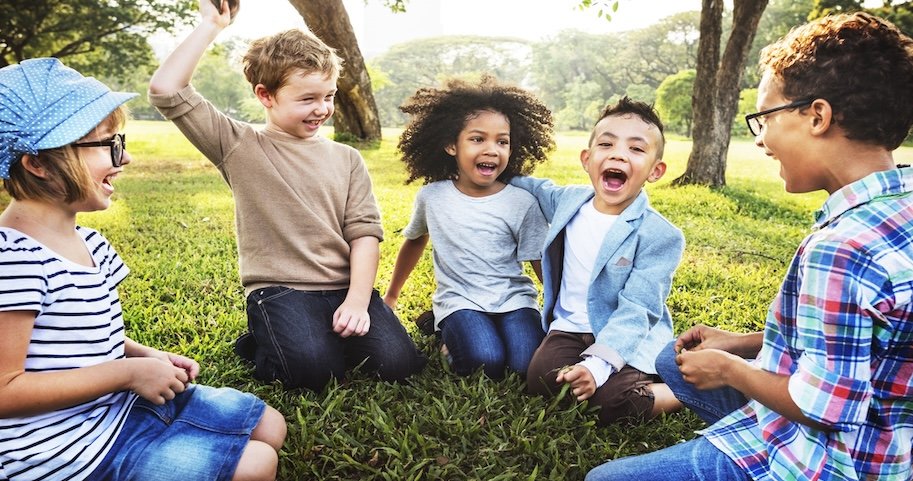

The United Nations declared June 11, 2024 as the first-ever annual , with 140 co-sponsoring countries. The announcement illustrates the growing global movement around the importance and benefits of play. Rather than another 鈥渢o-do鈥� to add on to busy days, a pedagogy of play based in the can offer a way of approaching instruction that fundamentally improves children鈥檚 lives.
We know from research that play is a critical component of healthy cognitive and social-emotional development. It promotes and executive functioning, such as collaboration, communication, and critical thinking, supports , and even enhances like early language development and math skills.
However, young children's opportunities for play are declining. In his book , social psychologist Jonathan Haidt outlines reasons for 鈥渢he beginning of the end of play-based childhood.鈥� According to Haidt, worried parents are removing opportunities for autonomous play, and as a result, their children are spending less time playing both inside and outside the home, leading children to become more sedentary, unhappy, and anxious.
Often, instead of engaging in physical or in-person play, kids are spending time on screens. Soaring rates of technology use are seen as a , but even two- to eight-year-olds are spending . Add this to the and you have a real play crisis at the same time as children鈥檚 are on the rise and have taken a dive.
The science of learning tells us that restoring children鈥檚 opportunities for joyful, intentional play鈥攗sing a rigorous, research-based approach called 鈥攈as the potential to improve children鈥檚 academic and social-emotional outcomes, at a time when doing so is particularly important. Decades of research on the science of Playful Learning show that children benefit most from a 鈥渂alanced diet鈥� of play opportunities across a of playful instruction, guided play, and free play:
It鈥檚 clear that play benefits kids, and yet they have access to an ever-declining amount of it as early as kindergarten. Within the school day, 鈥溾�� and an overemphasis on academic achievement often squeeze out recess and opportunities for children to learn through exploration. One hypothesis for this decline is that educators feel they have to make an either/or choice: play or learning. This false dichotomy harms children and fails to see what science has long known鈥攆or young children, .
For example, kindergarten teachers can try to teach students early literacy skills while they sit at desks doing worksheets, or they can use a curriculum from , which emphasizes make-believe play, creativity, and collaboration in order to teach young kids both academic and self-regulation skills. Math teachers can practice fractions and multiplication skills on the whiteboard, or they can engage students in playful learning through , an interactive STEM enrichment game that uses basketball to in fourth- through eighth- grade students. And science teachers can rely solely on textbooks to explain photosynthesis, or they can partner with , which installs outdoor learning labs that transform unused spaces on school grounds into herb and vegetable gardens where students compare and contrast the characteristics and needs of various organisms and discover science in action. All these programs, which receive funding from Overdeck Family Foundation, have play and inquiry-based learning at their center. But they also show the ability to support academic and social-emotional skills and are highly engaging, something that is particularly important at a time of and .
High-quality early childhood environments already recognize the essential role of play in children鈥檚 development. In fact, you can often hear the classrooms led by skilled educators before you see them, because the sound of joyful learning echoes out of the room and into the hallway. But encouraging the full spectrum of play as children grow and class sizes increase can be challenging. Some teachers might understand the importance of play but don鈥檛 see how it鈥檚 possible to integrate it into an already , filled with standards to cover, , , and . And it鈥檚 true that many teachers are already asked to in a myriad of ways.
But even if the constraints can鈥檛 change, educators, especially in elementary school, can and should look for opportunities within the confines of a typical day to make learning more playful. These could be pedagogical shifts, encouraging experiential or project-based learning opportunities aligned to the content children are already learning. Even small changes, such as bringing a story to life by acting it out, using manipulatives to break down math concepts through child-directed math games, or following children鈥檚 interests by incorporating topics that excite them into the content they need to learn, can make a big difference in creating a playful learning environment in the classroom.
Incorporating play into the school day would not only invigorate the classroom experience for students and teachers, but could also move the needle on student achievement in a way our education system has often struggled to do. Increasing children鈥檚 social-emotional well-being, engagement, and happiness while fostering foundational learning鈥攖hat鈥檚 something we should all line up for.
Associate Program Director, Overdeck Family Foundation
Portfolio Associate, Overdeck Family Foundation


