
P.R. Lockhart
Editorial Intern
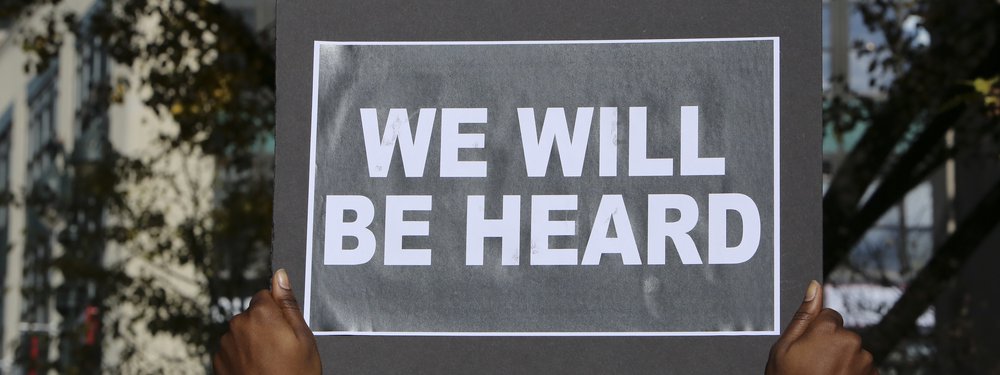
After heading to the polls , black voters are up for grabs once again in the upcoming 2016 election. But in the first election of the post-Obama era, liberals and conservatives alike have struggled to substantively address racial issues in a way that resonates with the demographic that helped secure the election of the nation鈥檚 first black president.
First, consider the context: Current candidates must appeal to black voters following the nation鈥檚 first black president.
鈥淏arack Obama will be one of the most important factors in who becomes the next president of the United States,鈥� NBC News reporter Perry Bacon, Jr. 鈥淥bama’s legacy is complicated, creating challenges and opportunities for both parties.鈥�
Reckoning with that legacy has proven to be especially difficult when it comes to matching Obama鈥檚 level of outreach among black communities, a struggle that is perhaps most easily visible in how candidates have addressed the Black Lives Matter movement. It is hardly a coincidence that the most significant racial justice movement in a generation would appear at the end of the Obama era鈥攊f Obama鈥檚 presidency can be viewed as the embodiment of black America鈥檚 hope for a future where they were embraced as equals, the swift rise of Black Lives Matter could be comparatively viewed as the proof of black America鈥檚 frustration that it never arrived. And while the movement initially avoided politics at all costs, its desire for influence among policymakers has led it to .
鈥淎s the Black Lives Matter movement seeks a greater role in shaping the conversation around a justice system that disproportionately affects African Americans, candidates are reacting in decidedly different ways on the campaign trail,鈥� The Guardian鈥檚 Sabrina Siddiqui. 鈥淗ow each party responds both rhetorically and substantively to such activists could shape turnout among black voters in November next year.鈥�
However, an examination of the tension between Obama and Black Lives Matter, or even an analysis of how candidates have responded to the movement, in particular, only tells part of the story. Politicians on both sides of the aisle have struggled just as much鈥攊f not more so鈥攖o address the concerns of an ideologically diverse black electorate as they have those actively involved in the movement. And while finding a substantive message that can speak to left-leaning black voters will go a long way for some contenders, the larger issue is that, for the most part, many feel that candidates in the 2016 election have failed to discuss race in a way that resonates with black voters鈥攂e they liberal activists, conservatives, independents, or moderates.
鈥淲e think the African-American vote will be key in this election,鈥� Rand Paul adviser Elroy Sailor recently to Robert Draper of the New York Times Magazine. 鈥淭he African-American community hasn鈥檛 been this politically engaged since the 鈥�60s. President Obama did a really good job of energizing and mobilizing African-Americans. In this election cycle, however, we predict the Democrat nominee will not be able to take the African-American vote for granted.鈥�
If conservatives are interested in taking Sailor鈥檚 advice, they鈥檝e been鈥攁s Siddiqui puts it鈥斺�榗autious鈥� in their approach. Paul, one of the few Republican candidates who about police brutality, when he attributed Baltimore鈥檚 uprising this past spring to 鈥渢he breakdown of the family structure, the lack of fathers, [and] the lack of sort of a moral code in our society,鈥� without acknowledging black residents鈥� concerns about the role of the police in fueling the violence. Establishment wunderkind Marco Rubio has publicly that concerns about the unjust treatment of blacks at the hands of law enforcement 鈥渋s a legitimate issue,鈥� but hasn鈥檛 offered any indication that he would take up the cause if he were to win. And other candidates, eager to appeal to the party鈥檚 remaining (but waning) tough-on-crime wing, have only raised race as a means of and the rising crime wave that it isn鈥檛 actually causing鈥攍eaving other key issues like voting rights, the racial wealth gap, and education still on the table.
To some extent, conservative intransigence on racial matters has been shielded from internal scrutiny due to the very recent rise of famed African-American neurosurgeon Ben Carson in the GOP polls, a development that some conservatives as an indication of the Republican Party鈥檚 progress on race. However, while Carson鈥檚 stories of overcoming a violent childhood, frequent deployment of respectability politics, and use of seem to speak to what The Daily Beast鈥檚 Goldie Taylor as strategies 鈥渢hat served to deepen his public policy bona fides and ingratiate him with working and middle class white audiences,鈥� black political commentators have been quick to point out that the elevation of a candidate that some on the right believe would be the first 鈥樷�� hasn鈥檛 led to any substantial efforts to address the specific concerns of black voters. 鈥淐arson has given the GOP a black man who is the personification of the nation鈥檚 progress but doesn鈥檛 much remind the Republicans about the institutionally embedded racial problems that remain,鈥� Isaac Bailey recently . 鈥淗is presence makes it easier for the GOP to continue downplaying the inequalities most African-Americans want given more priority.鈥�
As the GOP argues that it has found the candidate whose appearance makes him the most suitable to replace Obama, the Democrats have focused on convincing voters that they are the direct heirs to the current president鈥檚 political legacy. Sanders鈥檚 anti-establishment ideology and history of civil rights activism makes him the candidate that his supporters think should be the most attractive to young black activists, but his relative inexperience on the racial justice issues of today prompted Black Lives Matter activists to disrupt his events and demand that he release a racial justice platform (). Hillary Clinton is a familiar face among older, more moderate black voters, but, as The New Republic鈥檚 Suzy Khimm , many 鈥渉aven鈥檛 forgotten that her husband鈥檚 tough-on-crime policies are part of the problem when it comes to systemic racism in criminal justice.鈥� And while former Maryland governor Martin O鈥橫alley actually has experience leading a predominantly black city, the fact that the 鈥渮ero-tolerance鈥� policies that fueled Baltimore鈥檚 discontent this spring were implemented while he was still mayor has impeded his standing among black voters. While it is tempting to say that Democrats don鈥檛 have to work for the black vote, the truth is that many voters are frustrated with their treatment at the hands of a party that, Black Lives Matter co-founder Patrisse Cullors, 鈥渉as milked the Black vote while creating policies that decimate Black communities.鈥�
All of this leads to a still unanswered question: How will the black electorate vote in 2016? That will likely depend on how candidates approach a voting bloc that is united on certain key issues but ideologically divided on others. Both parties will need to put in considerable work if they hope to have black voters backing them at the polls. The outcome of the election may depend on it.
Editorial Intern


