
The Newest New German Identity
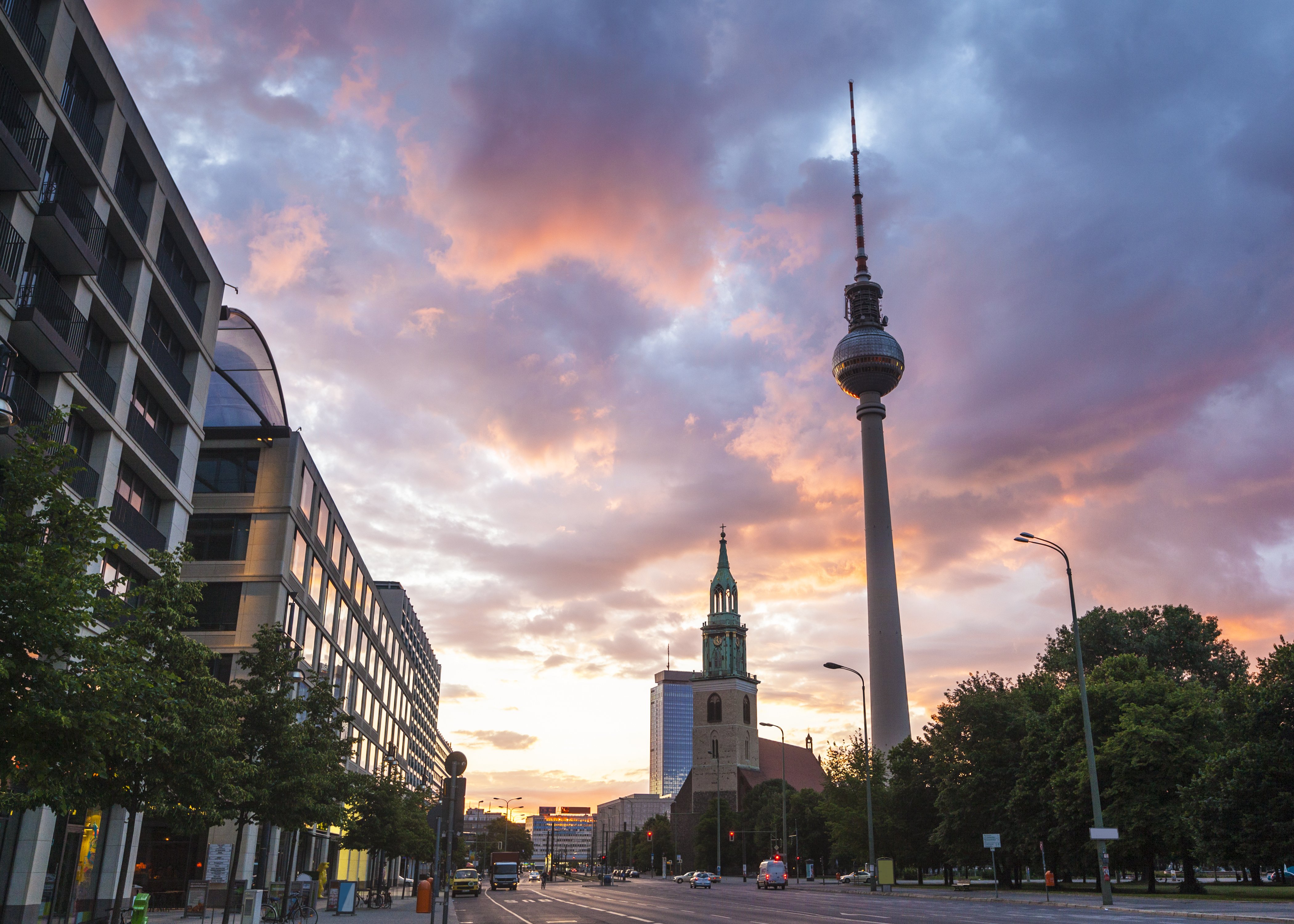
On Oct. 3, 1990, East and West Germany reunited, disappearing off the face of the geopolitical map and becoming, once again but differently, Germany.
And yet, 25 years after Germany鈥檚 radical rebirth, it鈥檚 easy to see that the country is still shaped by a barbed history of struggle and war trauma.
In fact, you could say that it wasn鈥檛 the fall of the Berlin Wall in 1989 but that of Nazi Germany in 1945 that was, in a way, the original sin of modern Germany, and the moment that has left an imprint on everything that has followed. Signs of this can be found in everyday German life, from the police who constantly guard all Jewish institutions to the laws that prohibit Holocaust denial to the fact that some words have been banished from popular parlance because of their association with Adolf Hitler.
One of the most noticeable results of this dark legacy has been Germany鈥檚 hesitancy to take up its role as Europe鈥檚 de facto leader, despite its political stability, size, and wealth. While some countries in Europe would surely be glad to keep it this way (in Greece, German Chancellor Angela Merkel鈥檚 tough approach to the debt crisis has led some to crown her the), others badly want Germany to come to terms with its past enough so that it can lead Europe into the future. Mid-20th century Poland was crushed, in part, by an aggressive Germany, and yet former Polish Foreign Minister Rados艂aw Sikorski once that he fears Germany鈥檚 power less than its inactivity.
But 2015 marks a new pivot in Germany鈥檚 reckoning with the rest of the world鈥攁nd with itself.
Over the past few months, what the United Nations is calling the has finally reached a tipping point. Masses of refugees have left their homes and spilled across unsafe seas in search of a better life. Since 2011, some four million Syrians have fled Bashar al-Assad鈥檚 brutal regime. Political and sectarian violence from Afghanistan to Eritrea to Kosovo has uprooted millions more. While these refugees hail from all over the world, the majority of them set out in rickety boats in hope of landing on Europe鈥檚 shores.
Europe鈥檚 response to this mass movement of people has been disastrous. After weeks of trying to figure out how to stem the pressure of refugee inflows, the European Union to relocate 120,000 refugees among its member states. But it doesn鈥檛 take a deep dive into this move to see that some of the world鈥檚 richest countries 聽to contain the crisis. Take Britain and Denmark, who have opted out of refugee quotas, or Finland and France, who are accepting relatively few refugees, though they鈥檙e among Europe鈥檚 larger and more economically stable countries.
Germany, on the other hand, has, with time, become explicitly welcoming. Merkel that Berlin will give its regional states additional funding to better handle the arrival of refugees, as well as 670 euros per new arrival per month.
But Germany鈥檚 words have perhaps been more telling than its purse. When asked about a simmering fear of how mostly Muslim refugees might change European culture, Merkel, 鈥淲e can鈥檛 say that this is a phenomenon that doesn鈥檛 concern us. … Fear has never been a good guide, not in one鈥檚 personal life and also not within society.鈥澛燬he continued:聽鈥淐ultures and societies shaped by fear will certainly never be able to be leaders in the future. We have this debate about whether Islam belongs to Germany. But when a country has four million Muslims, there鈥檚 no debate about whether Muslims are a part of Germany. … I find this debate very defensive. European history is so filled with dramatic and brutal conflicts that we should be careful about complaining when somewhere something bad happens.鈥�
Merkel, here, is revealing a Germany that, over many decades, has gradually become less opposed to shedding its reputation as鈥攁 country that casts itself in a supporting role on the international stage, though its economic power and size position it to lead.
Indeed, Germany has gotten to where it is today through bruising soul-searching in the face of more than half a century of hard knocks: reluctance to talk about National Socialism in the 1950s, a lack of political will to integrate waves of 鈥済uest workers鈥� beginning in the 1960s, mob rage aimed at refugees in the 1990s, and a xenophobic murder spree between 2000 and 2007.
This isn鈥檛 to suggest that the Germany of 2015 is more moral than the Germany of the past, but rather, that Germany鈥檚 more secure and stronger stance in the world today has been hard-won.
In addition to genuine empathy developed over the past 25 (or even 70) years, Germany鈥檚 generosity toward refugees may also be explained by the fact that its, and young, skilled refugees could help to fill a gnawing demand for labor. Astrid Ziebarth, of the German Marshall Fund, recently argued that Germany鈥檚 response is. What we should really be asking ourselves, she wrote, is how Germany鈥檚 political leaders can sustain this momentum, given that there鈥檚 no efficient refugee management system in place and that one country can鈥檛 solve the crisis alone. There鈥檚 also the issue of how mainly non-white refugees might fuel right-wing populist flames, which is an issue that confronts Germany with .
But this is a challenge to which Germany is finally suggesting it can rise. The image of a welcoming Germany stands in stark contrast to what we鈥檙e seeing elsewhere: refugees suffocated in the back of a truck in Austria, razor-wire fences in Hungary, and a United States that鈥檚 staying quiet on the other side of the Atlantic鈥攄espite having the wherewithal to help. Twenty-five years after reunification, Germany is no longer using the bones of history to constrain itself. Rather, it鈥檚 using them聽to show that it can be more than its history.
Twenty-five years ago, the question was how to bring East and West Germans back together in Germany. Today, it鈥檚 how to accept more of the world into Germany鈥攁nd how to bring more of Germany to the rest of the world.
More 国产视频 the Authors
Related

鈥淧eace Through Strength鈥� Is Hard to Read

“Getting the Golden Ticket”: Participants’ Perspectives on Lexington’s First Assembly

Civic Assemblies: A Framework for Community Colleges
