
The Threat of the Big Bad Pulse
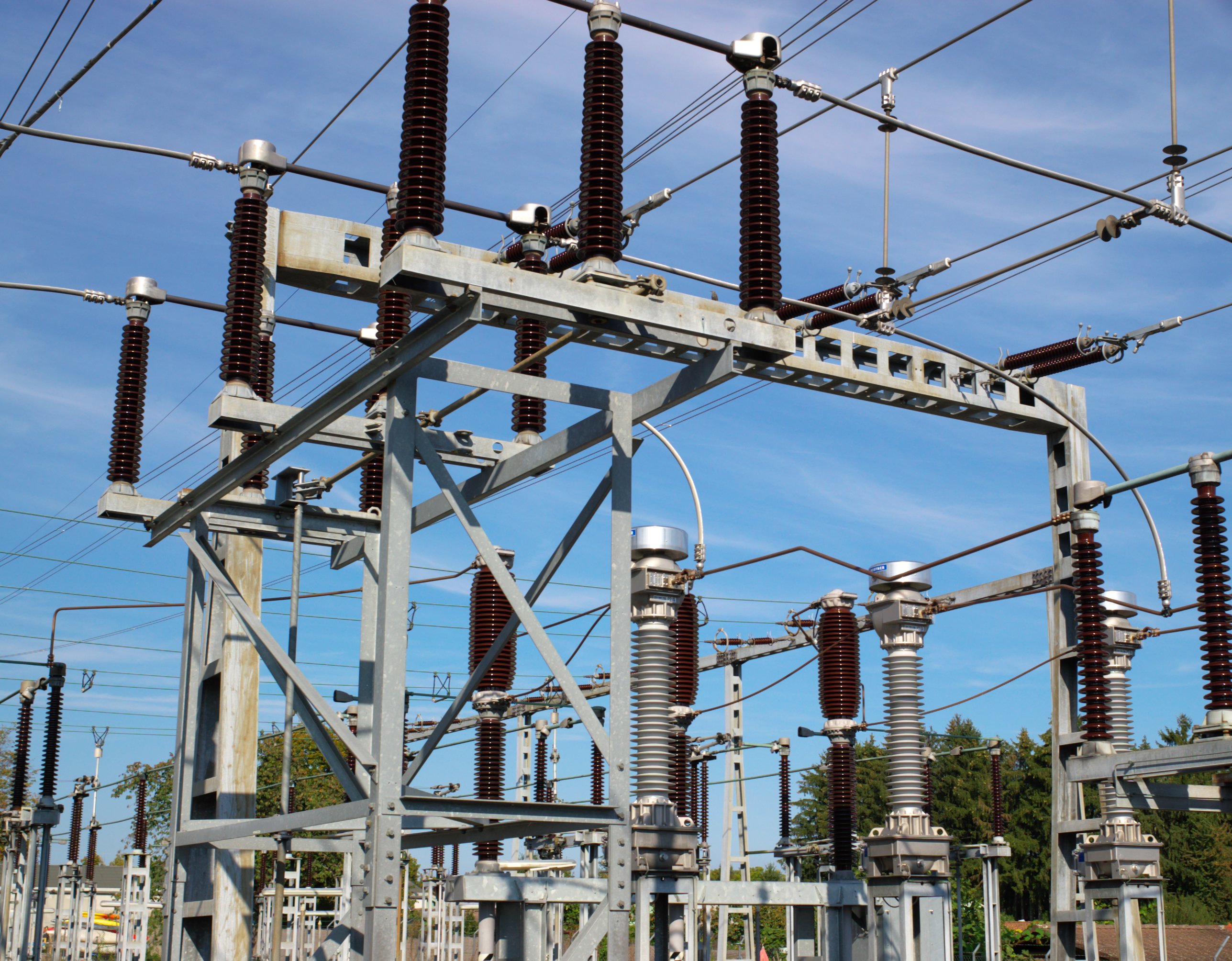
While before Congress
in May, Peter Pry warned that a rogue state or terrorist could attack the United
States with a weapon that would kill nine out of 10 Americans 鈥渢hrough
starvation, disease, and societal collapse.鈥�
That fearsome weapon? An electromagnetic
pulse. Pry, executive director of the EMP Task Force on National and Homeland
Security, a congressional advisory board, described a scenario in which an
adversary could detonate a nuclear device in the atmosphere over the United
States, which would in turn generate an EMP that would cause catastrophic
damage to the nation鈥檚 electricity grid, resulting in long-term, national power
outages.
It is, indeed, a frightening scenario鈥攁nd
it isn鈥檛 the only threat to the nation鈥檚 electricity grid. U.S. critical
infrastructure is also vulnerable to cyber and physical attacks. The risk of
such attacks is real, and in some cases growing. But don鈥檛 run out and stock
your bomb shelter with whale
oil just yet. In fact, odds are you have far more to fear from nut-obsessed
than nutty
extremists when it comes to the reliability of your electricity.
That doesn鈥檛 mean there鈥檚 no cause for
concern. Infrastructure has always been a target in a time of war, both to
erode military capabilities and to bring political pressure to bear. The United
States is fairly transparent about the locations of some major military and
intelligence facilities, and key economic nodes are easy to pinpoint as well.
The Sept. 11 attackers, after all, went after a military target (the Pentagon)
and an economic one (the World Trade Center). In addition, most U.S. military
bases are connected to civilian electricity grids, as are any economic targets,
an interdependency that is well known. In this age of electricity, the grid is
what the military calls a 鈥渃enter of gravity.鈥�
So, how worried should Americans be about such attacks? As with most things, it depends鈥攕pecifically, it depends on the threat.聽聽
So, how worried should Americans be
about such attacks? As with most things, it depends鈥攕pecifically, it depends on
the threat.
First, there鈥檚 Pry鈥檚 scenario. An EMP
attack resulting from a high-altitude nuclear detonation seems a possible but
not very plausible scenario. An adversary looking to carry out such an attack
on the United States would need ballistic missiles and nuclear weapons. The
missiles either need to be capable of an intercontinental launch or have a
platform that can both move within range of the U.S. homeland undetected and
launch a missile.
There are actors that either have or are
seeking to acquire the capability to launch such a weapon (for instance, North
Korea), but it is important to consider this threat in the context of the
likelihood of an attack. The consequences of launching a nuclear strike on the
United States would be severe, to say the least, so the motives of a potential
adversary would be a key question.
Moreover, if an adversary did want to
start World
War III and was not deterred by the formidable U.S. capability to respond
to such an attack, the grid might not be the best target. It is not a certainty
that such a detonation would cause a prolonged, widespread, and devastating
power outage; indeed, some manufacturers of industrial control systems and transformers
report that their equipment has been tested and proven robust to such an
electromagnetic pulse. Nor is it clear that the electric grid would be the ideal
target for such weapons. And for that matter, there are other, easier ways to
attack the grid. Frankly, the development of more discrete EMP weapons that can
be used against specific military targets is probably more worrisome from a
national security point of view.
Second, there鈥檚 the possibility of a
remote cyber attack, which is
to carry out if the target is a website or business software. Those types of
attacks can cause significant damage to a company or even a country, but are
less likely to result in physical damage to equipment in the grid. In part,
this is mechanical equipment that has been engineered to withstand physical
challenges, partly just because of the inherent danger of dealing with high
voltage electricity. Furthermore, although these systems do generally have
communications links, they do not tend to be outward facing鈥攊n other words, they鈥檙e
not connected to the Internet. It may be possible to breach these
communications links into physical equipment, but it is not easy and often
requires both knowledge of the system and physical access. Even Stuxnet, a very
sophisticated computer worm, someone at the Iranian
facility to plug in an infected flash drive, according to Symantec.
If neither EMPs nor cyber weapons are the
clear and present danger for the electric grid, who or what is the biggest threat?
National outage reporting data suggests that enemy number one is Mother Nature. According to the , severe weather accounts for the majority of outages…聽
National outage reporting data suggests
that enemy number one is Mother Nature. According to the , severe weather
accounts for the majority of outages; in 2014 there were 87 outages resulting
from weather-related issues. Most of these hazards are what the national
security world calls 鈥渓ow-consequence, high-probability鈥� events, meaning that
they occur frequently but generally cause little damage on a case-by-case
basis. The effects tend to be fairly short in duration and limited in the
number of customers affected. A number of weather events in recent years鈥攈urricanes
in the Gulf of Mexico, storms on the eastern seaboard, tornadoes in the Midwest
and Southwest, and wildfires in the West and Southwest鈥攈ave caused
higher-consequence electricity outage events. While such high-consequence
weather events鈥攊n terms of lives lost, economic costs, and duration鈥攎ay not be
as frequent, they are not unheard of, either. In 2012, for example, Superstorm
Sandy in more than
$50 billion in damage, 147 deaths, and knocked out power to more than 8 million
people鈥攊n a few cases, for months.
Moreover, given the changing climate,
such severe weather events are expected to increase鈥攊ndeed, 10 of the most
destructive hurricanes on record in the last 10 years.
A November 2014 Intergovernmental Panel on Climate Change report confirmed that
effects from climate change have been rising since the 1950s and are being worldwide. In
addition to the direct effects of climate change, such as severe storms, secondary
effects could have an impact on the electric grid, such as major droughts that
may affect the availability of water for thermal power plants. Further, the
report noted that climate change-related weather disasters will disproportionately
affect the poor; this is especially true in countries with immature energy
infrastructure where natural hazards are already causing multiday outages to an
already unreliable power supply. Countries that are at a higher risk for
climate change damage are often those with insecure energy infrastructure,
which means that when additional and more severe weather events occur in these
countries, the results are likely to be more catastrophic and long-lasting.
A different kind of weather, , also gets some attention as a hazard
to the grid. Geomagnetic events have the potential to be high consequence, and although
the last major event occurred in 1921, such flare-ups could happen at any time.
In 1989, for example, 6 million residents of Quebec, Canada, for nine hours
following a geomagnetic disturbance from a solar storm. The Federal Energy
Regulation Commission recently released new
to address this risk.
Weather is not the only natural hazard,
either: last year, a flock of renegade parrots reportedly a power outage
for thousands of Californians, though squirrels are the
of animal outages. These occurrences tend to be inherently low-consequence.
Human beings also cause many outages, from car accidents that take down utility
poles to deliberate acts of sabotage. Most of these incidents are either
low-consequence vandalism or not deliberate, according to DOE . In 2014, for
example, a
fell off course, crashing into power lines and causing a five-hour power outage
for some households in Lower Yakima Valley, Washington.
Not all human-induced outages are mistakes, and there is potential for high-consequence events.聽
Not all human-induced outages are mistakes,
and there is potential for high-consequence events. In April 2013, one or more
gunmen Pacific Gas and
Electric鈥檚 Metcalf transmission substation near San Jose, California. The
assailants cut communications links around the substation and fired more than one
hundred rounds from a high-powered rifle, damaging 17 transformers. Remote
operators were able to detect the leak and shut the transformers down before
there was long-term damage to the transformers or a power loss to Pacific Gas
and Electric customers, but it was a near miss. The Federal Bureau of
Investigation is still investigating the .
This is all very worrisome, but it would
frankly be prohibitively expensive to make the grid robust to every possible
threat. Nonetheless, making the electric grid more reliable and more resilient
to natural hazards would be an important first step. Indeed, such challenges
are increasing in frequency and severity due to climate change, aging
infrastructure, and a changing supply and demand landscape, a case that is made
convincingly in the Obama administration鈥檚 new .
After all, if the grid is not robust to natural hazards then it is not robust
to the more exotic events that have a low risk of happening in any given year.
Mundane resilience to Mother Nature is the first line of defense for the
electric grid.
A version of this article appeared on , a partnership of Slate, 国产视频, and Arizona State University. It is drawn from a longer scholarly article, accessible . 聽
More 国产视频 the Authors

Emily Schneider
Related

鈥淧eace Through Strength鈥� Is Hard to Read

“Getting the Golden Ticket”: Participants’ Perspectives on Lexington’s First Assembly

Civic Assemblies: A Framework for Community Colleges
