Ben Dalton
Fellow, Future Security

This blog post offers an overview of key figures in the Wagner Group-Russian government nexus, supplementing our comprehensive report. For a full analysis and deeper insights, we encourage readers to explore the complete report, The Wagner Group鈥檚 Little Black Book: Decoding Command and Control of Russia鈥檚 Irregular Forces.
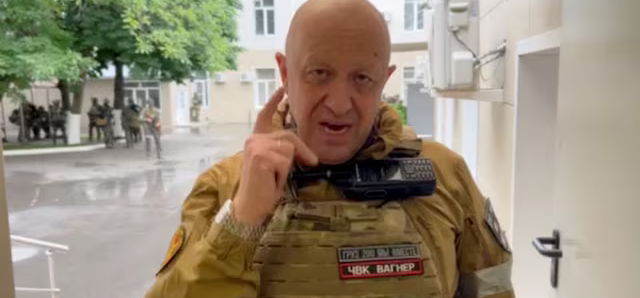
On a day-to-day basis, the head of the Wagner Group managed the businesses that facilitated the network鈥檚 paramilitary wing, liaised with high-level officials within the Russian government, including the president鈥檚 office, and personally steered information operations such as Lakhta Media, one of the entities accused of in the 2016 U.S. presidential election. From his perch in the back office鈥檚 St. Petersburg hub, 笔谤颈驳辞锄丑颈苍鈥檚 calendar was filled with meetings: lawyers, accountants, filmmakers, media managers, and real estate specialists, all working to keep his sprawling empire of hundreds of limited liability companies (LLCs) humming along.
In the last year of his life Prigozhin often made grandiose claims about his role as a swashbuckling paramilitary leader. But the available data painted a somewhat different picture, indicating that he likely rarely directly oversaw Wagner鈥檚 military field operations. He delegated that task to Wagner Group director Andrei Troshev, who served as 笔谤颈驳辞锄丑颈苍鈥檚 primary conduit to the group鈥檚 paramilitary wing. This division of labor underscores the Wagner Group's dual nature: part business venture, part shadow army.
Analysis of leaked documents, calendar entries, and a network mapping of the paramilitary鈥檚 administrative structures and phone book schema further confirms that Prigozhin was more an executive frontman than paramilitary commander. Instead, it appears that high-level Kremlin gatekeepers inside President Vladimir Putin鈥檚 office and in the upper echelons of the defense ministry controlled and shaped the overall strategy while active duty and semi-retired reserve officials in Russia鈥檚 military and security services coordinated operations at the field level.
笔谤颈驳辞锄丑颈苍鈥檚 from 2012 to 2022 reads like a Kremlin rolodex, revealing a decade of extensive coordination with Russia鈥檚 military and security elite. Between 2012 and 2022, he held 128 meetings with Anton Vaino, Putin鈥檚 chief of staff and likely 笔谤颈驳辞锄丑颈苍鈥檚 most direct line to the president. 笔谤颈驳辞锄丑颈苍鈥檚 calendar entries confirm that he met at least twice with Andrei Belousov during his tenure as First Deputy Prime Minister and Putin鈥檚 economic advisor. Moreover, reporting by the suggests that the two likely met more frequently and enjoyed cozy relations, working closely to resolve any issues that came up with management of the Wagner portfolio on an informal basis almost from the inception of the Wagner Group concept in 2014. Belousov would go on to replace Sergei Shoigu as Minister of Defense in May 2024.
笔谤颈驳辞锄丑颈苍鈥檚 calendar shows occasional meetings with then-Minister of Defense Sergei Shoigu and Chief of the General Staff Valery Gerasimov, but the bulk of his recorded interactions were with deputy defense ministers and heads of defense ministry directorates. Prigozhin met at least 122 times with Ruslan Tsalikov, the first deputy minister of defense and Shoigu鈥檚 longtime close associate. He also met 91 times with Dmitry Bulgakov, deputy minister of defense for logistics, who played a central role in provisioning the Wagner Group with equipment and transportation resources.
Both Tsalikov and Bulgakov were caught up in the sweeping purge the Kremlin initiated in the wake of the Wagner mutiny. Putin removed Tsalikov from his position in June 2024, part of a cabinet shuffle that saw the of four top deputy defense officials on the same day who oversaw ministry finance, contracting, and information management. The government dismissed Bulgakov in September 2022 due to logistical failures during Russia鈥檚 full-scale invasion of Ukraine and him on corruption charges in July 2024. Bulgakov鈥檚 replacement, Mikhail Mizintsev, also appears in 笔谤颈驳辞锄丑颈苍鈥檚 calendar: he served as the Ministry of Defense鈥檚 logistics chief for less than a year before joining the Wagner Group as deputy commander. Timur Ivanov, another deputy minister of defense, appeared in 笔谤颈驳辞锄丑颈苍鈥檚 calendar 15 times. As with Bulgakov, authorities dismissed and arrested Ivanov on corruption charges in April 2024.
笔谤颈驳辞锄丑颈苍鈥檚 calendar shows four meetings with Sergei Rudskoy, head of the Main Operations Directorate; 23 with Igor Kostyukov, chief of the GRU, Russia鈥檚 military intelligence agency; and 17 with Kostyukov鈥檚 deputy, Vladimir Alekseyev, who was a key architect of both the Wagner Group and Redut, a paramilitary recruiting hub that has largely supplanted Wagner in Ukraine. This constant engagement with the top echelons of Russia鈥檚 military, security, and intelligence establishment points to 笔谤颈驳辞锄丑颈苍鈥檚 role as the chief liaison between the state and the Wagner Group.
Beyond these high-level government contacts, Prigozhin focused on steering his business interests, taking a particularly keen interest in the network鈥檚 information operations. He met frequently with figures like Mikhail Burchik, who headed Lakhta Media and spearheaded Internet Research Agency disinformation campaigns, and lawyer Yevgeny Burleev, whose team coordinated 笔谤颈驳辞锄丑颈苍鈥檚 international lawfare campaigns, including lawsuits against foreign investigative journalists. Prigozhin also maintained regular contact with Valery Chekalov, the Wagner Group鈥檚 logistics chief, likely ensuring the paramilitary wing had what it needed to operate across multiple theaters.

While Yevgeny Prigozhin managed the Wagner Group鈥檚 business affairs and cultivated high-level government connections, Andrei Troshev emerged as the command nexus of its paramilitary operations. A battle-hardened veteran of Afghanistan and Chechnya and former commander in the Ministry of Internal Affairs鈥� special forces, Troshev served under the title of 鈥渄irector鈥� or 鈥渆xecutive director,鈥� effectively operating as chief of staff from 2014 onward.
Internal documents reveal his direct oversight of both tactical field operations and the organization's internal security apparatus. Troshev鈥檚 unique position at the nexus of the back office network connected him to more sectors than any other figure. He bridged the St. Petersburg Combat Group administrators (which later evolved into the 鈥淐ouncil of Commanders鈥�), the group鈥檚 internal security service, and its operations in Sudan, the Central African Republic, and Syria. This central role made Troshev the linchpin of Wagner鈥檚 sprawling paramilitary machine.
Among all the figures directly involved in Wagner鈥檚 paramilitary operations, Troshev had the most frequent contact with Prigozhin, with the possible exception of logistics chief Valery Chekalov. Between 2012 and 2022, 笔谤颈驳辞锄丑颈苍鈥檚 calendar logged nearly 200 calls or meetings with Troshev, identified by his nickname 鈥淏B鈥� or code number 102. By comparison, Dmitry Utkin, the titular commander of the paramilitary operation under Troshev, appears in only eight entries, listed by his code number 555.
Troshev parted ways with Prigozhin and the Wagner Group just before their short-lived mutiny, sparking resentment among some of the organization鈥檚 field commanders, who disparaged him on social media as an ineffective drunk. Nonetheless, Putin Troshev to coordinate volunteer units for the Ministry of Defense in Ukraine, appearing with him publicly in September 2023. Troshev鈥檚 loyalty appears to have shifted to the government, continuing a role similar to his Wagner responsibilities.

The third figure in the Wagner Group triumvirate, alongside Yevgeny Prigozhin and Andrei Troshev, was Dmitry Utkin, whose call sign 鈥淲agner鈥� became the group鈥檚 namesake. A veteran special forces operator, Utkin was field commander from the organization鈥檚 inception. After the Wagner mutiny in June 2023, Russian media published a document dated May 1, 2014, signed by both Prigozhin and Utkin, outlining their respective duties. Utkin鈥檚 responsibilities included recruiting and training a team and maintaining discipline within the group.
However, Utkin鈥檚 role within the Wagner network appeared more focused on field operations. In the group鈥檚 2018 back office directory, where he was listed under both Syria and St. Petersburg Combat Group administrators, Utkin had three backup contacts, compared to Troshev鈥檚 six. Two of these contacts, a communications officer and a duty officer for Syria, were shared with Troshev. Furthermore, Utkin met with Prigozhin far less frequently than Troshev, with only eight recorded meetings in 笔谤颈驳辞锄丑颈苍鈥檚 calendar. Internal documents consistently depict Utkin as subordinate to Troshev within Wagner鈥檚 organizational structure.

As Chief of Staff of Putin鈥檚 Presidential Executive Office, Anton Vaino served as an important gatekeeper between the Wagner Group and the highest echelons of Russian power. 笔谤颈驳辞锄丑颈苍鈥檚 personal calendar records 128 entries for Vaino between 2012 and 2022. These meetings occurred regularly, regardless of fluctuations in 笔谤颈驳辞锄丑颈苍鈥檚 other business activities. The frequency and consistency of these interactions suggest that Vaino was one of 笔谤颈驳辞锄丑颈苍鈥檚 primary conduits to President Vladimir Putin, likely facilitating Wagner鈥檚 operations and ensuring their alignment with Kremlin objectives. Vaino's connection to Putin runs deep, with their relationship dating back to Vaino鈥檚 role as Putin鈥檚 chief of protocol. This position likely made him instrumental in catering arrangements, including the 2006 Group of Eight (G8) Summit in St. Petersburg, where President Bush dined at 笔谤颈驳辞锄丑颈苍鈥檚 Old Customs House restaurant.
The ties between Wagner and the president鈥檚 office extend beyond personal connections. Internal documents, such as 笔谤颈驳辞锄丑颈苍鈥檚 requests for state medals for Wagner personnel, contain metadata linking them to the Federal Agency for State Property Management. This agency, under the president鈥檚 office, controls strategic state corporations like Rostec, Russia鈥檚 massive military-industrial conglomerate.

Minister of Defense Sergei Shoigu and Chief of the General Staff Valery Gerasimov were key figures in Russia鈥檚 military hierarchy and its relationship with the Wagner Group. Despite 笔谤颈驳辞锄丑颈苍鈥檚 public animosity towards them, his calendar reveals a working relationship: 32 meetings with Shoigu and 11 with Gerasimov between 2012 and 2022.
While both the Ministry of Defense and the General Staff fall under the same umbrella, they serve distinct functions. The Ministry of Defense handles administrative and logistical matters, while the General Staff, though technically within the Ministry of Defense, operates as a parallel structure responsible for planning and executing military operations.
笔谤颈驳辞锄丑颈苍鈥檚 calendar shows more frequent meetings with Shoigu and Gerasimov鈥檚 immediate subordinates, suggesting that joint task force management occurred at the deputy minister level, while higher-level strategic planning involved Shoigu and Gerasimov directly.
The careers of both men diverged in the aftermath of the Wagner mutiny and subsequent military shakeup. In May 2024, Shoigu transitioned from his role as Minister of Defense to Secretary of the Security Council, replacing Nikolai Patrushev, while Gerasimov, as of September 2024, has retained his position as Chief of the General Staff, weathering Putin鈥檚 reorganization of military leadership.

As First Deputy Minister of Defense from 2015 to 2024, Ruslan Tsalikov was a linchpin in the Wagner Group鈥檚 operations. 笔谤颈驳辞锄丑颈苍鈥檚 calendar records 122 entries for Tsalikov between 2012 and 2022, second only to Anton Vaino among high-ranking officials. This frequent contact suggests Tsalikov was a key liaison between Wagner and the Russian military establishment, likely coordinating logistical support and strategic alignment. However, following 笔谤颈驳辞锄丑颈苍鈥檚 August 2023 death, Tsalikov fell victim to Putin鈥檚 shakeup of the Russian military establishment. As Defense Minister Shoigu moved to the Security Council in May 2024, Tsalikov, Shoigu鈥檚 longtime confidant, abruptly stepped down to pursue local politics in Tuva.

Dmitry Bulgakov, Deputy Minister of Defense for Logistics from 2008 to 2022, was a key figure in sustaining Wagner Group operations. 笔谤颈驳辞锄丑颈苍鈥檚 calendar shows 91 entries for Bulgakov, highlighting his pivotal role in the Wagner-military nexus. Bulgakov's oversight of logistics facilitated the flow of weapons and supplies to Wagner forces. After taking over military logistics in 2008, of soldiers鈥� rations doubled and quantity tripled, despite troop reductions. This raised suspicions of corruption, with that Bulgakov favored 笔谤颈驳辞锄丑颈苍鈥檚 catering company, Concord. The government dismissed Bulgakov in September 2022 for his role in logistical failures during Russia鈥檚 invasion of Ukraine and arrested him on corruption charges in July 2024 amid a wider purge of the Ministry of Defense.

Mikhail Mizintsev鈥檚 career exemplifies the fluid boundaries between Russia鈥檚 official military and paramilitary structures. From December 2014, he headed the National Defense Control Center, a key command structure subordinate to the General Staff, meeting with Prigozhin at least six times in this capacity. In September 2022, Mizintsev replaced Dmitry Bulgakov as Deputy Minister of Defense for Logistics, a role that involved ammunition transfers to Wagner forces. After less than a year, he left this position to become the Wagner Group鈥檚 deputy commander.

Timur Ivanov, Deputy Minister of Defense from 2016 to 2024, embodied the close ties between Russia鈥檚 military structures and private interests in the defense sector. 笔谤颈驳辞锄丑颈苍鈥檚 calendar includes 15 entries for Ivanov, whose responsibilities included approving many of the defense contracts won by 笔谤颈驳辞锄丑颈苍鈥檚 companies, which helped finance Wagner Group operations. Even after 笔谤颈驳辞锄丑颈苍鈥檚 death, Ivanov鈥檚 influence persisted, allegedly negotiating with 笔谤颈驳辞锄丑颈苍鈥檚 son, Pavel, over control of oil and gas fields in Syria and diamond mines in the Central African Republic. Ivanov鈥檚 career ended abruptly in April 2024 when he was arrested on charges of accepting $12.2 million in bribes from defense contractors.

Sergei Surovikin, dubbed 鈥淕eneral Armageddon鈥� for his brutal tactics in Syria, including mass bombing campaigns, embodies the complex relationship between Russia鈥檚 military and the Wagner Group. As Commander-in-Chief of the Russian Aerospace Forces from 2017 to 2023, Surovikin maintained significant Wagner connections. 笔谤颈驳辞锄丑颈苍鈥檚 calendar shows eight entries for Surovikin between 2012 and 2022, with their relationship likely deepening during shared involvement in Russia鈥檚 Syria campaign. Internal documents reveal that Surovikin had a 鈥淰IP鈥� Wagner employee number, suggesting an honorary status within the paramilitary. He reportedly between the Ministry of Defense and Wagner, with Prigozhin advocating for his leadership in the Ukraine war. Notably, during 笔谤颈驳辞锄丑颈苍鈥檚 June 2023 mutiny, Surovikin was one of only two figures (along with Vladimir Alekseyev) chosen to publicly call for Prigozhin to stand down鈥攁 telling choice in crisis. Following the mutiny, Surovikin vanished from public view, was removed from his position as Aerospace Forces chief in August 2023, and later resurfaced as head of the Commonwealth of Independent States (CIS) Air Defense Coordinating Committee in September 2023.

Sergei Rudskoy, head of the Main Operational Directorate of the General Staff and First Deputy Chief of the General Staff, met with Prigozhin only four times between 2012 and 2022, according to 笔谤颈驳辞锄丑颈苍鈥檚 calendar. However, other evidence points to a deeper connection. A February 2018 letter from 笔谤颈驳辞锄丑颈苍鈥檚 employees to Rudskoy advocated for increased Russian engagement in Africa, outlining potential geostrategic goals. During the July 2020 of 33 Wagner members in Minsk, 笔谤颈驳辞锄丑颈苍鈥檚 team urgently drafted a letter to Rudskoy explaining their perspective, indicating an ongoing working relationship. As head of the Main Operational Directorate, Rudskoy holds one of the most prominent positions in planning and executing Russian military operations. As of September 2024, he has weathered Putin鈥檚 shakeup of the military leadership and remains in his position, which he has held since 2015.

Igor Kostyukov, head of the Main Directorate鈥攂etter known as the GRU, Russia鈥檚 military intelligence agency鈥攎et with Prigozhin 23 times between 2012 and 2022, according to 笔谤颈驳辞锄丑颈苍鈥檚 calendar.

Vladimir Alekseev, First Deputy Head of the GRU, has been a pivotal figure in Russia鈥檚 intelligence operations and the GRU鈥檚 involvement with irregular military formations. Alekseev's ties to the Wagner Group run deep. During 笔谤颈驳辞锄丑颈苍鈥檚 June 2023 mutiny, Alekseev appeared in a video attempting to dissuade the mutineers, claiming he had worked with Wagner 鈥渇rom the first day of the existence of the organization.鈥� Internal documents confirm close cooperation between Wagner and the GRU under Alekseev's management in Syria in 2016. Moreover, phone records show Alekseev and Prigozhin in contact at crucial moments, including just before the full-scale invasion of Ukraine and during the mutiny itself.
In January 2022, Alekseevand Prigozhin reportedly clashed over Alekseev's private military company, Redut, recruiting Wagner veterans. Redut, a GRU-run recruiting hub for irregular formations operating in Ukraine, has largely replaced the Wagner Group as the primary means by which the Russian state funnels irregular volunteer units into the Ukraine war effort.
As of late November 2023, Alekseev was seen awarding fighters of the Hispaniola Battalion, a volunteer unit within the Redut system. Post-mutiny reports suggest the GRU assigned all unconventional operations targeting Ukraine to Alekseev, affirming his continued significance in Russia鈥檚 military intelligence operations and the GRU鈥檚 use of irregular formations.

An analysis of 笔谤颈驳辞锄丑颈苍鈥檚 calendar shows that one of his most frequent contacts was Sergei Vladimirovich Pavlenko, with 821 entries under the code number 575. Pavlenko shares the same name as the who has led the Federal Penitentiary Service (FSIN) in the Kirov region since 2020. If they are the same man, 笔谤颈驳辞锄丑颈苍鈥檚 regular coordination with a colonel in Russia鈥檚 prison service鈥攁long with occasional meetings with other FSIN officials, including at least two with Gennady Kornienko, FSIN director from 2012 to 2019鈥攆its with Wagner鈥檚 extensive history of prison recruitment. Many of Wagner鈥檚 senior field commanders had criminal backgrounds, with several joining the group immediately after serving prison sentences.
Fellow, Future Security
Senior Fellow, Future Security