Stephen Burd
Senior Writer & Editor, Higher Education

At a time when , everyone needs to act responsibly and make sure not to unnecessarily raise people’s fears and promote bad public policy. The stakes are too high for opportunism or sensationalism. Unfortunately, when it comes to reporting the effect of the credit crunch on student loans, some in the media are being misled and unwittingly They’re not.
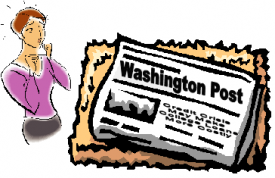 Take, for example, The Washington Post’s recent front page story, The article begins with an ominous lede: “Many college students across the nation will begin to see higher costs for loans this spring, while others will be turned away by banks altogether as the credit crisis roiling the U.S. economy spreads into yet another sector.” It wouldn’t surprise us if some high school seniors in the DC metropolitan area, who are on the bubble about applying to college this year, read that front page lede and thought for at least a moment, “why bother?”
To be fair, the Post article was actually an improvement over even more and that have run in recent weeks. The authors of the Post story, at least, try to make a distinction between how federal and private student loans will be affected by the credit crunch. In its fourth paragraph, the article notes that the only students who appear to be in danger of being turned away by banks are high-risk borrowers seeking high-cost private student loans.
Still, the article gives the misleading impression that students across the board are going to see their loan costs soar. And at least in the case of federal loan borrowers, this just isn’t true. In fact, this coming year because of legislation Congress passed in the fall that will reduce the interest rate on federally-subsidized loans for undergraduates from 6.8 to 6.0 percent. It drops all the way to 3.4 percent over the succeeding four years. The pending interest rate cut, which Congress included as part of , is never mentioned in the story. That seems like a pretty major oversight to us.
To back up its point about rising loan costs, the article’s 2nd paragraph says that federal loan borrowers “could be required to pay higher fees to borrow money, according to university finance directors and lenders.” Presumably the story is referring to the fact some lenders have reduced under the Federal Family Education Loan (FFEL) program as a result of the cuts Congress made to lender subsidies as part of the College Cost Reduction and Access Act. But the story fails to mention that . And while some students may have to pay slightly higher origination fees, many more will benefit from the interest rate cut and from other benefits that Congress included in the legislation — such as a major boost in the maximum Pell Grant award, increased loan forgiveness for those who work in public service, and a decreased financial aid penalty associated with student work and savings. None of these new benefits were mentioned in the Post article.
And the fact that JP Morgan Chase, one of the top lenders in FFEL program, has announced that i doesn’t appear until the 24th paragraph of the story.
In taking the sensational approach, the Post buried more measured voices. For example, Larry Warder, the Acting Chief of the U.S. Department of Education’s Office of Federal Student Aid, says in the story that the Department hasn’t detected any major problems with student-loan availability. “I’m afraid people are panicking with no reason to.” Unfortunately, we don’t hear from Warder until the last third of the article.
Here are some other problems with the story:
Everyone needs to become much more responsible in discussing the credit crunch’s impact on student loans. There is a danger that families, nevermind policymakers, are being frightened into thinking that college loans are not available, and that therefore, they shouldn’t even bother to apply to college. Nothing could be further from the truth.
As we’ve said many times, even during this time of market uncertainty, federal student loans — as much as $46,000 to some undergraduate borrowers — are guaranteed to be universally available irrespective of a family’s credit history. The loan industry and the for-profit college industry want a bail out. But there is no federal loan crisis for students. Policymakers and the media should take heed.
听
Senior Writer & Editor, Higher Education