
Jay Newton-Small
National Fellow, 2016, 2017
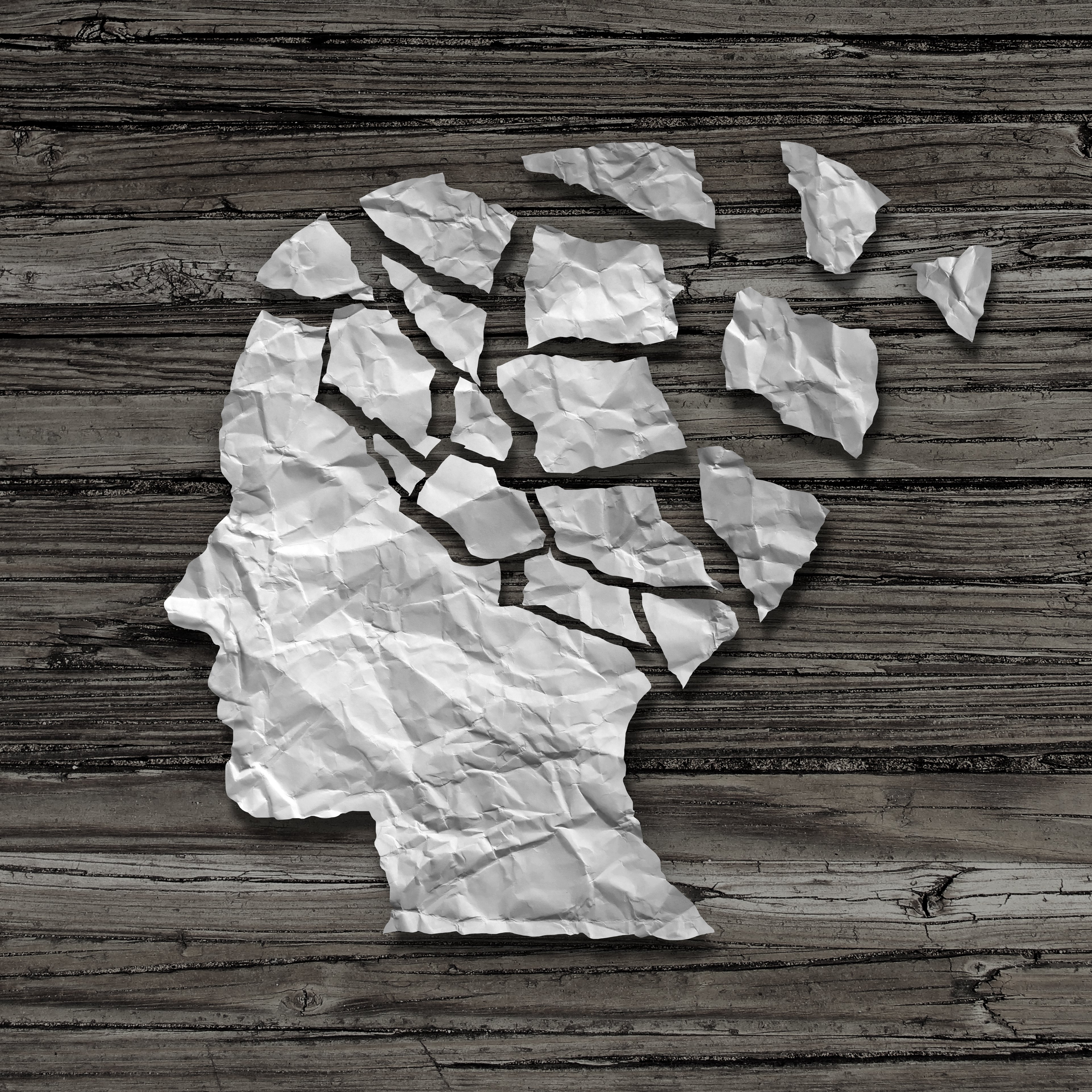
The first time I remember seeing my father鈥檚 symptoms, I was a junior in college spending a year abroad in Paris. He was passing through town and had taken my two roommates and me out for dinner. We drank a fair amount of wine, but not more than I鈥檇 seen my Australian dad put away at parties past. So I was shocked when, after he鈥檇 paid and we went to leave, he became embarrassed and disorientated: He鈥檇 forgotten which hotel he was staying at.
He came off as a drunkard to my roommates, but I was immediately concerned: I knew my smart, savvy father, who had spent 40 years as a United Nations diplomat, would never forget such a simple fact unless something was seriously wrong. Three years later, he was diagnosed with early onset Alzheimer鈥檚. He was 60.
I knew nothing of Alzheimer鈥檚 at the time. I have since spent 15 years researching it, living with it. For a long time, I was one of the only people I knew who had this secret鈥攂ecause it was a secret at first. But, increasingly, I realized that I am not alone. . It is now the sixth leading cause of death, and those afflicted may not even know it: 45 percent of people with Alzheimer鈥檚 are never even told by their caregivers that they have it. My father remained in a state of semi-denial for the better part of the next decade.
My parents retired to Naples, Florida. They worked out a system of cues. My father would look to my mother. She would make some slight gesture, and he鈥檇 know how to tell a certain joke, or regale a favorite story. The blessing of muscle memory also helped mask his mental deterioration: 10 years after his diagnosis, he could still shoot six under par on a round of 18 holes of golf. His friends hardly realized that he couldn鈥檛 remember any of their names.
When my mother died, his secret came out. He looked to me to play her part, to provide cues I didn鈥檛 know. In fact, much of the time he thought I was my mother. My mother only made my father sleep in the guest bedroom when she was mad at him. He couldn鈥檛 understand why I was sleeping in the guest bedroom and not with him. Every night, he鈥檇 try and climb into bed with me. He even once, touchingly, proposed.
As an only child, I wanted more than anything to be able to care for my father after my mother died, and I moved him to Washington to be closer to me. But no matter how much I loved him, I wasn鈥檛 equipped to help him. I couldn鈥檛 trust him to be alone when I went to work. He鈥檇 walk the dog and five panicked hours later, the police would find him and Bella six miles away. One day, I came home to a house full of gas: He鈥檇 tried to cook but was used to an electric stove.
He still looked fine: He could dress himself, do laundry, brush his teeth and hair. But cutting his toenails one night ended up in a bloody trip to the emergency room and six stitches. He ate perfectly, wielding a knife and fork as if dining with the queen. So few people realized that behind the scenes, things were not connecting. His neurologist once likened the disease to an ever-deteriorating game of telephone. A normal brain connects A to B to C. But in the brain of an Alzheimer鈥檚 sufferer, an increasing number of those connections are missing. So they might go A to X to M to Q to C. More and more gets lost in translation.
One small cruelty of the long goodbye is that many of those suffering from Alzheimer鈥檚 don鈥檛 realize how incapacitated they are. I quickly realized that I had to put my father in a home; there simply wasn鈥檛 a choice. It鈥檚 important to keep people with Alzheimer鈥檚 as engaged as possible. Locking him in my home all day with a nurse would鈥檝e been as bad for him as it would鈥檝e been for me. Homes offered classes, art, music, movies, dancing, even golf鈥攁nd, most importantly, friends on his level. But my father didn鈥檛鈥攃ouldn鈥檛鈥攗nderstand why I needed to do this.
I took my father on what felt like the worst day of my life鈥攚orse than the day my mother died鈥攐n a tour of 13 homes with memory units. It was awful. Most places park residents in wheelchairs in front of blaring televisions. But there were a few that were good, with sunlit, looping corridors designed for restless wanderers like my dad. At every station were different activities: an iPod playing music, some bunnies in a cage, a yoga class.
At first my father refused to even enter the homes. But by the end of that long, wrenching day we made dinner at home and he had a rare moment of clarity.
鈥淲hich did you like?鈥� I asked, not really expecting a lucid answer.
鈥淭he second to last,鈥� he responded.
鈥淩eally?鈥� It had been my favorite as well.
He nodded emphatically. 鈥淚t鈥檚 okay,鈥� he told me. 鈥淚 love you.鈥�
That memory is the one I choose to keep. The next day when I dropped him off, he had no such understanding.
鈥淵ou鈥檙e imprisoning me!鈥� he screamed, slapping me across the face. 鈥淚 can live alone. I don鈥檛 need you. I want to live alone.鈥�
鈥淵ou can鈥檛,鈥� I told him, weeping.
My sweet, gregarious, happy-go-lucky Australian father who had never harmed a fly, never yelled at me in his life, had to be hauled away by orderlies. That proved to be the absolute worst day of my life. I felt completely inadequate: a failure as a daughter, as a caregiver. And yet, I saw no other path forward.
I was young to have to deal with Alzheimer鈥檚. Many of my friends are just now beginning to go through what I did. I try to be a resource for them. I fear, with the number of people suffering from Alzheimer鈥檚 expected to nearly triple from 5.3 million to 13.8 million by 2050, that my story will become all too common.
The other day, I was in CVS buying deodorant. I was looking at the ingredients in each stick, trying to avoid ones with aluminum chloride, aluminum chlorohydrate and aluminum zirconium, which have been found to cause nerve cell damage in rabbits.聽
I have no idea if aluminum causes Alzheimer鈥檚, , but there are a lot of theories that the two are linked and it鈥檚 better in my mind鈥攈aving seen the end game鈥攖o be safe than sorry.聽聽So I avoid aluminum cans聽and tin foil and certain kinds of deodorants. My father was the first in his family to suffer from the disease and he always believed, when he was more lucid, that his case was environmental, having spent much time in dodgy African mines in his youth.
At CVS, a woman came up next to me and began a similar search. 鈥淎luminum?鈥� I asked. Yes, she said. Her mother had just been diagnosed with Alzheimer鈥檚 and she鈥檇 been reading all about it. It seems there is a not-so-secret club of Alzheimer鈥檚 caregivers forming and we have clues to recognize one another, subtle cues like those my parents used. In fact, there鈥檚 a growing market developing that services people like us: brain teaser apps, special recipes and beauty products. We are the world鈥檚 largest, least desirable club.
National Fellow, 2016, 2017


