Aryn Baker
Visiting Fellow, Planetary Politics
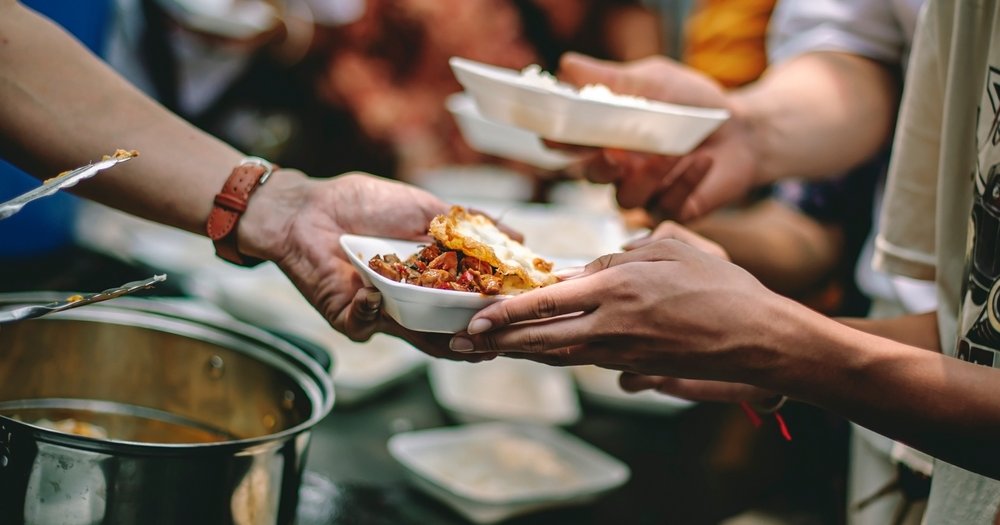
For much of the past two decades, Michael Shaikh has chronicled the human cost of war from Afghanistan to Sri Lanka, Myanmar, and Mali, as an investigator for Human Rights Watch, the International Crisis Group, and the United Nations. In his , The Last Sweet Bite: Stories and Recipes of Culinary Heritage Lost and Found, he moves beyond clinical descriptions of war crimes to ask how violence shapes what鈥檚 on our plate, and how cooking can be both a survival strategy and an act of resistance. Shaikh spoke with Planetary Politics Visiting Fellow Aryn Baker about the centrality of food culture and the risks of overlooking it in humanitarian interventions.
Aryn Baker: This book is rooted in your experiences as a human rights investigator. How did it come about?
Michael Shaikh: It鈥檚 tough to ask someone to recount the worst moments of their lives, so I would often do it over a meal. Inevitably, the conversation would turn to the food in front of us. People would tell me that those dishes were getting harder to find. They talked about how losing a family recipe was like losing a family member. This happened in Afghanistan, in Myanmar, in Sri Lanka. I heard it from Uyghurs in Turkey. It made me think about how important our culinary cultures are to our sense of identity, and what is at risk when that food language is lost. I wanted to show what violence does to change food traditions. If you鈥檙e interested in food, you should be interested in what鈥檚 happening to the people who make that food.聽
AB: Tell me about one dish that stands out.聽
MS: The Rohingya have a beef curry called goru ghuso: Luscious, scarlet red, and very fiery. During [the Muslim holiday of] Eid, leaders distribute goru ghuso to the community. It鈥檚 how they strengthen traditional leadership roles. Now that they are in refugee camps, they can鈥檛 get beef. They can鈥檛 grow the tomatoes, the ginger, the onion, and the chilies. So they鈥檙e not making goru ghuso, and the leaders can鈥檛 go out and distribute it. Gangs are moving in, taking over food distribution, and subverting traditional leadership roles. That is undermining social cohesion and opening the door to more violence.聽
AB: What happens when food culture is not protected by human rights policies?
MS: Governments understand that if you attack the way people eat, you destroy the thing that holds a community together 鈥� their solidarity networks, their modes of communicating, their nationhood. Ripping apart someone鈥檚 food culture is a very powerful tool of erasure. It鈥檚 a tactic of genocide. It鈥檚 a war crime to destroy cultural artifacts, like an old painting or a mosque. Targeting a food culture should be treated as equally criminal.聽
AB: Should targeting a people鈥檚 food culture be interpreted as an act of genocide?聽
MS: If you start looking at attacks on food culture, you will see how it presages more dangerous types of attacks. You can see it right now in western China, where the Chinese Communist Party is forcing Uyghurs to eat pork and drink alcohol, which goes against Islam. They were doing that long before they started rounding up Uyghurs and putting them into internment camps. While we haven鈥檛 seen any evidence of mass death among Uyghurs in Western China, like in Gaza or in Myanmar, this is still a cultural genocide. The intent is to erase Uyghur heritage. It would behoove both policymakers and those looking to strengthen international human rights law to look at attacks on food culture as kind of a canary in the coal mine for attacks on people.
AB: You don鈥檛 cover it in your book, but parts of Gaza are in a state of famine. Is Palestinian food culture a target?聽
MS: We can talk about Gaza, the Uyghurs, and the Rohingya in the same breath, because the intent is to erase those peoples and their culture. Gazans are seafaring people. The Israelis don鈥檛 allow them to go . When you prevent them from practicing that aspect of their culture, you start destroying those people. What鈥檚 happening to Gazan fishermen is happening to Palestinian olive growers in the West Bank. Fish, olives鈥攖hese things are at the heart of Palestinian cuisine and identity. An attack on those is a direct attack on the people.聽
AB: You write that food is a powerful tool for healing. A Rohingya woman told you that in the face of genocide, the act of cooking her traditional recipes had become a form of resistance, a way to reclaim her identity.
MS: The Rohingya cooks told me this was their way of fighting back: 鈥淭hey use guns. We鈥檙e using food.鈥� It gives them agency. Food brings people together. It keeps people, communities, and families intact. It sounds like a clich茅, but that can have a real healing effect.聽
AB: How would you change policy to protect food cultures?
MS: Start with protecting women and girls. They are the load-bearing pillars of our food cultures. And where do they spend most of their time? In the kitchen. When you look at Gaza, Mariupol, Khartoum, Aleppo, you are seeing militaries intentionally flattening neighborhoods. Those are kitchens that have been flattened. That鈥檚 the crime of , and it has a direct impact on the production and maintenance of culture. Outlawing domicide is a big first step in the protection not only of people, but of women, girls, and culture. And that鈥檚 something that can be done right away.
AB: This is probably the first book to combine descriptions of human rights abuses with recipes. Did that ever feel like a contradiction?
MS: People were in tears when they told me they worried about these foods disappearing. That鈥檚 why they gave me recipes. They were gifts, and I felt obligated to pass them on. Because I think, on a personal level, if someone gives you a recipe, you have a responsibility to cook it.聽
AB: What, besides learning a new dish, do you want readers to take from your book?聽
MS: This is a book about how people resist and defy cultural violence. It gives us lessons on how to approach food, cook and eat with people, and build community鈥攁nd these are the very things Americans need to be doing now. Don鈥檛 go into the hellscape of social media to understand what鈥檚 going on. Go eat with your neighbor.聽
Food is love, and people love it, and it means a lot to them. If we can learn some of these lessons from the people in this book and apply it to our lives here in the United States, we will all be better off. Cooking is an act of resistance. It鈥檚 an act of love. As far as I鈥檓 concerned, it鈥檚 an act of combating evil.
Visiting Fellow, Planetary Politics