Stephen Burd
Senior Writer & Editor, Higher Education
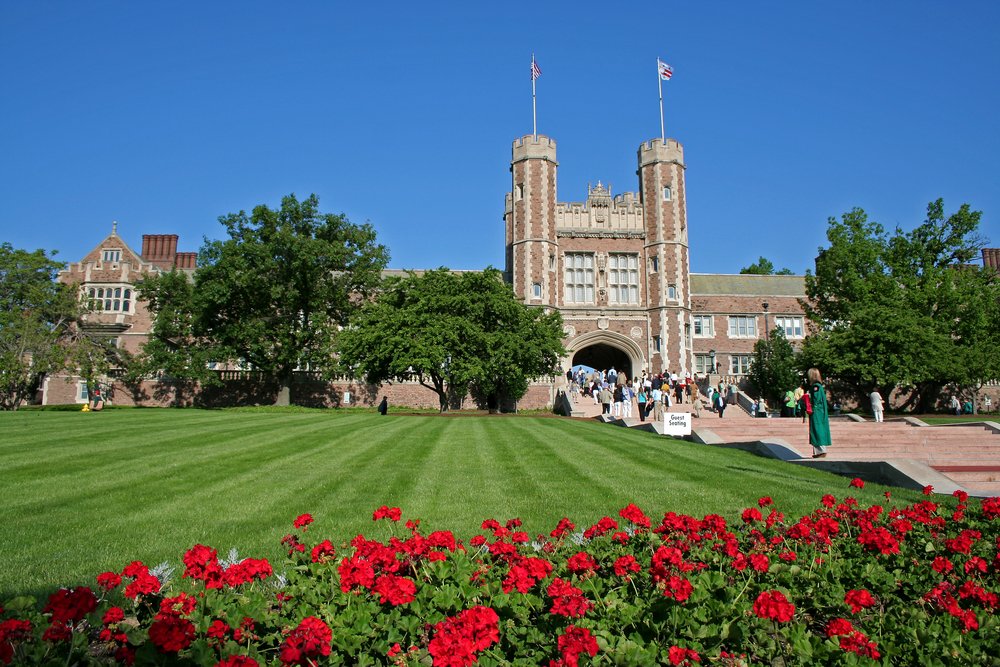
Shaun Kai Ern Ee has been pushing Washington University in St. Louis to become more socioeconomically diverse.聽A junior at Wash U., he is hardly alone in this pursuit. But the story of how this international student from Singapore came to care about this issue is unique.
At 18, Ee, who attended an affluent high school, was required to serve for two years in the Singaporean military, which was extremely diverse. 鈥淎nd that really opened my eyes personally to how having a distorted set of demographics around socioeconomic status in a school can really distort the view of those people in it,鈥� Ee recently told me when I visited the campus. 鈥淎nd those people are going to be future policymakers and potential leaders, so that鈥檚 something that鈥檚 really problematic.鈥�
When Ee arrived in St. Louis two years ago, he was alarmed to see 鈥渉ow upper-class鈥� Wash U. was. He was particularly struck by a student in his freshman dorm who regularly shipped bottled water in from New York because . 鈥淪tudents don鈥檛 worry a lot about spending money here,鈥� he says with a laugh.
So Ee joined (WU/FUSED), a student group that was pressing the university to enroll more low-income students. On that front, the university鈥檚 record has been extremely poor. In the fall of 2013, for example, Pell Grant recipients of the school鈥檚 undergraduate student body, the lowest share of any college of its caliber.
But this year Ee and his colleagues in WU/FUSED scored a major victory. Tired of being labeled the least socioeconomically diverse elite college in the country by the student group and especially by , Wash U. in January that it planned to nearly double the percentage of Pell Grant recipients that it enrolls by 2020. Under the plan, Wash U. will spend at least $25 million a year for five years to increase the share of students receiving Pell Grants, the government鈥檚 primary source of aid for financially needy students, to 13 percent. The money will go to increasing the school鈥檚 need-based financial aid budget.
鈥淚mproving the socioeconomic diversity of our student body is not just important; it鈥檚 critical to our success as a university,鈥� , the university鈥檚 provost and executive vice chancellor for academic affairs, said in a announcing the plan, which he developed.
Ten months in, the university has already made progress. Pell Grant recipients of the freshman class that started this fall.
Thorp, who was before coming to Wash U. in 2013, told me in a recent interview that the university鈥檚 experience this year shows it can enroll more low-income students without lowering its academic standards. 鈥淥ne thing that is incredibly important is that the tests scores for this class are identical to what they were before. The average ACT was 33 last year, and it is 33 this year,鈥� he says. 鈥淪o we are not talking about students that we have made enormous compromises to admit. These are students who have every hallmark of success.鈥�
Thorp acknowledges that some of the university鈥檚 administrators 鈥� particularly in the academic and student affairs divisions 鈥� have been nervous about the plan. The university has come so far in terms of building its prestige that they worry about going backwards, he says.
Indeed, over the last several decades, Wash U. has had a remarkable transformation, from to being one of the country鈥檚 most highly ranked universities. During this time, the university鈥檚 leaders sought out top-notch professors, raised academic standards, and went on a building spree, constructing fancy new dormitories as well as state-of-the-art academic, research and recreational facilities. And they opened up the university鈥檚 coffers to try to attract, , a higher-achieving and more affluent student body.
By the standards that colleges use to judge their performance these days, they have succeeded beyond their wildest dreams. Today, U.S. News & World Report Wash U. as the 15th best national university in the country, tied with Cornell and Vanderbilt Universities. And the school now admits only about 17 percent of the students who apply, according to the magazine.
鈥淲hen a school moves this far this fast and there are people who were part of it, they are scared to death that they鈥檙e going to lose it,鈥� says Thorp. 鈥淪o what I have contributed to this is mainly just to say, 鈥楲ook everybody, this is a great school and no one is going to take it away from you.鈥� 鈥�
While the university鈥檚 plan represents a sea change for a school that has made little effort in the past to recruit low-income students, . Getting to 13 percent Pell recipients will put the university in the middle of the pack of its peer institutions. At elite colleges like Amherst and Vassar, more than 20 percent of students receive Pell Grants.
Thorp hints that the university may go further. 鈥淚t鈥檚 a good practice to under-promise and over-deliver,鈥� he says with a smile.
Ee and his friends at WU/FUSED are happy with the plan so far. Their focus now is on ensuring that the university delivers on its promises.
鈥淚n the long term, absolutely we want more low-income students,鈥� Ee says. 鈥淏ut I think it鈥檚 really great that Provost Thorp has already committed us to this, and I will personally be pretty happy if this comes through. Because when I was a freshman, there seemed like no chance at all that any of this would be happening.鈥�
This post ran first in .“
Senior Writer & Editor, Higher Education