
We May Fail
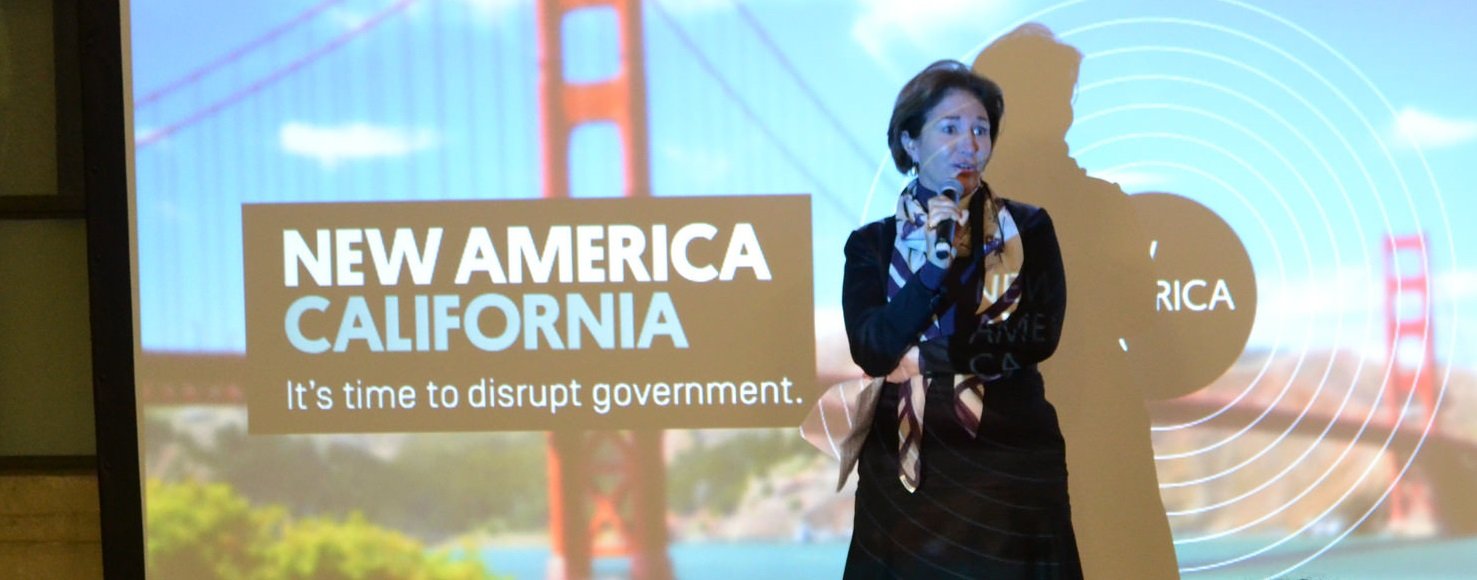
Three years ago I sat at table with staff from several of the
country鈥檚 largest philanthropic institutions鈥攖he kinds with endowments in the
many billions. As the light glinted off the heavy oak table, everyone gathered
there went around the room explaining how we were 鈥渄iversifying our investments
away from federal policymaking.鈥� Basically, that we were betting that federal
policymaking was no longer the best route to tackling many of the diverse
problems鈥攃limate change, nuclear weapons, failing schools, and so on鈥攖hat we
were all trying so hard to solve.
As it turns out, the organizations represented around that table
were ahead of the curve when it comes to decision-makers and civic institutions,
most of whom haven鈥檛 yet caught up to the reality that federal policymaking
isn鈥檛 working. Meanwhile, the average person is well aware that something is
very wrong. We are in the midst of a period of historically .
Congressional squabbles over insignificant political fights make the news while
we in California run out of water, parents worry about their children鈥檚
education, and the gap in wealth widens by the day.
At , we see
that the status quo isn鈥檛 working and so we鈥檙e adopting a bold experiment to
remake ourselves into the kind of organization that can use new methods to
solve the public problems that need solving. Instead of focusing solely on
making federal policy, we鈥檙e devising ways to tap into the powerful energy and change
already bubbling up in cities and counties around the country. We鈥檙e expanding
our network from Washington, DC and New York鈥攕tarting in San Francisco, and
then and then a host of smaller cities.
Expanding our network will allow us to showcase for bigger audiences
what is working in cities outside the
corridors of power and to get ordinary people 鈥� the same ones who know
something鈥檚 gone wrong in government 鈥� excited about finding workable solutions
to problems that affect their lives. We
want to find the brightest minds already focused on solving problems in their
communities and show them how they can scale by better understanding how to
partner with government. By giving them the tools to implement their ideas and
opening avenues to scale their solutions nationwide, we hope to inject start-up
style thinking into the halls of government with the goal of changing how the
muddy slog works.
As
as the current system of federal policymaking is, it鈥檚 also filled with
world-class policy experts and decision-makers who want to find a way forward
and are ready to act. We want to connect them with the best social innovators
and their new ideas. We know that while many socially-oriented start-ups
originate and thrive locally, they can only scale if they understand how to
engage with government. And we believe we can be the bridge between these two
critically important groups.
That鈥檚 why we are seeking out the best social problem-solvers in
California to connect them with our diverse teams of policy experts and expose
them to the political realities they鈥檒l need to navigate to bring their
innovations to wider audiences. It鈥檚 our hope that after two or three years
we鈥檒l have built a community of public problem-solvers in several cities around
the country. Together we鈥檒l have a network of current and past change-makers
who can learn from and draw on each other as a visible force for social good
that embraces technology and new thinking.
Why begin this experiment in San Francisco? We鈥檙e starting here
because of the bold new ideas emerging across a range of sectors. California
has been the birthplace of the household names that upended the way we live in
the twentieth century 鈥� Hewlett-Packard, Microsoft, Intel and Apple 鈥� and are
still mainstays as innovators. And Google, Facebook, and Tesla鈥攖he newer kids
on the block鈥攁re changing entrenched ideas about everything from to , which is paving the way to even more disruptive technologies in the
process.
This culture of rapid development, testing, iterating and then doing
everything possible to find wide adoption with products is applicable to how we
govern and legislate. And these approaches have already shown some success
tackling thorny social problems.
Take Daniel Lurie, who founded the . Daniel saw that
low-income families weren鈥檛 getting access to the most effective services to
break the cycle of poverty. So he created Tipping Point to create, test and
refine new approaches to fighting poverty. (Their mantra? Invest, measure,
improve, repeat.) Instead of being daunted by the interconnected problems of
labor, finance, health, and education that keep people in poverty, Daniel and
the Tipping Point have helped thousands of people in the San Francisco Bay Area
find homes, go to college, find jobs, and get high quality medical care, all
while fiercely fighting the idea that we can鈥檛 do anything to tackle tough
social problems.
Even local governments in California are embracing new methods. The San
Francisco Mayor鈥檚 Office of Innovation has created waves nationally by . 18F, the
federal government鈥檚 digital services agency, , and agencies
across the federal government are to try and capture some of its ideas and talent.
In addition to being inspired by these Californians鈥� pragmatic
approaches to solving problems, we鈥檙e also excited to expand the 国产视频
network to San Francisco because California鈥檚 start-up culture has dramatically
popularized what we see as a critical component to success in addressing
entrenched social problems: the benefits of learning from failure. And while the
idea of has become run-of-the-mill in Silicon Valley, the social sector as
a whole lags behind in its ability and willingness to learn from failures of
all sizes. Imagine if Tipping Point was scaled nationwide. How many communities
and people could be helped? The only way we can find out is to try it.
We believe we can drastically improve government and policymaking
by trying new things and committing to be transparent about our successes and
our failures. This kind of approach will
help 国产视频 on its way to becoming a truly . But it鈥檚 not as if we鈥檙e
giving up our roots as a think tank. In fact, tapping into pragmatic problem
solving has been what 国产视频 has always done. We were founded by policy
experts and journalists who believed that we could find the minds and foster
the debates needed to guide American renewal in an era of profound,
exhilarating, but often threatening change. We have heeded that call, helping
to change American attitudes and policy in myriad ways: in our groundbreaking
work to foster an open
internet while being mindful of the ways that data can be a vehicle for
discrimination, to push forward cross-cutting policy analysis about how we
can support
families in all their forms and as they
struggle to come into their own as citizens, and to better 鈥撵谤辞尘
to 鈥攖o enter classrooms that are more equitable and inspiring
places.
We may come up short in making things better. We may pick the
wrong method or back the wrong ideas. And that鈥檚 okay with us, because we鈥檒l
take what we learn and use it to improve.
We are heeding the advice of the who are advocating that non-profits ; that we learn from our failures and successes.
If you believe, as we do, that we can make a better government
and that we can solve thorny social problems鈥攐r even if you鈥檙e just curious
about what we鈥檝e started, then I ask that you help pitch in and get involved
with 国产视频 California. Follow our . Come to an event in
San Francisco. Get excited by an idea we put out into the world and share it
with your neighbors.
Let鈥檚 take what we can learn from business entrepreneurs and social
innovators and apply it: iterate, scale, and do it over and over again until we
have a government that runs with the imagination and risk-taking acumen of a
start-up and the hard-earned knowledge of experts. Only then can we begin to
transform federal policymaking from a quagmire of problems into a place to
create solutions.
More 国产视频 the Authors
Related

鈥淧eace Through Strength鈥� Is Hard to Read

“Getting the Golden Ticket”: Participants’ Perspectives on Lexington’s First Assembly

Civic Assemblies: A Framework for Community Colleges
