
We Should All Be Political, Even If We鈥檙e Not All Partisan
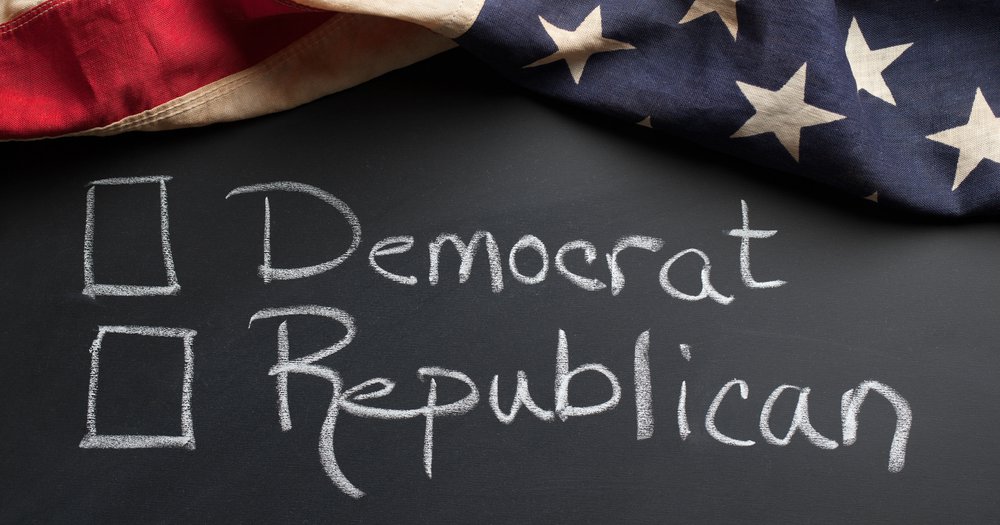
Is it possible to be political and nonpartisan simultaneously? It鈥檚 a question likely as old as the Republican and Democratic parties themselves. The short answer is yes. According to Merriam Webster, one of political is 鈥渙f, relating to, involving, or involved in politics and especially party politics鈥�. To be political is to be involved in government. To be partisan is to advance the agenda of a political party. But there is also room for nonpartisanship: being involved in government without exclusively taking any one party鈥檚 side. However, a natural tension exists between being political and being partisan. That鈥檚 because both our political and partisan identities often play out in same system or sphere: government.
Commenting on the recent launch of FutureEd, a new nonpartisan, independent education think tank, Audrey Watters鈥攁n education writer鈥�:
Related: I don鈥檛 understand why folks claim their work is 鈥渘onpartisan.鈥� Education is always political. And as [Marxist theorist Antonio] Gramsci said, 鈥淚 believe that living means taking sides. Those who really live cannot help being a citizen and a partisan.鈥�
Watters鈥攁nd Gramsci by extension鈥攔aise an important and often tricky dilemma. For one, there鈥檚 a practical reason why many nonprofits鈥攚ho work to influence politicians鈥攊dentify their work as nonpartisan. Nonprofits with a 501(c)(3) tax status remain nonpartisan to maintain their 501(c)(3) tax exempt status.
Individuals of course don鈥檛 have these restrictions. They can freely choose to be political and partisan. The fuller quote attributed to Gramsci : 鈥淚 hate the indifferent. I believe that living means taking sides. Those who really live cannot help being a citizen and a partisan. Indifference and apathy are parasitism, perversion, not life.鈥� Gramsci saw partisanship and indifference as opposites, perhaps rightly so. But we shouldn鈥檛 conflate being partisan with being political. Nor should we conflate nonpartisanship with indifference.
On one extreme, to be political, an individual has to get involved in the affairs of government. Involvement could include voting, holding a political office, calling or writing to your senator about an issue you care about, or testifying at local public board hearings.
The U.S. education system is inherently political because who of governs it: parents, students, educators, but also political actors such as mayors, governors, legislators, and federal government officials. We can鈥檛 separate schools or how we educate students from governing bodies or actors (governors, legislators, judges, mayors) working in them. Sure, our two major political parties constantly argue over the proper role of government in schools, in making decisions about how students are educated, and at what price. But neither party believes that government has or should play no role. The Republican party, even as champions of small government鈥攊sn鈥檛 the party of no government. And we can鈥檛 be political if there is no government to engage.
On the other extreme is to be apolitical, or choosing to not engage in governmental affairs. No one should advocate for this. What it means to be a citizen is wrapped up in the extent to which we actively participate in what鈥檚 happening around us. This includes what鈥檚 going on in our communities, our schools, and our government. Participation has always been central to our democracy鈥攊n very simple terms, a way a nation chooses to organizes itself politically. Active participation, or citizenship, is even more important in the political environment we currently find ourselves.
It may be easy to conclude that Gramsci thought nonpartisans were apolitical, unengaged, and indifferent for failing to take a stance. However, it isn鈥檛 that nonpartisans don鈥檛 take sides, or are averse to politics. It鈥檚 that nonpartisans don鈥檛 any one side exclusively. On the other hand, being partisan requires an individual to take a side.
Partisanship is when an individual exclusively supports one political party over another. It鈥檚 the stance a person takes when they decide to engage politically. But, it鈥檚 not political engagement itself. We can be partisan and not political if we fail to engage in the affairs of government. In other words, to be partisan but not political is only having opinions without ever acting on them.
An educator, deciding to participate in governmental affairs, and staunchly supports the education agendas put forth by one political party over another can be said to be partisan. On the other hand, when a nonpartisan educator engages in the affairs of government, this individual doesn鈥檛 faithfully support any one political party. This is arguably what makes them independent.
Consider how an educator who is nonpartisan can believe fiscal conservatism is important for the health of a government鈥攎eaning they may support Republican policies that tighten, rather than loosen, a government鈥檚 health care budget. But when trying to ensure disadvantaged students can afford college, this same educator may also believe that a college student鈥檚 financial needs should be adequately met with government support, a position widely supported by Democrats. How this individual decides to engage politically to help students with financial needs won鈥檛 be primarily based in party politics, but on what course of action they believe will enable government to 聽support its citizens鈥攊n the here and now鈥攁nd for many years to come.
We can be political and partisan, but we can also be political and nonpartisan or independent. And, we should always be political even if we鈥檙e not always partisan.
More 国产视频 the Authors
Issues
Programs/Projects/Initiatives
Related


What Was Supposed to Save Taxpayers Hundreds of Millions Will Instead Cost Billions: New College Accountability Rules

For Most Renters, Eviction Threat Falls with Age. Not for Older Student Parents.
