
We Talk 国产视频 Police Misconduct, But Poverty is Another Story
There was a time, not so long ago in a public debate not so far away, when many Americans wanted to keep the poverty discussion at arm鈥檚 length. The indelible flashpoint known as Ferguson offered hope that attention would zoom in on the on more so than the destructive G.I. Joe toy sets they brought with them once residents were fed up.
Instead, the dominant school of thought since Ferguson has assumed that frustrated or angry #BlackLivesMatter protesters were almost exclusively reacting to police violence and brutality. And while doubting law enforcement is a difficult proposition for most white Americans, with 63 percent nationwide high or average amounts of trust in the police, it鈥檚 still notable that a rather large amount (if not a majority) of white Millennials 鈥� 45 percent 鈥� the justice system.
But, that鈥檚 not surprising since, as the Washington Post鈥檚 Chris Cilliza correctly , young people pretty much don鈥檛 trust anyone anyway, with only 50 percent trusting police 鈥渙nly sometimes or never to do the right thing.鈥� Ferguson, along with the tsunami of public outrage over an endless string of unarmed black men being killed by cops, just so happened to find itself crashing against a libertarian-leaning wave of youthful skepticism on everything from , drones and the now waning war on marijuana. It鈥檚 that particular wave that Republican presidential hopefuls such as Sen. Rand Paul (R-KY) are .
You could say timing is everything. This emerging lack of tolerance for police misconduct becomes an easier cause for sympathetic (and mostly Millennial) publics to get down with. It has also forced bi-partisan hand-holding on formerly glass-ceiling topics such as criminal justice reform, where now talk regularly about better ways to keep young men of color, especially young black men, out of jail. While the Obama administration secures funding for body cameras, states and municipalities are . 聽Many policymakers in Washington are already expressing relief at a job well done because, finally, they鈥檝e managed to break through the usual impasse towards something they can all agree on.
But here鈥檚 the problem: no one was really having a robust discussion on in the first place. Politicos might be elated to find common ground on overhauling criminal justice, but that鈥檚 a cart before the horse discussion. The events in Ferguson didn鈥檛 spark this critical conversation since it was complicated for most Americans to put 鈥渟uburb鈥� and 鈥減overty鈥� in the same thought. We normally view our riots, uprisings and ugly unrest scenarios as urban phenomenon (generally fulfilling a stereotype that it鈥檚 only black people in urban settings with a genetic propensity for rioting when, clearly, ).
Yet, suburban poverty is on the rise, aggravated by recession and a tragic deer-caught-in-headlights response from local governments鈥攁s from Brookings鈥� Metropolitan Policy Program and others has shown over and over again.
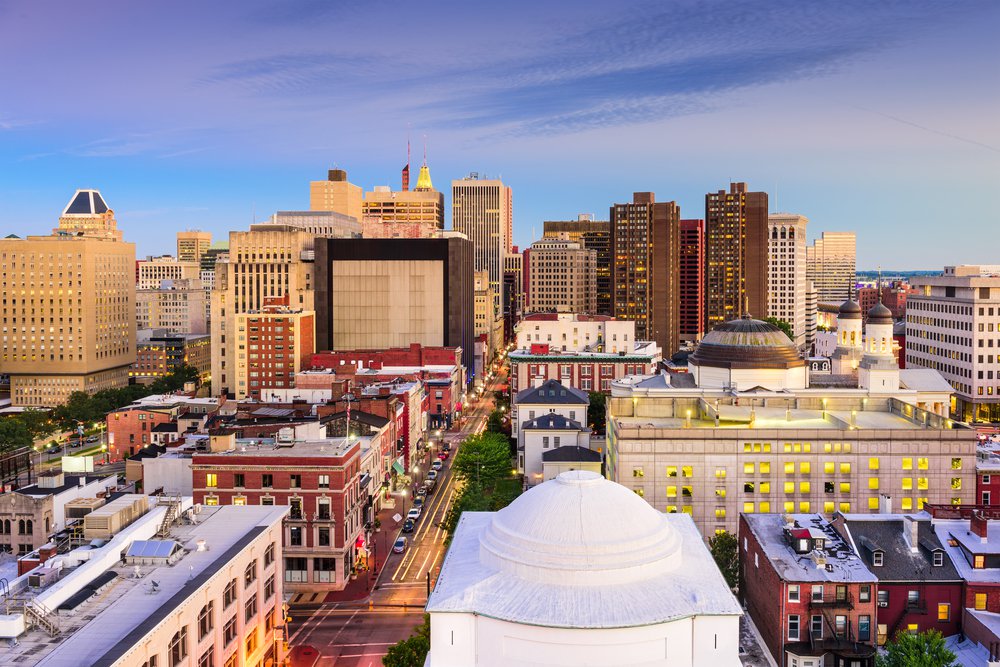
Recent events in Baltimore have, at least, forced a national discussion on poverty even if no one鈥檚 moved the needle on it, yet. 聽That鈥檚 the most hopeful aspect of the crisis, even if poverty in Baltimore and elsewhere still remains the same. There鈥檚 still no national campaign to eliminate a rather high 15 percent national poverty rate 鈥� and in Baltimore, citywide poverty is 25 percent while the black poverty almost matches it at 24 percent. Baltimore pushes the state of Maryland to ninth on a Top 10 list of places with the highest foreclosure rates. A recent shows poverty in Baltimore, and many other American cities, is just as high (if not higher) now as it was in 1970. Unemployment is an official 8.4 percent there, but that hides rampant underemployment and a much worse situation for black men: as of 2012, as many as 42 percent of working-age black men between the ages of 16 and 64 .
That鈥檚 an uncomfortable discussion to have, and it鈥檚 much harder to address or execute an anti-poverty strategy when everyone is shying away from it. Slapping body cameras on cops and reforming procedures only gets you so far, with legislators, after a while, satisfied with simply finding better and more humane ways for police officers to herd impoverished human cattle 鈥� yes, there is something nefariously neo-plantation about that. Ultimately, that won鈥檛 do much to change living conditions on the ground.
In spite of this evidence, most of white America has yet to connect this sense of instability to the socio-economic challenges faced by many African Americans. Hence, while Americans are beginning to accept police misconduct as a greater problem (see: that visceral, apple pie American fear of government 鈥渙verreach鈥� and police states), there is some detachment from the more important discussion of poverty that serves to 聽dismiss what many see only as 鈥渂lack people鈥檚 problems.鈥� 聽The latest shows a majority of voters perceiving the Baltimore 鈥渞iots鈥� as 鈥渃riminal,鈥� 68 percent of whites predictably seeing it as another case of 鈥渃riminals taking advantage of the situation.鈥�
That鈥檚 not really surprising. Most whites typically support punitive incarceration policies due to their tendency to equate crime with blacks and Latinos, according to a Sentencing Project published last year. And even as no discussion on poverty is complete without a discussion on race, the majority of whites would rather (unsurprisingly) talk about it.
Speaking of timing, events in Baltimore were unfolding not only as a string of presidential candidates were announcing their 2016 bids but also at a time when Congress has been questionable budget cuts to a number of crucial social safety net programs. 聽Baltimore is in the news just as , making us all feel better about ourselves 鈥� while discounting the very high underemployment that make the Bureau of Labor Statistics look intellectually dishonest.
And while all of this might raise partisan awareness or spur competing candidates to upstage one another as campaign ideation factories spit out talking points, it鈥檚 doubtful that discussion will translate into resources on the ground where it鈥檚 needed most.
More 国产视频 the Authors
Related

鈥淧eace Through Strength鈥� Is Hard to Read

“Getting the Golden Ticket”: Participants’ Perspectives on Lexington’s First Assembly

Civic Assemblies: A Framework for Community Colleges
