Welcome to Janelle Mon谩e’s America
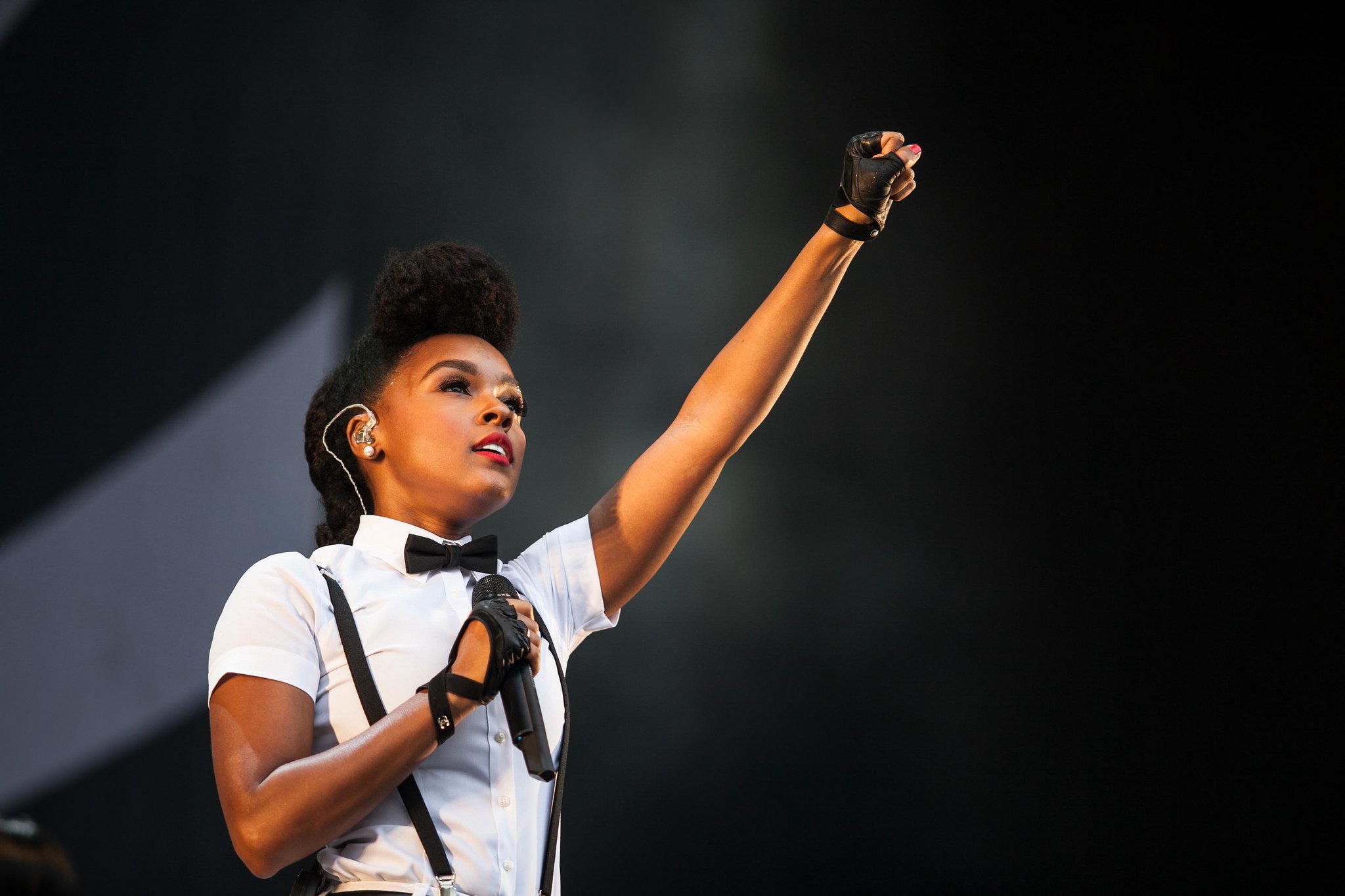
The latest video album didn鈥檛 鈥渂reak the internet.鈥� Instead, the 鈥溾�� for Janelle Mon谩e鈥檚 new album, Dirty Computer, aired on BET in late April, building some buzz and hype before it arrived, with minimal fanfare, on YouTube the following day. In the lead-up to the album鈥檚 release, outlets including the and wrote profiles of Mon谩e, highlighting her struggles as she has grappled with crosshatching aspects of her identity鈥攔ace, gender, and sexuality鈥攖o produce what she鈥檚 described as her most personal work yet. Likewise, many critics have sought to decipher the different ways in which this self-reckoning surfaces on the album.
And yet, despite all that parsing, few critics have grappled with the album鈥檚 criticism of American identity more broadly鈥攈ow America both celebrates and devalues people long relegated to society鈥檚 fringes. Dirty Computer contends with this tension, while also offering listeners (and viewers) an Americana that embraces the marginalized.
Dirty Computer features two songs that directly reference America: 鈥淐razy Classic Life,鈥� which is the second song on the album and the opening 鈥渕emory鈥� flashback on the visual album, and 鈥淎mericans,鈥� which, as the closer, serves as the soundtrack for the final scene and end credits on the visual album. Crucially, these two songs bookend the album鈥攖he only song not between them is the intro track鈥攁nd they, in turn, form a sort of container around songs that more explicitly investigate , , and . By doing so, these songs signal that each of the album鈥檚 other songs is a deeper dive into distinct facets of American identity. But both 鈥淐razy Classic Life鈥� and 鈥淎mericans鈥� re-conceptualize what it means to be American writ large, and in doing so they shine a light on the fundamental strain between how a person claims American identity, and how American society values certain citizens more than others.
On 鈥淐razy Classic Life,鈥� Mon谩e puts forward an inclusive vision of being American. The song opens with a spoken-word introduction by a voice that, in both its resonance and its speech patterns, evokes Martin Luther King Jr., reciting lines from the : 鈥淸You told us] 鈥榳e hold these truths to be self-evident: that all men [and women] are created equal; and that they are endowed by their Creator with certain unalienable rights; among these are life, liberty, and the鈥攁nd the pursuit of happiness.鈥欌�� By starting the meat of the album with a classic American text, and in what sounds like a classic American voice, Mon谩e reminds us of what are arguably America鈥檚 myths: exceptionalism, freedom, and equality. She then juxtaposes these notions with the first sung lyrics of the track鈥斺�淵oung, black, wild, and free鈥濃�攁nd with footage of young black women driving in a car down the open road, though we know that the founders included only white male landowners in their hoary vision of citizenship.
Through that juxtaposition, Dirty Computer proffers the still-contentious idea that to be young and black and wild and a woman and free is, despite history, to be American. Mon谩e continues to hammer this idea home throughout the song.
During the two pre-chorus sections of 鈥淐razy Classic Life,鈥� Mon谩e sings: 鈥淚鈥檓 not America鈥檚 nightmare / I am the American dream.鈥� She follows with: 鈥淚鈥檓 not America鈥檚 nightmare / I鈥檓 the American cool.鈥� In both instances, Mon谩e asserts that the young, black, wild, and free identity she claims isn鈥檛 simply American鈥攇uaranteed a place in society because of the Constitution. More than that, she鈥檚 the ideal, the epitome of American identity鈥攖he dreams and cool America aspires to and finds joy in.
If the album had ended here, it鈥檇 be safe to say that Dirty Computer suggests a fairly straightforward interpretation of American identity, one that not only accepts but also fully celebrates youth, blackness, womanhood, and independence. However, a closer listen to 鈥淎mericans,鈥� the closing song, complicates that message, with its pointed reminder that society still operates according to a system of hierarchies.
For one thing, the opening verse contains a number of references to examples of violence against black people in America. 鈥淒ie in church, live in jail, say her name, twice in hell鈥� is a line that arguably refers to Dylann Roof鈥檚 of black parishioners at a church in Charleston, the prison-industrial complex that disproportionately affects black Americans, and Sandra Bland鈥檚 . Mon谩e follows up with references to prejudices specifically against women: 鈥淚 like my woman in the kitchen /鈥� A pretty young thang, she can wash my clothes / But she鈥檒l never ever wear my pants.鈥� In a similar vein, the second verse references 鈥斺�淪eventy-nine cent to your dollar鈥濃�攁nd racism鈥斺�淵ou see my color before my vision / Sometimes I wonder if you were blind / Would it help you make a better decision?鈥�
These lyrics suggest that racism and misogyny are as central to American society as, in Mon谩e鈥檚 own words, 鈥渁 big old piece of American pie,鈥� and that people will continue to 鈥渄efend [their] land鈥� to maintain their warped, 1950s-era conception of society.
At this point, Mon谩e once again includes the voice that evokes King, but this time the voiceover speaks words the civil rights leader never actually said:
Until women can get equal pay for equal work
This is not my America
Until same-gender loving people can be who they are
This is not my America
Until black people can come home from a police stop without being shot in the head
This is not my America
Until poor whites can get a shot at being successful
This is not my America
…
Until Latinos and Latinas don鈥檛 have to run from walls
This is not my America
This harsh indictment might at first feel dissonant when you consider its upbeat tempo and its role as the background music for the visual album鈥檚 triumphant final scene. But, importantly, it parallels the structure of the 鈥渆motion picture鈥� as a whole, and it also ends on a hopeful note. The King-like voice finishes by saying: 鈥淏ut I tell you today that the devil is a liar / Because it鈥檚 gon鈥� be my America before it鈥檚 all over.鈥� Through those lyrics alone, Mon谩e leaves open the radical possibility of a future in which all the different parts of her identity are accepted and valued on their own terms.
Mon谩e鈥檚 album arrives at a time when the question of who does and doesn鈥檛 count as American is particularly fraught. When asylum seekers are at America鈥檚 borders; when transgender Americans are from serving their country; when and anti-Muslim incidents are on the rise; when people who鈥檝e made their home in America for years under of protected status have that status revoked; when and are stopped by the police for usually spurious reasons; when after of gendered violence and misogyny continues to break; when, in other words, millions of Americans are asking themselves where and how they belong鈥攁rt that dissects American identity feels especially, newly vital. (Consider also Childish Gambino鈥檚 ultra-violent video, 鈥�.鈥�)
And, indeed, Dirty Computer provides a rejoinder to this questioning, pointing a way forward. Mon谩e ends 鈥淎mericans鈥� with what鈥檚 arguably an offer to join her in a new future, asking anyone who鈥檚 listening: 鈥淧lease sign your name on the dotted line.鈥�
Anyone have a pen?
More 国产视频 the Authors
Related

Built to Last: How Leaders Are Creating Sustainable Early Childhood Funding

Pre-K Is Having a Curriculum Moment. A Professional Learning Movement Needs To Follow.

Federal Early Education Update: June 2026
