
What Brazilians Lost in the Coup
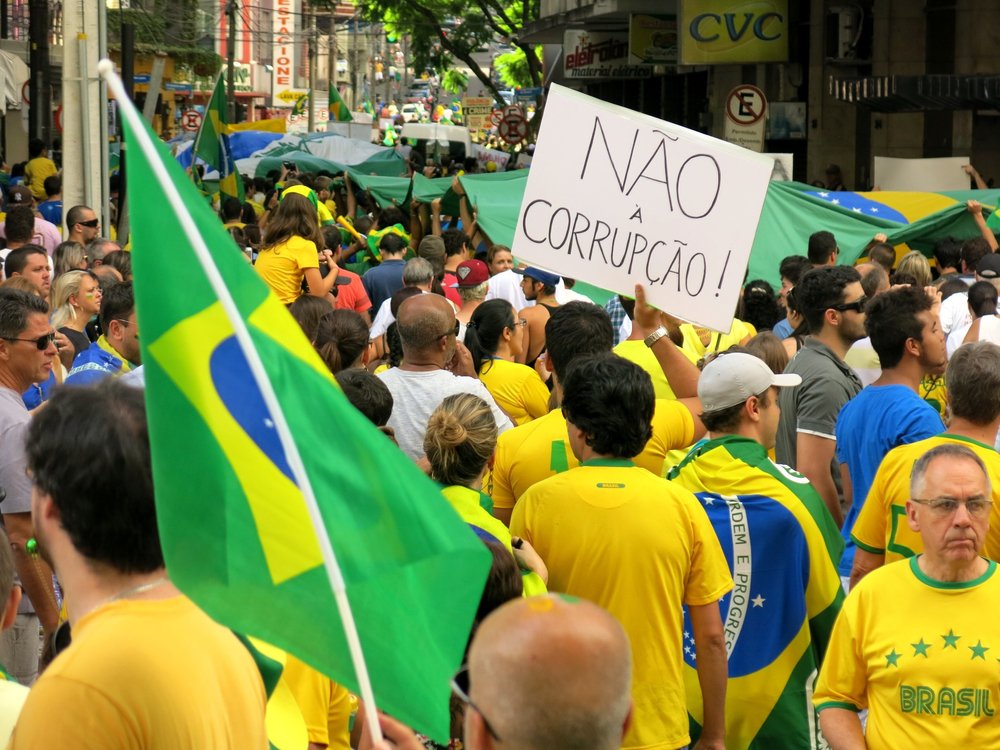
To most of the outside world, the recent ouster of Brazil鈥檚 former president Dilma Rousseff appears to have followed a legitimate democratic process. Rousseff, and the Workers鈥� Party that she and fellow former President聽represent, are too easily cast as two more exemplars in a long-line of supposedly corrupt Latin American leaders.
To be sure, there is no shortage of corrupt leaders in Latin America or elsewhere around the world. 聽But that generalization is incorrect, and the ease with which the world has accepted a neat narrative of alleged corruption and moved on with indifference is shameful. It is so for two reasons鈥攆irst, it is because a vigorous democracy with independent institutions has been dealt a heavy blow. Secondly, and equally important, it is because Brazil may lose some of the most innovative, progressive social experiments in the world of the past 20 years鈥攅xperiments that have reduced inequality and poverty, and that risk being swept aside in this moment of elitist anger.
For those who haven鈥檛 been paying attention: President Rousseff was impeached by a majority vote of the Brazilian Senate last month, a move that many progressives, including some who are critical of Rousseff鈥檚 administration, are calling a coup. The charge against her was the alleged manipulation of the federal budget to hide the size of its deficit. Many independent jurists in Brazil agree that while the internal movement of funds may be an administrative irregularity, it鈥檚 hardly an impeachable offense.
The Workers鈥� Party is not without its flaws, to be sure, and while they can rightly claim they are much less corrupt than nearly all other political partners in Brazil, that鈥檚 hardly a defense or an excuse. It鈥檚 also not enough to point to the fact that more than half of Brazil鈥檚 Congress have some charge or legal case pending against them, or that Eduardo Cunha, the head of Congress who started the impeachment process against Rousseff, was even more recently ousted for personal enrichment from corruption.
Politicians can鈥檛 get away with saying 鈥渁t least we鈥檙e not as dirty as them.鈥� And though its party leaders deserve immense credit for leading the civil society movement that restored democracy after the military dictatorship that lasted until 1984, that admirable past doesn鈥檛 mean the Workers鈥� Party deserves to stay in power indefinitely. In other words, the Workers鈥� Party has made mistakes, and some of its leaders have been imprisoned for wrongdoing. But those mistakes are not the only driving force behind Rousseff鈥檚 ouster, and probably not even the main reason.
So what was? 聽Let us consider that Brazil鈥檚聽is angry, and has been for some time. Frustrated at a stalled economy, accustomed to privilege, and dependent on low-income workers who maintain their homes and pick up their children at private schools, many upper- and upper-middle class Brazilians resent the Workers鈥� Party attempt to nudge Brazil towards equality. 聽As they saw their status slip鈥攚ith air travel and car ownership no longer a sole privilege of the elite, and with the expansion of labor rights to Brazil鈥檚 army of domestic workers 鈥攖hey needed someone to blame for the economy and for their declining status. 聽
In short, the ruling class in Brazil is angry at the equality-producing policies that the Workers鈥� Party聽implemented. These include investment in universal, public health; expanded public education with an emphasis on quotas for Brazil鈥檚 historically marginalized African Brazilian population; and a national cash transfer program that was clean and efficient and lifted nearly 40 million Brazilians out of poverty.
It is beyond the scope of this essay to say for certain that elitist anger drove Rousseff out of office. The point is, regardless of the motivations for Brazil鈥檚 political purge, these advancements and equality-producing victories are at risk. It is already clear that Brazil鈥檚 new conservative leaders want to do away with many of these progressive policies and programs.
They want to dismantle a single payer聽and replace it with an insurance company led system of the sort the U.S. has developed (hardly a model for achieving public health). 聽They want to聽from prisons, and universities, to day care centers, hospitals, and infrastructure companies; and they want to cap public spending, which could hurt Brazil’s most vulnerable citizens.
Admittedly, I am not impartial in any of this. I lived in Brazil for 15 years, and the Workers鈥� Party was in power for almost all of them. I founded a non-governmental organization (NGO) that, over the past two decades, has partnered with the government across many of these programs. We were never part of the government and we have our critiques of it, but we are an NGO with a progressive mission focused on gender equality and violence prevention. A mission that built on the progressive policies of the Workers鈥� Party.
Indeed, for those who believe in social justice, the first years of President Lula鈥檚 administration were exciting times. A generation of young professionals, most of whom had spent parts of their teenage years protesting a repressive military dictatorship, found their beliefs in children鈥檚 rights, women鈥檚 rights, public health and land reform, among others, enshrined in national law. 聽And we had a government led by a union leader and former metalworker with only a high school education who convinced Brazil鈥檚 Congress to put the resources to make these programs happen. The future was one of hope that our mission could become a reality, and we weren鈥檛 alone.
So, too, was it exciting to be part of an alliance of NGOs that worked with the government to use public schools as a place to teach gender equality, reduce homophobic bullying, and prevent violence by men and boys against women and girls. Evaluation of the process shows that it works鈥攖o change attitudes and to reduce violence, and it was officially incorporated into online training for teachers. 聽Some of the same conservative leaders who ousted President Rousseff also called the material 鈥�.鈥� They say it undermines the family and makes children gay, a fearful and closed reaction that has taken us back decades: the initiative has been defunded at the national level.
We also collaborated with Brazil鈥檚 impressive national public health system, which reached nearly 60 percent of the population鈥攏o small feat in a country as vast as Brazil. It was one of the first countries in the world to offer HIV and AIDs treatment free of charge and to see its HIV rates decline, but heterosexual men were the least likely to come for HIV testing, increasing women鈥檚 risk of HIV and decreasing the chance that men were getting treatment. The government supported us in designing a policy that would encourage men to accompany their pregnant partners to prenatal visits and to train health care workers to invite men to come back for their own check-up. 聽The result: congenital syphilis rates are down and heterosexual men鈥檚 HIV testing is at record levels.
The government also invited us in as partners in its national cash transfer program, called Bolsa Familia, that benefits more than 40 million individuals with a monthly amount given to all households living in poverty who have children under the age of 14, and whose children are enrolled in school. 聽The money is given to mothers in a debit card. It has worked to nearly end the worst poverty in Brazil, and the government officials who administer it were open to making it better. 聽When we proposed that the program could be a pathway to promoting men to do a greater share of the childcare so that women beneficiaries could enter the workplace in greater numbers, they were open to the idea. They worked with us on a program, supported by UN Women, and we saw the impact.
The list goes on. 聽And we were just one Brazilian NGO among many 聽that worked with the progressive cadre of professionals in Brasilia and in state and municipal governments to make the dream of a more equal Brazil a reality. From the massive reduction of children working in hazardous conditions to the achievement of legal unions for gay couples and the expansion of women鈥檚 access to contraception to the advent of new legislation to end violence against women, the 14 years of Workers鈥� Party administrations deserve credit for what they got right, just as their leaders must be held accountable for what they got wrong.
And just as their successors must be held accountable for what they are failing to do. After watching 14 years of reductions in inequality, these progressive policies should not be sacrificed in the current anti-Workers鈥� Party sentiment and anger of the upper-middle class. We could be witnessing the tragic and unjust end of a brilliant moment in participatory and progressive democracy. Yes, there are flaws in the existing policies and how they are implemented. And even more flawed was some of the political deal-making and vote-buying that went on in Brazil鈥檚 Congress to make these policies possible. But the justice-focused and progressive intentions of the policies鈥攁nd the tangible, positive impact of them鈥攕hould not be lost.
And there is another, equally tragic part of what we lost in the coup: the belief in a more just Brazil. 聽A generation of young adults who went to Brasilia believing that Brazil could come out of poverty and the worst income distribution in the world are now sad and cynical and trying to figure out if they believe their political system will ever work again. That鈥檚 what we really lost in the coup.
More 国产视频 the Authors
Related

Engagement in a Civic Education Desert

Built to Last: How Leaders Are Creating Sustainable Early Childhood Funding

Pre-K Is Having a Curriculum Moment. A Professional Learning Movement Needs To Follow.
