
What Did We Really Celebrate on the Fourth of July?
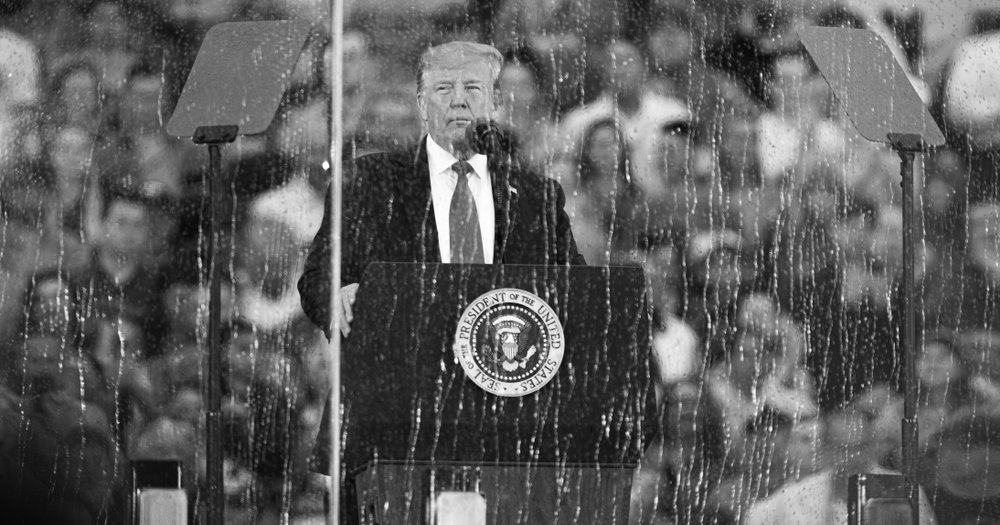
The Fourth of July has come and gone鈥攐ur energy exhausted, the day of our independence fully celebrated. President Donald Trump and, oh, (well, ). Independence Day is Americans鈥� one designated day out of 365 to celebrate the country鈥檚 liberation from tyranny鈥攆oreign taxation, a distant monarchy, maybe your dysfunctional marriage鈥攂y stuffing ourselves with hot dogs and sitting on porches and patios to watch fireworks. Indeed, on the Fourth, the pride that many people feel from being American is never more raucously on display, and this year鈥檚 festivities more than proved that, via colorful bands and awe-inspiring air shows, people love to revel in America鈥檚 image of greatness.
But what did America celebrate, really? The symbols and slogans of the holiday get the headlines, but they betray both the underlying truths of our moment, and take our eyes away from how the holiday gives us an opportunity to heal that divide.
We celebrated liberty鈥攂ut people aren鈥檛 free. For years, migrant children have been and allegedly . Prisoners find themselves in , locked in a cycle of labor and imprisonment.
We celebrated justice鈥攂ut Americans continue to face injustice. Ex-felons trying to turn themselves around , and votes continue to be manipulated in the wake of the . Even now, many Americans don鈥檛 see the criminal justice system .
We celebrated equality鈥攂ut some find themselves treated unequally. disrupt conversations on workplace equality. Different groups, such as Muslim-Americans, . Even our role models on the soccer pitch have to
We celebrated security鈥攂ut in the years after 9/11, . Shootings . And while our stock market is , Americans are finding themselves .
We celebrated unity鈥攂ut what more accurate way to describe our nation right now if not divided? Uncertainty grows as . Hate groups find their voice , furthering their message of supposed alienation. Our border agents , indulging their disdain for others.
Let鈥檚 actually drill down on that last point. In our broader haste to marvel at spectacle, many people turned a blind eye to the vastness of the suffering afflicting others. Or perhaps even worse, we didn鈥檛 think about it at all鈥攕omething that belies a lack of communal empathy.
Consider how, in the last month alone, our nation鈥檚 heroes in uniform鈥攖he people who immediately responded in the aftermath of 9/11鈥�, yet pushed on anyway. Or think about how black Americans crowded into the House of Representatives to , proving that the wounds of slavery and racial injustice have hardly healed more than a century later.
There鈥檚 no question that people are aggrieved by the injustices they (rightfully) feel have yet to be meaningfully answered by their country, their America.
So how do we move forward?
During a recent conversation with Sharon Burke, Senior Advisor at 国产视频, Burke mentioned the importance of avoiding the perils of infighting. 鈥淧eople forget: We voted for our representatives, the administration,鈥� she pointed out. 鈥淲e chose to go with what we have now, and we鈥檙e seeing the consequences of being unaware.鈥�
Put differently, voters, in various ways, elected the officials in charge now and, by extension, many of the conflicts that they鈥檝e wrought on both policy and public discourse. Many citizens listened to the news eager to cast blame on someone else, soaked up tweets that affirmed their hatred of the 鈥渙ther.鈥� Insults and put-downs, not reason, draw clicks and spur comments.
There鈥檚 no shortage of ideas for how to honor the spirit of Independence Day, despite the parading and posturing. , , : 鈥渞eclaiming the Fourth鈥� takes on many forms. But we鈥檙e only doing a disservice to our nation if we don鈥檛 learn to reclaim the core sense of togetherness鈥攁n America of many values, but with a central value of community.
After all, America didn鈥檛 liberate itself 243 years ago鈥擜mericans liberated one other.
Helping other Americans, , has long been at the core of what makes America great. It can be a seemingly inconsequential action, like stopping to chat with your neighbor who has different views from you, or devoting a few dollars to your local veterans鈥� charity. But either way, civil participation and compassionate patriotism build a healthier discourse for the nation, and prepare us for future adversity.
As Burke underscored in our interview, 鈥渢he first and best line of defense against a terrorist or a hurricane is a stronger society in general. America is strong when its communities are.鈥�
Contenting ourselves with food and fireworks before diving right back into political bloodsport achieves the exact opposite. When we cover up our divisions with diversions, polarization will continue to eat away at our institutions and progress. 鈥淭hings are hollowing out,鈥� Burke said, solemnly. 鈥淲e can fill the cavity, or we cave in.鈥�
More 国产视频 the Authors
Related

“Getting the Golden Ticket”: Participants’ Perspectives on Lexington’s First Assembly

Civic Assemblies: A Framework for Community Colleges

Don鈥檛 START Now
