
What Now for NATO?
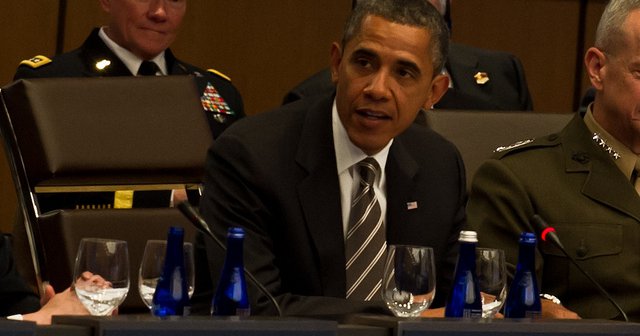
For many inhabitants of Warsaw, the NATO summit, which took place in the Polish capital on the eighth and ninth of July 2016, was nothing more than a nuisance. Several of the city鈥檚 main arteries were closed for the entirety of the event; border controls were increased; and public transport was disrupted. Frustrated citizens flooded the 聽comments sections of online news portals before the summit even began asking why a summit requiring such high levels of security could not take place in an isolated venue far away from the streets of Warsaw. On Saturday evening, President Obama鈥檚 escort to the airport alone caused such traffic jams that 聽parts of the city came screeching to a standstill.
For Polish authorities, however, the summit meant much more than traffic jams. It is no accident that that one of the venues chosen for the event was the Presidential Palace where, in 1955, the USSR and several other nations signed the Warsaw Pact, an agreement set up in order to counter the threat of NATO. , Polish Minister Witold Waszczykowski emphasized the importance of the summit, stating that it would be the first meeting of Allies on NATO鈥檚 eastern flank since the 2008 summit in Bucharest. In reality, this is not so impressive鈥攖hree other summits took place in the Czech Republic, Latvia and Romania in the last 14 years, making Eastern and Central Europe a rather popular destination for NATO gatherings. Why, then, was the symbolic meaning of the meeting stressed to such an extent by the Polish government?聽
Put simply, what did the summit mean for Eastern and Central Europe, and did it mean the same for NATO itself?
While Law and Justice, Poland鈥檚 ruling party, has strong Euro-sceptical views, its mistrust of international organizations does not extend to NATO. With Russian interventions in Georgia and Crimea in recent years, and Soviet troops on Polish soil still fresh in the collective memory of the nation, the country鈥檚 authorities were eager to secure increased presence of NATO troops on its territory. And, indeed, the Alliance鈥檚 leaders confirmed the deployment of four battalions of approximately 1000 soldiers each in Poland and the Baltic states. Although these numbers would hardly be sufficient to stop a Russian invasion, they do represent a deterrent, as any confrontation would directly involve NATO troops and trigger the involvement of the entire Alliance in the conflict. Moreover, Anakonda 2016, a massive multinational military exercise, took place in Poland in the weeks leading up to the summit, and involved over 31,000 soldiers from 24 countries.
However, there are two possible downsides to those actions. Firstly, Poland is not only looking for greater support from NATO鈥攊t has already also taken internal defensive measures. Polish Minister of National Defence Antoni Macierewicz, a figure fhis claim that the 2010 crash of the Polish presidential airplane in Smolensk was no accident and was covered up by Russia and the former Polish Prime Minister, has to counter the threat of 鈥渉ybrid warfare鈥欌�漮f the type seen in Ukraine in recent years. A report by the Warsaw-based National Centre for Strategic Studies (NCSS) about this formation included a very controversial line stating that this paramilitary force could constitute an efficient preventive measure against anti-governmental actions. Although a co-author of the report underlines the fact that the term 鈥渁nti-governmental actions鈥� has nothing to do with the widespread anti-governmental protests which have taken place since the 2015 parliamentary elections, the fact that during peacetime the paramilitary force would be under the responsibility of the Ministry of Internal Affairs rather than the Ministry of National Defense is worrying. NATO, in other words, risks being coopted by the Polish government for defense of a party, not the people.
The second problem links more directly to the decisions taken during the NATO summit. Russia perceives NATO, and the fact that a NATO summit was held in Warsaw, as further examples of the Alliance鈥檚 encroachment and unjustified presence in its so-called 鈥渘ear abroad.鈥� Indeed, one of the outcomes of the meeting in Warsaw was that all delegations supported Georgia鈥檚 NATO membership aspirations, a delicate subject that, according to some analysts, sparked the war between Russia and 聽Georgia in 2008. Moreover, NATO a Comprehensive Assistance Package for Ukraine aimed at increasing its resistance to 鈥渉ybrid threats.鈥� During a pre-summit press conference, NATO Secretary General Jens Stoltenberg stated that the Alliance鈥檚 aim is 鈥渢o defend our allies, not to increase tensions in Europe,鈥� and that it 鈥渞emains open to dialogue with Russia.鈥� This type of remark,however, is overshadowed by the tone set in the Warsaw Summit Communiqu茅, which stated that 鈥淩ussia鈥檚 recent activities and policies have reduced stability and security, increased unpredictability, and changed the security environment鈥� and described the 鈥渋llegal annexation of Crimea,鈥� the 鈥渄eliberate destabilisation of eastern Ukraine,鈥� 鈥減rovocative military activities near NATO borders,鈥� and 鈥渁ggressive nuclear rhetoric.鈥� While a strong stance from NATO might be necessary to curb Russia鈥檚 ambitions as a regional hegemon, it will likely further exacerbate the existing tensions with the Kremlin, especially given that, since the summit, Washington and Moscow .
But it is also worth noting that the subject of the Russian threat was only one among the many topics discussed during the summit. The Alliance also recognized cyberspace as a domain of operations comparable to air, land and sea, and underlined the importance of energy security in resisting political and economic pressure from external actors. Montenegro also took part in the negotiations, and was invited to become the 29th member of the Alliance, which could potentially bolster its efforts to join the EU. ISIS was described as a 鈥済rave threat to the wider Middle East and North Africa region and to our own nations,鈥� and NATO outlined its determination to 鈥渄o more and achieve lasting calm鈥� in the region. Finally, the EU was described as a 鈥渦nique and essential partner鈥� with which cooperation must be further enhanced.
After the dissolution of the USSR, many political scientists argued that NATO would become an obsolete construct. But the renewed perception of Russia as a threat means that many countries in Central and Eastern Europe still look to NATO for protection. And the Alliance鈥檚 increased focus on new security challenges, including cyberspace, terrorism, and energy, has allowed it to survive and even thrive in the international arena. NATO is still much more than a nuisance鈥攁nd not only to the temporarily inconvenienced residents of Warsaw.
More 国产视频 the Authors
Related

Everyone Agrees Financial Aid Offers Are Broken. Now What?

What the Iran MOU Gets Right, Gets Wrong, and Leaves Unresolved

Prenatal Connection to Early Intervention: A Snapshot of Current and Future State
