
What Role Do White Moderates Play in Southern Politics Today?
There鈥檚 a clear debate brewing within the Democratic Party over what to do in the South. For years, political strategists have encouraged the candidacies of white moderates who can toe the line of conservatism enough to court reluctant Republicans and white independents. The 2010 and 2014 midterms challenged this narrative, though, as these races saw in Congress from the Deep South and underscored the waning popularity of white, centrist Blue Dogs.
Another challenge to the narrative that white moderates perform best in the South came in 2018, when Southern states showed a surge of progressivism, as candidates like Stacey Abrams and Andrew Gillum came close to snagging statewide seats on platforms that centered racial equality, economic inclusion, and social justice. (Close to winning isn鈥檛 the same thing as winning, but both candidates came than the white centrist Democrats who .)
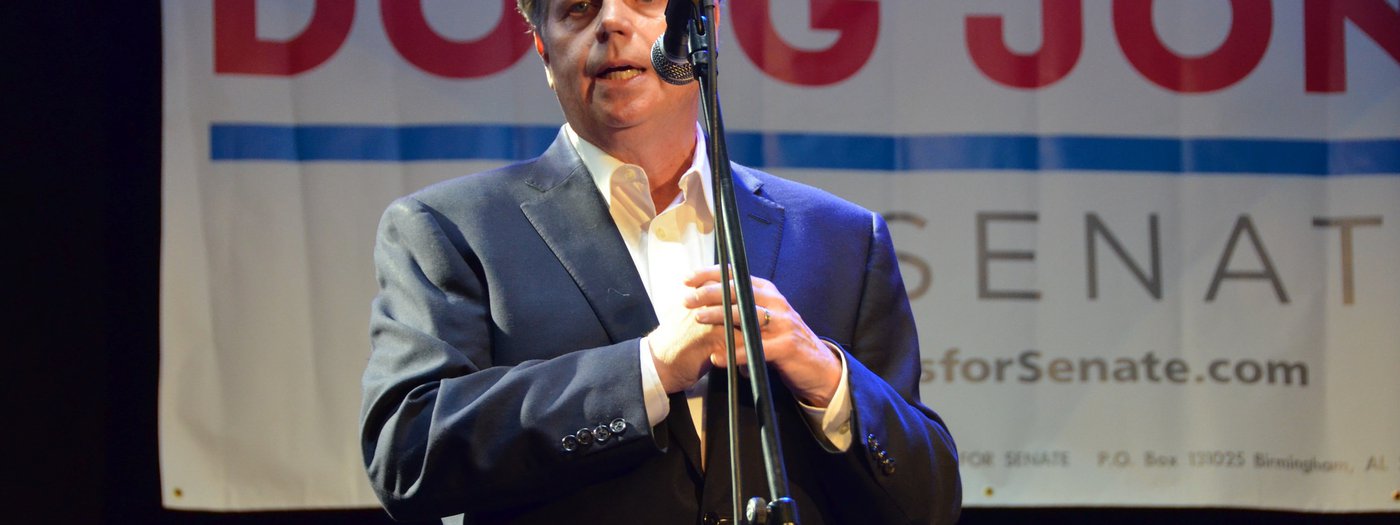
The year before also saw a historic election鈥攖hat of Doug Jones, who became the first Democratic Senator from Alabama in 20 years. Now, Jones is attempting to weigh in on the fate of Southern moderates in his new book, 鈥攁nd doing so with mixed results.
Part legal tell-all, part memoir, the book zooms in on the story of the 1963 Sixteenth Street church bombing, carried out by members of the Ku Klux Klan, that killed four black girls: Addie Mae Collins, Carol Denise McNair, Cynthia Wesley, and Carole Robertson. As a 9-year-old living in an all-white suburb of Birmingham at the time, Jones describes how he was largely insulated from the tumultuous atmosphere of 1960s Birmingham, where the civil rights movement was gaining traction, and the violence of the Klan and police forces rose accordingly to suppress it.
Throughout the book, Jones confronts a key concept that Martin Luther King Jr. wrote about in his 1963 Letter from Birmingham Jail, that 鈥渏ustice too long delayed is justice denied.鈥� Jones describes how the prosecution assembled hundreds of thousands of investigative documents into a puzzle of circumstantial evidence to convict two Klan members for the bombing鈥攁fter more than three decades. With extraordinary effort, he argues that 鈥渋t鈥檚 still justice no matter when you get it.鈥�
But while Jones鈥檚 message on justice is clear, I鈥檇 argue that his view of moderates鈥� role in achieving that justice wobbles throughout the book.
When discussing the history of the South and the atmosphere of violence that sparked the bombing, for instance, he both criticizes and excuses white moderates. Jones praises Charles Morgan Jr., another white civil rights attorney, for a speech in which he condemned Birmingham鈥檚 white moderates who 鈥渉ad done nothing to change the oppression of their black neighbors 鈥� by encouraging or tolerating blatant racial and social injustice.鈥� But then Jones also uses -style rhetoric when he describes his family鈥檚 lack of participation in Klan rallies, since they, 鈥渓ike most respectable folks (segregationist or not), would have no part of it.鈥� Moreover, when discussing his own political career, Jones takes pride in being a moderating voice that focuses on 鈥渒itchen tables issues,鈥� such as employment, wages, education, and access to medical care, that are what 鈥渆veryone, black and white, male and female, young and old, [have] in common.鈥�
To be fair, Jones falls to the left of his Democratic statewide predecessors in Alabama. But he remains committed to 鈥渞epopulating and re-energizing the center.鈥� And his voting record seems to support his occupancy of what he calls 鈥渢he radical middle鈥濃�攈e is one of who has voted with President Donald Trump more than 40 percent of the time.
More troubling still, his voting record shows a potential disconnect between his and his backing of the issues that disproportionately affect them. Jones was one of the few Democrats who the rollback of regulations on community banks that will make it easier to hide and harder for the government to identify predatory lenders who . He also voted to confirm William Barr as attorney general, despite Barr鈥檚 history as that increased incarceration rates among African Americans, and Robert Wilkie as the U.S. Secretary of Veterans Affairs, despite to Confederate pride groups.
This is all the more vexing when you consider how Jones owes his seat in the Senate in large part to the work of black organizers in Alabama, especially those who founded Black Voters Matter and spurred a among the black community for a non-presidential election.
It seems that Jones wasn鈥檛 unaware that the support of the black community was required for his election, as he spent a significant amount of time and money campaigning in Alabama鈥檚 black communities. Yet still, he stumbled, running two ads that stirred controversy鈥攐ne praising people who of the Civil War, and the other questioning whether Roy Moore would have had with sexual assault if he were black. He also ran on a typical Southern Democrat platform that you could argue assumed the support of black voters while centering the white vote. Jones notes that on election day, 鈥渁 white woman 鈥� gave me an unexpected and sincere declaration of support. For some reason, that convinced me we had it.鈥�
Jones lays out his moderate strategy鈥攚hich focuses on collaborating across the aisle and staying away from the fringes of political debates鈥攁s critical to renewing the presence of Southern Democrats in national politics. He also condemns identity politics and the 鈥渆xploit[ation] of social and cultural issues that divide us鈥� as the reason Democrats can鈥檛 make connections with voters outside blue strongholds.
But here, Jones appears to have missed a key point: In some ways, Democrats have abandoned the South. The 1960s saw an from the Democratic party, as it became more liberal on civil rights. Republicans picked up these voters and began taking greater control of state houses and Congressional seats in the late (and made a policy priority). Rather than fighting back, many nationally-focused Democrats seem to have given up. Even though the South has in recent years and they could potentially run candidates that excite the community, the Democratic National Committee has put money largely behind white centrist candidates鈥攐r has looked elsewhere entirely. In the early 2000s, the Mississippi Democratic Party one part-time staffer, and in 2018, the National Democratic Party in the Mississippi Senate races.
Of course, this isn鈥檛 a wholesale dismissal of Jones and his politics. Neither is it to suggest that a more fundamental veer to the left wouldn鈥檛 be attended by its own issues鈥攋ournalists and other pundits are still where middle-of-the-road Democrats fit into the shifting political landscape, and how that may affect the party鈥檚 future. Rather, as the 2018 midterms showed us, this is to underscore how progressive politicians who openly challenge inequality and recognize the different needs of varying communities do, contrary to the received wisdom, stand a real chance in the South. Democrats don鈥檛 need to run on defensive, anti-Republican extremism to appeal to voters on the fence. As Jones himself notes, 鈥減andering to people who were not going to vote for [you] anyway鈥� is a losing strategy.
In the end, Jones鈥� account doesn鈥檛 seem to meaningfully reconcile the demographics of his voter base and his understanding that 鈥渢he impact of institutional oppression is ongoing for African Americans鈥� with his moderate stance. His laser-like focus on 鈥渒itchen table issues鈥� glosses over the fact that kitchen tables don鈥檛 look the same across Alabama. Some kitchen tables are in , where the black community of Birmingham was relegated by government redlining, and some kitchen tables are in that white families in the suburbs are fighting to leave. A message of unity is important in times of great political division, but it shouldn鈥檛 come at the expense of talking about the different needs of communities that are too often segregated along racial lines.
More 国产视频 the Authors
Related

Making the Case for Youth Apprenticeship: The Appeal to Gen Z

Nothing 国产视频 Us Without Us Can Actually Raise Us

Shaping AI from the Middle
