
What’s at Stake in Kurdistan’s Post-Referendum Future?
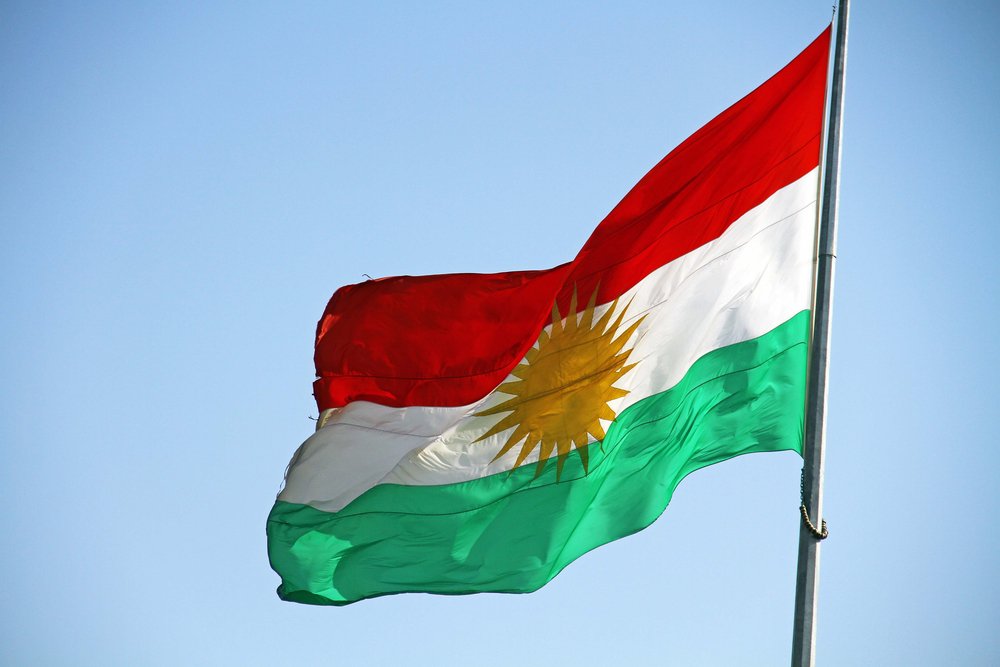
Amid flurries of fireworks, waving flags, and honking horns, thousands of Iraqi Kurds descended on the streets of Erbil, the capital city of the Kurdistan Region in Northern Iraq, earlier this week, after they cast ballots in a regional independence referendum.
The question? 鈥淒o you want the Kurdistan Region and the Kurdistani areas outside the administration of the Region to become an independent state?鈥�
While the official results have yet to be released, the non-binding vote鈥檚 outcome is anticipated to be clearly in the affirmative, which would give the Kurdish leadership a political mandate to negotiate a Baghdad. In this case, the referendum would mark a significant step toward sovereign statehood. But while some may see the vote outcome as an auspicious beginning, with the promise of an internally recognized homeland on the horizon, the future of Kurdistan, and Iraq, is clouded in political uncertainty鈥攁nd mired in a tenuous calm.
Understanding Kurdistan鈥檚聽current political landscape requires a look back at the past. Much of the present-day concern centers around Kirkuk, an ethnically mixed region where Arabs, Kurds, Turkmen, and Assyrian Christians live in precarious co-existence amid the gas flares of oil fields that pump some . The city and the surrounding province of the same name have a complex history. Between the 1970s and Saddam Hussein鈥檚 ousting in 2003, Baghdad deployed a policy of. This policy forced hundreds of thousands of Kurds, Turkmen, and Assyrians from their homes. What鈥檚 more, family houses, arable lands, and all were transferred to Sunni Arabs loyal to the Baathist regime, thus shifting the regional demographics to.
After the American invasion in 2003, however, Kurdish influence began to wax in Kirkuk, and thousands of families that had been. The Kurdish Regional Government, based in Erbil since its birth in 1992, under the wing of an American-enforced no-fly zone, reportedly families to return.
A number of areas in Northern Iraq, Kirkuk among them, were claimed by both Erbil and Baghdad in the post-Saddam order. The Iraqi constitution, for instance, drafted in 2005, vowed to demographically 鈥渘ormalize鈥� these so-called disputed-territories, conduct censuses, and to hold referendums 鈥渢o determine the will of their citizens.鈥� However, 2007 came and went, marked not by referendums but by spasms of sectarian violence across the country.
Administrative and security responsibilities have shifted across the so-called disputed territories in the intervening years. But Kurdish authorities solidified control of Kirkuk when the Iraqi army fled in June 2014, pushed back by as ISIS fighters advanced., serving as an effective bulwark against ISIS as other cities in Northern Iraq fell to jihadists.
Yet in March 2017, the Kurdish flag was hoisted above the city, flapping alongside an Iraqi standard. This gesture enraged Baghdad, who insisted on the flag鈥檚 removal and, weeks later, on the removal of the Kurdish governor of Kirkuk.
Neither demand was heeded. 聽聽聽
It was against this backdrop鈥攁nd much finger-pointing over which side is committing wrongdoing in the region鈥攖hat a Kurdish referendum was held on Monday. In the weeks and even days leading up to the vote, whether Kirkuk residents would actually cast ballots., and rumors of an were swirling. But Kirkuk voters turned out鈥攊n droves, even: Some 80 percent of eligible voters in the province participated in the referendum, with preliminary results indicating a landslide victory of for the 鈥測es鈥� campaign. Moreover, the vote was peaceful, even in Kirkuk, and a member of the EU parliament who observed the proceedings the referendum 鈥渇ree and fair.鈥� Cue celebrations, flag waving, and collective exhales across Kurdistan in general, and Kirkuk in particular.
Still, storms appear to be brewing on multiple fronts. On Wednesday, only two days after the referendum, the Iraqi parliament Prime Minister Haider al-Abadi to send troops to Kirkuk to take back the oil-fields the regional government had managed. Abadi himself said that the referendum 鈥渕ust be annulled.鈥�
But Sabah Al-Numan, a spokesman with the Iraqi counter-terror force, told me in a conversation that his unit was still coordinating with the Kurdish Peshmerga to oust ISIS from the town of Hawijeh, located in Kirkuk province. Business as usual, he insisted.
Also troubling is that Iran and Turkey, both of which have significant Kurdish minorities, are rattling sabres at the Kirkuk fray. in Kirkuk if the Turkmen population, which shares cultural and ethnic links to Ankara, is threatened. Meanwhile, Iran, which vehemently opposed the referendum from the beginning, provides funding and training to many semi-sanctioned Iraqi militias, some stationed in Kirkuk province.
So what happens next? The answer, it seems, is that we have to wait and see.
In Kurdistan, analysts are cautiously optimistic that Baghdad will agree to sit down and negotiate with Erbil over Kirkuk, despite promises to the contrary. With time, they say, the post-referendum bluster will give way to debate and, ultimately, serious discussions about secession and sovereignty. Indeed, for all the bellicose rhetoric, three days after the referendum, a precarious calm seemed to be holding.
Many observers believe that, in the long-run, Kirkuk will be formally balkanized into a tripartite region, with Arabs, Kurds, and Turkmen each ruling their own land, resources, and population. Long negotiations between the parties, however, are needed before any sort of formal settlement is reached and borders drawn.
The future of Iraq is inextricably tied to Kirkuk鈥檚 Gordian politics and complex ethnic landscape. Call it overlapping nationalisms, call it sectarian strife, or call it an oil curse, but whatever the narrative, Kirkuk poses a challenge that will require patient untangling from all sides for years to come.
More 国产视频 the Authors
Related

Engagement in a Civic Education Desert

Built to Last: How Leaders Are Creating Sustainable Early Childhood Funding

Pre-K Is Having a Curriculum Moment. A Professional Learning Movement Needs To Follow.
