
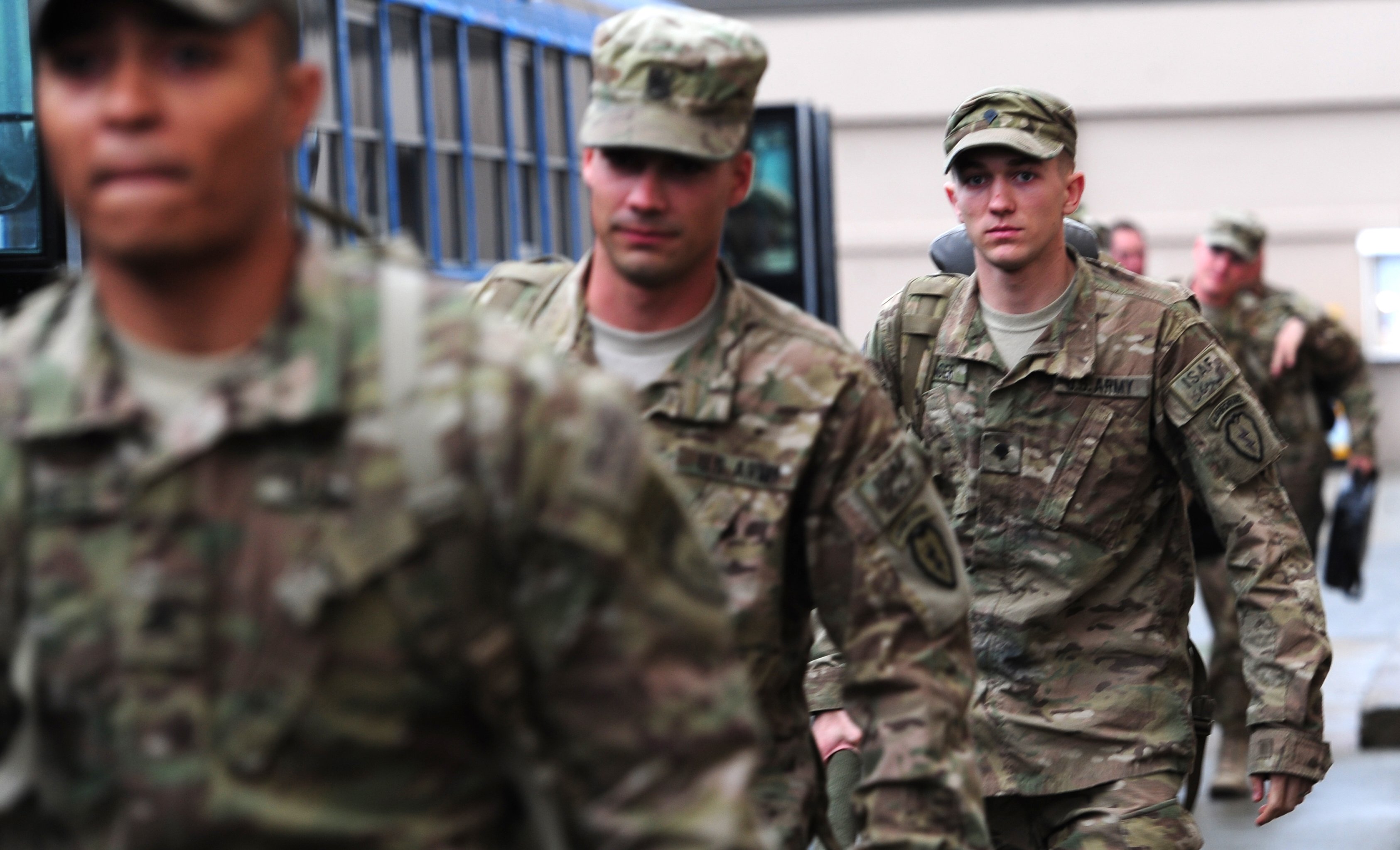
The aftermath of
election results on November 9 distracted attention from Veteran鈥檚 Day, just
two days later. Thankfully, there鈥檚 a
better alternative to saying 鈥渢hank you for your service鈥� to a veteran this
year: watch the so-titled film.
Tom Donahue鈥檚 new
documentary raises difficult questions about the
struggles of veterans after war and, importantly, the decisions of a country
before 飞补谤.听
The film also reminds
its viewers why the phrase sounds superficial in the ears of some veterans. Take, for instance, Dan Cnossen. In 2012, the 32-year-old Navy SEAL was working
his way through the Denver airport, on his way to Washington鈥檚 Walter Reed
military hospital to have his prosthetics adjusted. Dan lost both his legs
after stepping on an improvised explosive device in Afghanistan in 2009, and
his misaligned prosthetics were rubbing to the point of bleeding. As he painfully
made his way toward his gate, an airline employee asked with presumption, 鈥淎re
you a vet?鈥� Dan nodded yes, to which she responded 鈥渢hank you for your
service.鈥� Dan managed to smile but was
left wondering how genuine goodwill could feel so empty.
The problem with the hackneyed phrase is not just that it rings hollow. More pointedly, it reflects military
reverence that does little to compensate a burdened military. More subtly, the phrase sidesteps any doubt
about the decision to burden those troops.
As with my father,
my military career was defined by an experience with war鈥攈e served in Vietnam,
while I served in Iraq and Afghanistan. But unlike my father, my generation was
warmly welcomed home, even as many were divided about the wars we fought in.
For some, the decision to send us to war represented a failure to learn the
lessons of Vietnam. For others, the decision to bring us home represented a
failure of commitment.
If one lesson emerged from Vietnam, it was to honor the troops, even if
you question the war. This tension鈥攎ilitary
reverence with doubt鈥攎anifests in public polling. Confidence
in the U.S. military , but Americans are less confident in its
capabilities. Since starting asking the question 23 years ago, American views
of their military as the No. 1 power in the world are at an all-time low of
49%.
Ill-prepared for a post-terrorism model of warfare, this tension emerged鈥攁longside
a corresponding civil-military divide鈥攁s we fell into controversial wars of
choice. Even Afghanistan, for instance,
was not an existential fight; al-Qaida demonstrated unprecedented lethality, but
it did not pose a strategic threat to the United States. Moreover, most U.S.
troops were killed fighting not al-Qa鈥檌da but the Taliban, an enemy that had
not attacked us on 9/11.聽
While some called it the 鈥渨ar on terror,鈥� a better description was the 鈥渨ar
after terror.鈥� We asked the nation to get back to business, which is the best
course of action after terrorism鈥� it is how the terrorists lose. But in sending
its military to war鈥攚hile the nation professes normalcy鈥攁 gap emerged between
the two.
Americans did not plant victory gardens or work in ammunition
factories. The only 鈥渄raftees鈥� were the soldiers compelled to remain in the
鈥渁ll-volunteer鈥� force (through a policy known as 鈥渟top-loss鈥�). The staggering financial cost of our modern
wars, likely to exceed WWII expenditures, was deferred by passing this debt to
future generations. Americans honored,
but did not protest, the flag-draped coffins that returned from abroad.
So while the emotional trauma of 9/11 enabled a soft trigger for war, the
ambivalence of this widening gap made it easy to stay in war. America鈥檚 longest conflict became an in-between
war: necessary enough to deploy troops, but not necessary enough to die for.
This dynamic was reflected in expediting
mine-resistant vehicles to Afghanistan in response to an evolving IED threat.
These $600,000 鈥淢RAP鈥� vehicles were not constructed for counterinsurgency or
counterterrorism missions鈥攖hey were purpose built to transport troops safely,
consistent with 鈥渇orce protection鈥� becoming our top priority in Afghanistan. Unfortunately, even the MRAP could not
protect soldiers from life-altering mental or moral injuries, and many
of our veterans suffer such hidden injuries in silence. In the end, the MRAP reflected the awkwardness
of a war in which the primary
purpose of our presence was to protect itself, and the false comfort that the
costs had been minimized.
I lost a best friend and several teammates to the wars, and I got off
easy. The full cost to our nation, to
include the burden carried by our veterans and the gold star families, is
beyond measure. Thanking a veteran, like Dan Cnossen who lost both his legs,
for their service doesn鈥檛 rebalance the burden of fighting the war鈥攊t
highlights how large the imbalance has become.
Thank You
for Your Service gives its viewer a troubling glimpse of this
imbalance, evoking frustration with government bureaucracy struggling with a
deluge of veteran trauma. For the White
House and Pentagon, it is a reminder that reverence of the military is no
substitute for strong civilian oversight of the military. Deeper down, it is a cautionary tale about the
risks of low civic participation in a democracy and, more specifically, the
perils of a nation that doesn鈥檛 share the costs of its decisions to go to
飞补谤.听
More 国产视频 the Authors
Related

Everyone Agrees Financial Aid Offers Are Broken. Now What?

What the Iran MOU Gets Right, Gets Wrong, and Leaves Unresolved

Prenatal Connection to Early Intervention: A Snapshot of Current and Future State
