John Summers
Research Fellow, History and Disability
On March 7, a group of families and national advocacy organizations against the District of Columbia school system on behalf of 4,000 special education students. The lawsuit alleged chronic failure to transport the students to school in a timely fashion, or at all. In Massachusetts, where I live, the state department of education responded to a similar group complaint against Boston Public Schools last year. 鈥淪tudents with disabilities are at times missing entire school days or parts of school days due to lack of appropriate transportation services to which they are legally entitled,鈥� .
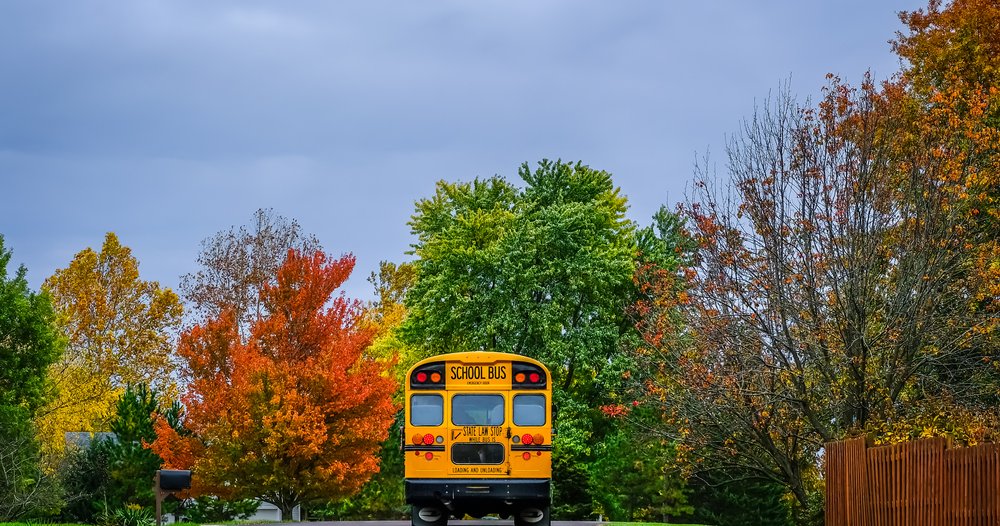
Transportation often takes a backseat, as it were, in special education. But getting students to school entails the first order of business. Many of the buses and vans so dedicated are appointed with wheelchairs or restraint systems. carry trained monitors on board. Some students are picked up on the corner nearest their homes. Others, like my son Misha, require door-to-door transportation. Cambridge Public Schools transports Misha between our home and his placement at the Perkins School for the Blind, out of district. If the Individual Education Program of such students stipulates the need for such accommodations, they are guaranteed by federal and state law as a
My son鈥檚 commute out of district demarcates the only time of the week when he is neither at home with me nor at school with his teachers. Because Misha does not speak, he gives no independent account of his comfort or safety. Because he depends on stable routines to maintain his equilibrium, a late pickup instigates a chain reaction that upsets his poise for learning.
Misha is one of 120 students whom Cambridge transports out of district. To parents of students without disabilities, Cambridge offers a 鈥溾�� for 鈥渃ommunication, bus safety, and efficiency. Parents can download an app and follow the location of the bus in real time. To parents of special education students, Cambridge offers no such service.
The double-standard is common. In January, the EPA鈥檚 Clean School Bus Program the names of 280 school districts due to receive a cumulative total of $1 billion for the purchase of electronic buses. Transportation operators are to optimize fleet routing and manage traffic congestion. Meanwhile, nationwide lack electronic tracking technology, according to an annual survey reported in the February issue of School Bus Fleet. Special education students may be the only people in America who regularly ride buses and vans missing technology so basic that every public transportation system uses it.
Last month, following years of fruitless advocacy in Cambridge, I filed a disability discrimination complaint with the Office of Civil Rights in the U.S. Department of Education.
鈥�
The double-standard effectively excludes special education students from being counted in the 鈥溾�� reckoning currently underway. 鈥淭he lack of a tracking system prevents the district from promptly identifying and remedying noncompliance,鈥� Massachusetts鈥檚 education department concluded in its investigation of Boston Public Schools last year. The class-action lawsuit in Washington D.C. argues the same point. Because that district 鈥� on time or arrive home on time at the end of day in a systematic way,鈥� school officials cannot inform a caregiver or parent 鈥渨here their child is.鈥�
The double-standard also mars state reporting procedures. My daughter attends the ninth grade in Cambridge鈥檚 public high school. Her progress reports disclose the number of times, if any, that she has been late or tardy. Contrariwise, the progress reports that I receive about Misha in his out-of-district placement at Perkins disclose no such information.
That is because Massachusetts collects but does not require out-of-district schools to report late arrivals or absences. Of the four offices that oversee Massachusetts special education鈥攖he (OASIS), the (SEP), the (PSM), the (SEIS)鈥攏one proclaims standards for transportation or assesses compliance with state .
The , passed by the Massachusetts state legislature in 2019, included transportation as a reimbursable expense. Districts may draw up invoices for a portion of the cost of transporting students and then submit expenses to DESE鈥檚 .
I asked Associate Commissioner Jim Sullivan, the program鈥檚 manager, if those invoices, taken together, could throw some light on the performance of transportation vendors statewide. No, Mr. Sullivan answered. Districts are not required to report performance data. The only basis for an audit would inquire as to whether districts actually incurred the expenses.
鈥�
The lack of state supervision hives off responsibility to individual districts, which often outsource transportation to third-party vendors, reducing performance accountability to a matter of contract management. My inquiry about the absence of a real-time bus tracker on special education vehicles in Cambridge 鈥渉as come up ,鈥� a School Committee member said in response to my testimony at a meeting in March.
Then why hasn鈥檛 the committee done anything about it?
Cambridge, like many districts in Greater Boston, outsources special education transportation to NRT Bus, one of many vendors currently consolidating as monopolies under the umbrella of private equity. NRT is owned by , which is owned by . I will go out on a limb and say that Audax is probably not interested to max-out safety and performance accountability if doing so narrows their profit margin.
Policymakers need to step up and get real-time bus trackers on special education vehicles. There really is an app for that.
Research Fellow, History and Disability