Brigid Schulte
Director, Better Life Lab
A Better Life Conversation with "Workaholism" Scholar Malissa Clark
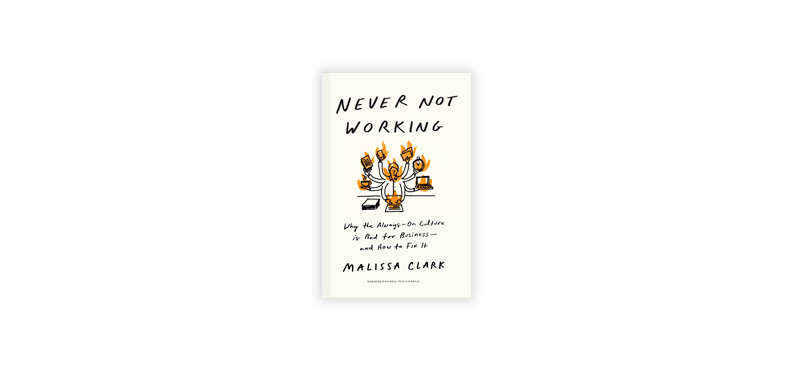

From her earliest days, Malissa Clark remembers being driven to overachieve, always cramming her schedule full, and wrestling with perfectionism, never feeling she was doing enough, or that it was good enough. That drive led Clark to become a professor of industrial and organizational psychology at the University of Georgia, director of the Healthy Work Lab and author of Never Not Working: Why the Always-on Culture is Bad for Business and How to Fix it. She鈥檚 one of the world鈥檚 leading 鈥� and one of the few 鈥� scholars of workaholism, what drives it, how it can damage health, relationships and even, ironically, work quality and productivity. And what to do about it.
It's something she鈥檚 intimately familiar with, as she freely admits in the book, and in many of our previous conversations, including as a guest on the Better Life Lab podcast I host, that she struggles with workaholic tendencies. (As do I 鈥�)
She shares a chilling story: She was pregnant with the first of her two children in graduate school, and her daughter was due right in the middle of the semester. She was taking a full load of classes and also teaching. The Friday before spring break, she was in a coffee shop trying to finish up a midterm when she went into labor. She was in horrible pain. 鈥淚 continued to work and pushed myself for a couple hours,鈥� she explains. 鈥� contractions were sporadic. And I thought, 鈥榃ell, keep on working.鈥� And so I did.鈥� When the contractions started coming more frequently, she left the coffee shop, went to the hospital and delivered her daughter. She took spring break off, then went back to work. 鈥淚 only took one week off. I don鈥檛 even know how. I had such brain fog,鈥� she says. 鈥淚t was the most ridiculous decision ever. I didn鈥檛 ask for any help. I鈥檓 sure they would have given it to me. I just didn鈥檛 feel like I could. I don鈥檛 know why. The unfortunate thing is, nobody pushed back. They just let me do that and didn鈥檛 insist that I take time for myself and my baby.鈥�
The experience spurred Clark鈥檚 research interest in the often toxic interplay of internal motivation 鈥� the inner compulsion to overwork 鈥� and the overwork culture we find ourselves in. For instance, unlike every other industrialized nation, the United States has no national public paid maternity, paternity or family and medical leave policy. U.S workers have no guarantee of paid time off when someone is sick or for annual leave. In addition, in so many organizations, long work hours and work devotion are expected, rewarded and seen as signs of an ideal worker. 鈥淚 will say now the university has a formal paid parental leave policy. But they didn鈥檛 when I was a graduate student, which contributed to me feeling like I couldn鈥檛 take a break,鈥� she says. In countries with such policies, she says, the message is that time for life, for care, for family, recovery and rest is valuable. 鈥淭heir workaholism is not quite as dramatic as ours in the United States. Some countries are just doing it a lot better than we are.鈥�
I spoke to Clark recently about the difference between being an engaged worker and a workaholic, and some of the uneven ways workaholism plays out across gender and socioeconomic class. The following is a transcript of our conversation, lightly edited for length and clarity.
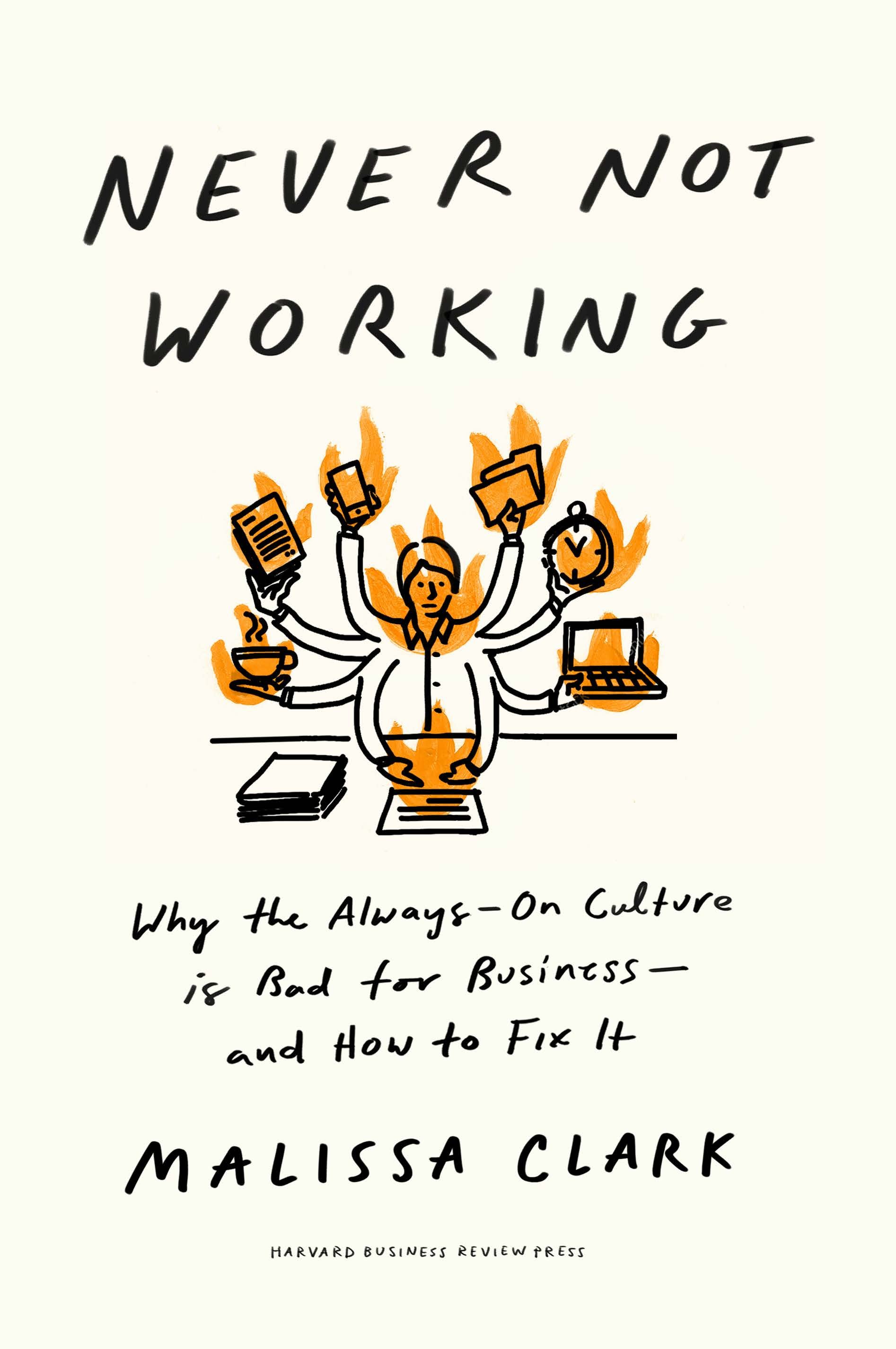
Brigid Schulte: I loved your book. And I hate to admit it, but I really related to your title: Never Not Working. I wanted to start with the obvious question 鈥� is that true? Are we really never not working? Are we a nation of workaholics?
Malissa Clark: It's hard to gather data. But one study that surveyed Americans found that over 50 percent said they identify as workaholics. And over 70 or 75 percent of millennials said that they felt like they were workaholics. So, in the U.S., I do think it resonates with a lot of people. But workaholism is not only in the U. S. There are cultures that really embrace this always-working mentality.
Schulte: You write about the difference between workaholism and work engagement 鈥� that you can work hard, but not be a workaholic or buy into the ideal worker norm. What鈥檚 the difference?
Clark: There are two key factors that I use to differentiate between the two. Work engagement has been linked to a lot of positive outcomes. When you鈥檙e engaged, you're absorbed in your work. You're enthusiastic about it. You are really enjoying that project that you're working on. But that energy is being spent at work. With workaholism, not only are you spending energy at work鈥攜ou also spend it outside of work. The components of workaholism are multidimensional.
First, there's the motivational component. That's your inner drive, your inner compulsion. You feel like you ought to be working. So when you're not working, you might feel this compulsion, almost like in the pit of your stomach, this nagging feeling like, 鈥淥h, I should be working.鈥� You might be thinking about work鈥攖hat鈥檚 the cognitive part. You might be feeling negative emotions such as guilt for not working. All of that is energy that you're spending outside of work that is related to your work.
So one of the differences is, where is the energy being spent? The long work hours, on the surface, can look very similar. Someone can work long hours, but be an engaged worker, but also they're able to shut work off when they leave. They are able to enjoy family time and not try to work at the same time. That鈥檚 because work engagement is driven by intrinsic motivation, this love of work. And workaholism is driven by introjected motivation, which is this feeling like you should be working.
It's like a push and a pull. It鈥檚 complicated. I love my work, so I am very engaged. But I also have these workaholic tendencies. It鈥檚 possible to be both. So it's a matter of recognizing the strengths of being an engaged worker, but also the potential downsides of your workaholic tendencies and trying to keep those in check to have a more balanced relationship with your work.
It's a continuum, not an either/ or.
Schulte: You give very helpful self-assessments in the book. I scored right on the borderline of workaholic tendencies!
Clark: I鈥檓 right there!
Schulte: Beyond where you鈥檙e spending your energy and your motivation to work, you write about how there are four drivers of workaholism. Can you help us understand what we should be looking for?
Clark: The first one is the most obvious. It's the behavioral component. You work long hours. You tend to take work on vacations. You do what I call in the book, 鈥渨orking lite.鈥� You鈥檙e doing something non-work related, but you sneak in work at the same time. I'm so guilty of this. For example, watching TV with your laptop on your lap.
Schulte: That really resonated with me.
Clark: The other three drivers are motivational, emotional, and cognitive. The first is what scholars call introjected motivation, which is you're driven to work these long hours because, as I explained before, you feel like you ought to. Perhaps it's from these societal expectations. It could be for a variety of reasons. It's a pretty uncomfortable feeling. Along with that pit in your stomach are negative emotions 鈥� feeling anxious, guilty. Feeling irritated if something's preventing you from working, that's the emotional component. And then finally, the cognitive component, where it's difficult to shut work off in your head, even if you're not physically working on something. You have a hard time focusing and being in the moment because your mind tends to drift back to work. It might keep you up at night.
Schulte: You also write about four personality traits that can be signs of workaholism — overcommitment, busyness, rumination, and perfectionism. Can you share more?
Clark: If you鈥檙e concerned you or someone else might fall prey to workaholism, there are signs of what to look out for. I call them 鈥渁lways behaviors.鈥�
The first of which is overcommitment. Workaholics do tend to take on too much, and they don't really know their limits. It's hard to say no, and, because of that, just kind of take on more and more and more. That leads to the long work hours, obviously.
Another sign, which I can definitely relate to, is busyness, this idea of always having to be busy, always doing something. You feel if you鈥檙e not busy, then you鈥檙e wasting time. You can鈥檛 just sit and watch a TV show.
Another sign is rumination. This goes hand in hand with the cognitive component of workaholism. You tend to overthink everything. You tend to go over and over in your head about how you could have done something differently, what you have going on, your next project at work.
Schulte: Guilty.
Clark: The funny thing is rumination can be helpful sometimes. If, for example, you are at the end of your workday and you finish a task halfway, then it leaves you thinking about it. You might be able to jump right in the next day and finish it more quickly because you've been ruminating on it. But the problem comes when that rumination is hindering your sleep or not allowing you to disengage from work and take that precious time to psychologically detach, which research shows is very helpful for rest and recovery.
Then there are perfectionist tendencies. Workaholism is related to the negative aspects of perfectionism — feeling like you can never live up to your standards. So that's something to look out for too. Do you feel this pervasive sense that I鈥檓 not meeting my own standards, so I need to work harder and longer?

Schulte: You write in the book about work addiction, which you say is not a clinical definition, but a cultural phenomenon. Workaholics Anonymous bemoans that workaholism is the only addiction that鈥檚 valorized. People not only wear it like a badge of honor, but think you need to work like a workaholic in order to do good work or be productive, like it鈥檚 a necessary evil. Is this what you found in your research?
Clark: We're taught at a young age to pick yourself up by your bootstraps, that you can accomplish anything if you work hard enough. That attitude continues when you get into the workforce. As a society, we have this image of the ideal worker as someone who is constantly available to their work, who prioritizes work above everything else. We really need to rethink who is the ideal worker.
Schulte: Your subtitle is about why this workaholic culture is bad for business, and how to fix it. We have this cultural notion that long work hours and busyness is good for business, that you鈥檙e going to be more productive and make more profits if you have people working all the time. You say that isn鈥檛 true.
Clark: The research shows that workaholism is not related to productivity. It's simply not. There鈥檚 a variety of reasons why. Workaholics tend to always be on, almost like in fight or flight mode 鈥� taking on work and trying to handle it, ever adequately recovering from work. Over time, that actually makes workaholics less productive. It decreases performance.
Recovery time is critical for coming back to work the next day, energized, well rested, engaged, and ready to start the work the next day.
Workaholics tend to take on too much. Teammates or leaders might overcommit the unit or overpromise to clients. Maybe it鈥檚 impossible to meet the promises they made. Not only are they causing havoc with their coworkers and their time, but they鈥檙e overpromising and underdelivering, and that鈥檚 not going to be great for sales, customer satisfaction or anything else.
The economist John Pencavel has a book called Diminishing Returns. He's looked at effective hours at work and actual number of hours spent working. His models show that after 55 hours of work in a week, we start to become less productive. And that someone who works 70 hours is no more productive than someone who works 55 because of that law of diminishing returns. That goes back to recovery. At a certain point, we're just not going to be as productive. When you're exhausted, how productive are you, really, when you sit down to work on that difficult project?
But we, as a society, still reward long hours. That, unfortunately, can be linked to promotions and positive performance evaluations.
Schulte: You write that workaholism shows up a little differently for men and women. How so?
Clark: The ideal worker prototype we have is easier for men: 鈥淚'm working these long hours because I'm the provider for my family.鈥� But for women who are working long hours and striving to move up in their own careers, they have the pressure of that ideal worker norm to succeed at work, but simultaneously, there's also the ideal mother norm and or ideal parent norm and [drive to] prioritize the kids.
This one woman I interviewed was feeling guilty not only from herself and her own internal pressure to be a good mom and be a good worker, but feeling judged by the women in her neighborhood, who would make comments like, 鈥淥h, I hope your work is worth it.鈥�
Schulte: So you stay longer and longer to try to make sure you do something amazing at work, so it will justify your time away from home. And feel guilty all the time.
Beyond gender, some people argue that workaholism is only associated with knowledge work, because there has to be an element of passion to it. Whereas low-wage workers may see their work, not as a calling, but a job. A means to an end. Is there an educational or socioeconomic component to workaholism?
Clark: For knowledge workers specifically, it can be really difficult to shut work off both physically and in your mind. We're creative in our jobs, and so it's difficult to kind of shut that off when you leave work. So there is this general tendency for knowledge workers to have that cognitive component of workaholism 鈥� thinking about work, not being able to shut it off. With low-wage workers, they may do a better job shutting work off, maybe not.
There鈥檚 just not a lot of research on workaholism with low-wage workers. The big issue is they're simply not being paid enough to work one job. So oftentimes they're working two jobs or three jobs. For them, it's more of a concern about long work hours, taking shift work that affects circadian rhythms that affects health. And job demands unique to certain occupations and certain low-wage work that are physically taxing in addition to being mentally taxing. Maybe it's not workaholism per se. But it鈥檚 equally important to understand.
Schulte: Is that where having choice comes in? Low-wage workers might be acting like workaholics, though, because of the low pay, the way we鈥檝e structured work, they really don鈥檛 have a choice.
Clark: Right.
Schulte: So is workaholism a choice? Is it something that we can choose to do, or choose not to do?
Clark: Well, having choice is a privilege. I don't think people can choose if the reasons for working are financially driven, for example. Perhaps there are some workaholic tendencies that we can work on to try to curb. So, there is some control there. But the environment that we're in can exacerbate those tendencies. And in certain cultures, like here in the US, we do have this always-on hustle culture. We鈥檙e always connected with technology. This is the norm. So, if you want to be successful in an organization where that's what's being rewarded, you don't really have much control if you want to move up.
Schulte: Do you have hope that things can change?
Clark. I do have hope. The people I interviewed for the book, a lot of them were from Workaholics Anonymous, and they really, really had struggled with workaholism for years, for decades, and were making drastic changes to their lives, and to the way they worked. Many of them are leaders in their companies. So they鈥檙e not only changing how they work, but the way their company works. That鈥檚 really encouraging.
All around the world, there鈥檚 the four-day week movement and other policies that are being implemented in very, very creative ways by companies to encourage work-life balance. There鈥檚 one company that鈥檚 implemented a policy called 鈥淭ake time to win time鈥� to encourage employees to take their vacation time. The more vacation time they take, they get an entry into a drawing for each day they take, and the drawing wins them more vacation time. So instead of rewarding long work hours, they're rewarding taking a break and having more balance. There are some really good things that are happening. We鈥檙e seeing some change. I know it's going to be hard and slow. But I am hopeful.
Director, Better Life Lab